

Research group Lars Österlund Lab explores how advanced materials can be used to create cleaner and healthier environments, smarter energy solutions, and more sustainable technologies. The research brings together surface science, nanotechnology, and functional materials engineering, with a strong focus on solving societal challenges. By combining fundamental studies with applied projects, the aim is to understand materials at the deepest level while ensuring our discoveries can be used in practice.
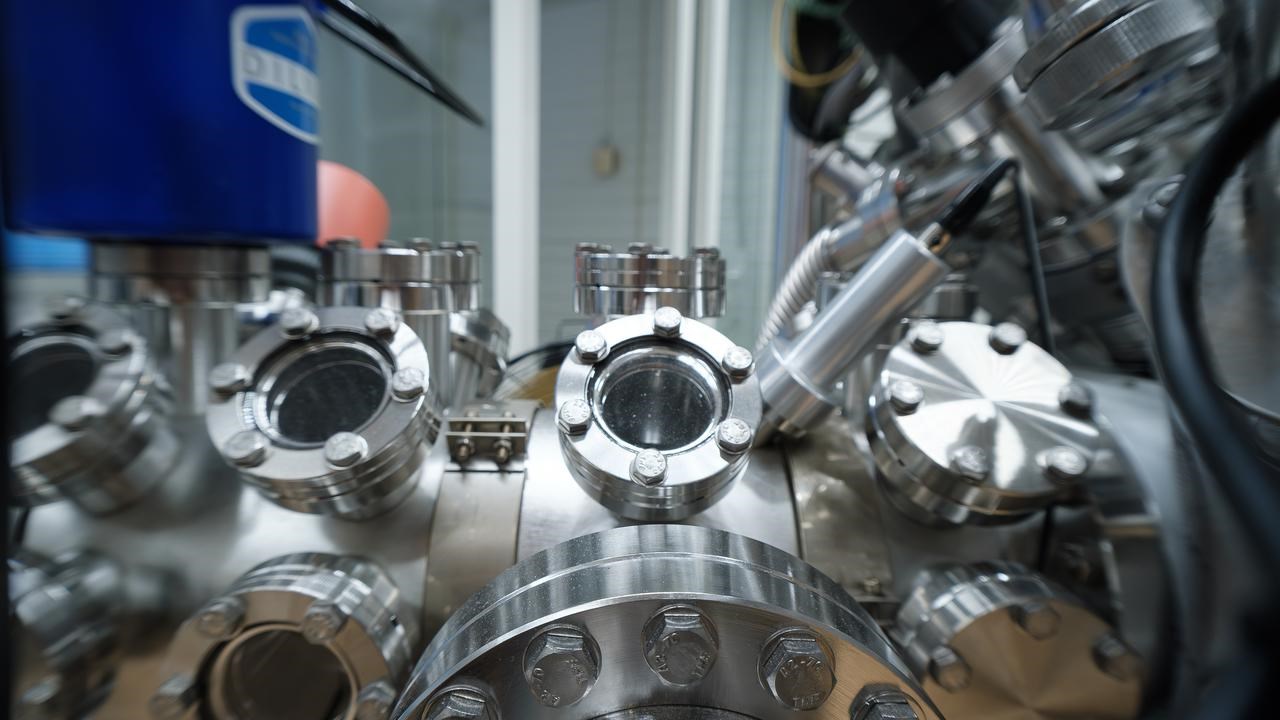
The XPS platform is used to analyze the surface chemistry and reaction mechanisms of materials.
ImageSimon JönssonA central idea in our work is to begin with real‑world problems, air & water pollutions, inefficient energy use, or the need for self‑cleaning or antimicrobial surfaces and then trace these challenges back to the physical processes governing material behavior. This “reverse‑engineering” mindset helps us design new materials and reveal the underlying mechanisms that make them work.
Our research focuses on uncovering how molecules interact with surfaces at a fundamental level. We investigate how solar radiation engages with materials, aiming to understand these processes and harness them through biomimetic strategies inspired by nature. A central theme of our work is the activation of chemical reactions by light or electrons, particularly on metal oxide surfaces. We examine how environmentally significant molecules—such as sulphur dioxide, nitrogen oxides, and organic compounds—behave upon contact with a variety of surface structures.
Using advanced spectroscopic techniques, we monitor these interactions in real time. This enables us to generate detailed insights into reaction mechanisms, supporting the development of next-generation catalysts and innovative technologies for environmental purification.
Another important area involves chromogenic materials, materials that change their optical properties depending on light, temperature, or electrical input. These “smart” materials are used in applications such as energy‑saving windows and adaptive optical coatings. We work on electrochromic, photochromic, and thermochromic systems, including rare‑earth oxyhydrides that darken reversibly under blue or UV light. Because many of these materials can be produced at low temperatures, they are suitable even for flexible substrates. Our long-standing collaborations with industry help bring these materials from the lab to real architectural and energy‑efficient solutions.
Nanopatterning plays a key role in several of our research directions. By using techniques such as block‑copolymer self‑assembly and colloidal templating, we create materials with precisely designed nanostructures. These structures can manipulate light in unique ways, forming “metamaterials” with properties not found in nature. Inverse opals, nanorods, and other patterned architectures allow us to control photonic band gaps, enhance catalytic activity, or design coatings with optimized refractive index and surface area.
Photocatalysis and surface functionality are longstanding strengths of the lab. We develop materials that use light to break down pollutants in air or water, enabling sustainable cleaning technologies. These photocatalysts can be incorporated into thin films, nanoporous coatings, or multilayer structures that combine several functionalities, such as windows that both regulate heat and clean indoor air when exposed to light. The research also explores wetting properties, such as hydrophilicity and hydrophobicity, which are essential for creating self‑cleaning or antimicrobial surfaces. Through careful control of surface chemistry and nanostructure, we design coatings that repel oils, transport water efficiently, or change their wetting behavior under illumination.
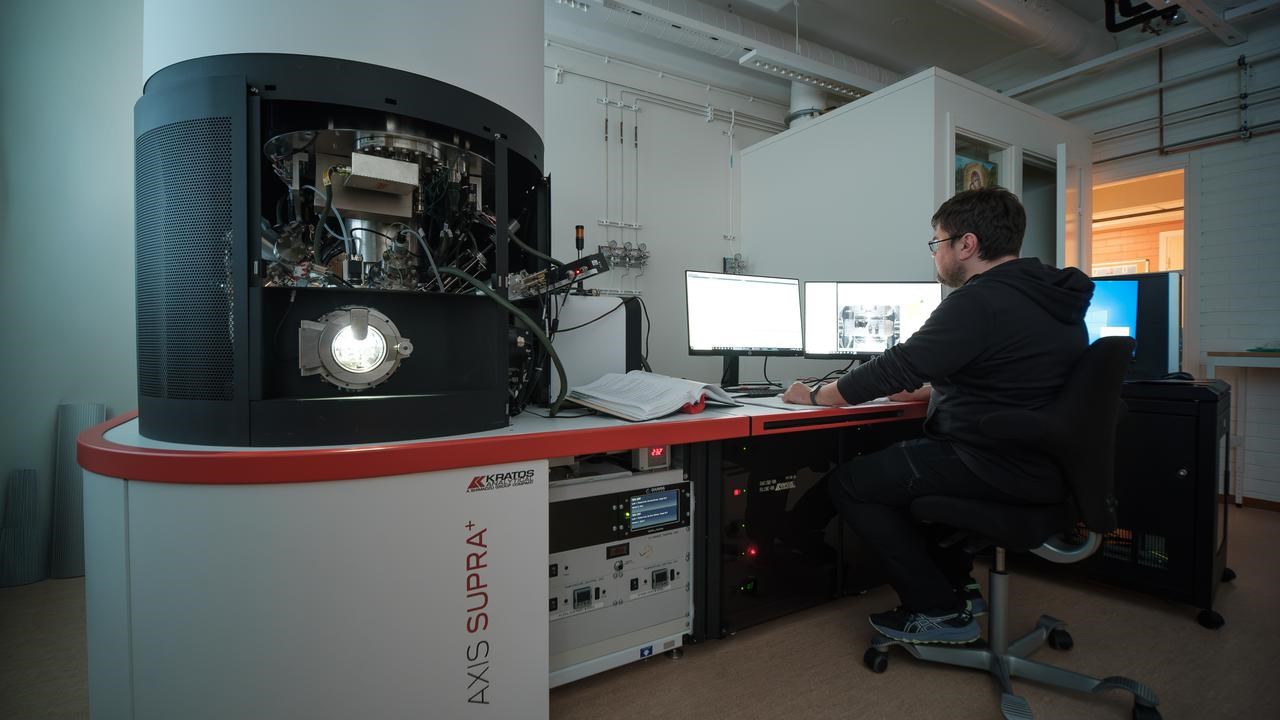
Dmitry Shevela, staff scientist at the XPS platform.
ImageSimon JönssonLars Österlunds research has led to patented technologies and contributed to the creation of spin‑off companies, including Surface Catalytix AB, which develops self‑cleaning and antimicrobial surfaces, Aqua Catalytix AB, which develops water treatment systems for destruction of persistent chemicals, SweSenSI AB, which develops silicon-based hydrogen sensors. The group has also a spin-off project RegenCura at the Umeå BioTech Incubator developing bone grafting materials based on nanoporous and surface functionalized materials. The lab maintains close collaborations with industry partners and international research groups, ensuring that our scientific discoveries can be transformed into impactful applications.
Lars Österlund also plays an important role in strengthening and expanding the field of materials chemistry at Umeå University.