
PLEO, an animatronic dinosaur toy, was studied by Ylva Fernaeus as an example of how lifelike behaviour can encourage people to attribute qualities and abilities that a technology does not necessarily possess.
Publication date: 2026-11-09
Designing beyond technology’s illusions
Recently installed as Professor of Design at Umeå Institute of Design, Ylva Fernaeus explores how design can challenge dominant visions of technological progress and help create more thoughtful alternatives. Her research brings together technology, culture, material practices and sustainability, asking not only what emerging technologies can do, but what kinds of futures they encourage us to create.
Text: Jens Persson

Ylva Fernaeus brings together technology, culture, material practices and sustainability to explore not only what emerging technologies can do, but what kinds of futures they encourage us to create.
Image:Mattias PetterssonNew technologies often arrive accompanied by compelling visions. Artificial intelligence promises autonomy. Robots appear to think and act. Photorealistic images present products that seem fully developed, even when they could not yet exist in the physical world.
But who creates these visions, and what happens when imagined technologies begin to shape what society understands as possible?
These questions are central to the research of Ylva Fernaeus, who was installed as Professor of Design at Umeå Institute of Design, Umeå University, during the university’s Annual Celebration this autumn. Her work spans industrial design, interaction design and human-computer interaction.
“I am interested in what happens between a technological vision and the reality in which it must eventually operate,” Ylva says. “That space reveals a great deal about our assumptions, our priorities and our ideas about progress.”
Looking behind technological promises
Designers have always visualised things that do not yet exist. Sketches, prototypes and visualisations allow ideas to be explored before they can be realised. They help designers test possibilities and invite others into conversations about what the future could become.
Generative AI complicates this relationship. It can quickly produce realistic images of products that appear complete, even when their technology, materials or physical behaviour remain unresolved.
“The growing realism of these images risks blurring the boundary between creative vision and deception,” Ylva says. “An image can present something as effortless and fully developed while concealing how difficult it would be to make it work.”
Her research examines what this shift means for design. If an image can make an impossible product appear convincing, designers must communicate whether it represents an early idea, a speculative proposal, a functional prototype or an existing product.
“The role of design is not simply to reproduce the world as it is,” she says. “We need to imagine alternatives, but we must also be honest about the distance between a vision and something that can exist in the world.”
Challenging the illusion of intelligence
The gap between promise and reality can also be found in technologies that appear more intelligent or socially capable than they are.
Ylva has explored these questions through research into robotics, tangible interaction and artificial intelligence. Her work shows how a product’s appearance and behaviour can encourage people to assign it qualities it does not possess.
In one study, she investigated an advanced robotic toy marketed as an alternative to a pet. Its lifelike movements suggested that it would be responsive and engaging. In practice, its limitations quickly became apparent.
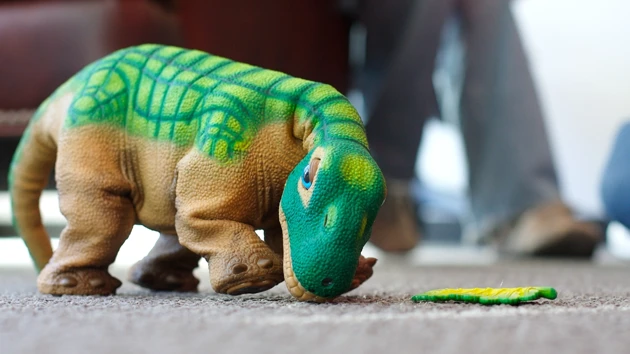
“When technology signals understanding or competence that it does not possess, we create expectations it cannot meet,” Ylva says. “Perhaps the more interesting design challenge is to communicate what a system can and cannot do.”
Another project, developed with a student in collaboration with Electrolux, examined how people might take temporary control of an autonomous vacuum cleaner. Although autonomy was presented as the defining quality, users still wanted meaningful ways to intervene.
For Ylva, this illustrates why interaction design must remain connected to specific products, behaviours and situations.
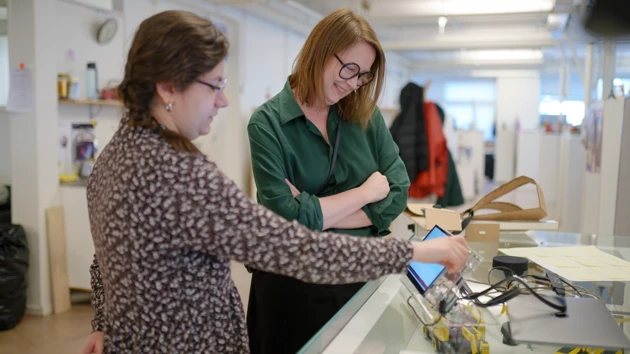
Ylva Fernaeus and Interaction Design student Ece Günesen discuss Umbra, a degree project exploring how alternative forms of interaction can help people engage with personal data beyond the logic of measurement and optimisation.
“You cannot design the interaction independently of the thing itself,” she says. “Its movement, speed, form and limitations all shape how people understand and use it.”
Reconnecting technology with materials
A recurring concern in Ylva’s research is the tendency to describe digital technologies as if they were detached from the physical world. Digital services are said to exist in “the cloud”, while artificial intelligence is often presented as invisible or almost magical.
But the cloud consists of data centres, servers, cables, mined materials, energy and human labour.
“Behind every seemingly magical AI service lies a highly material infrastructure,” Ylva says. “We may only see what happens on our screens, but beneath the surface there are always resources, people and environmental consequences.”
Making these conditions visible is essential to understanding the wider effects of technology. It also challenges ideas of progress centred on speed, automation and constant novelty.
Ylva’s research instead explores how care, repair, craftsmanship and material knowledge can support more grounded approaches to technological development. One example is her study of a 150-year-old Jacquard loom, a mechanical weaving machine that uses punched cards to control intricate patterns. The loom remains in use today, directing attention towards maintenance, craftsmanship and the knowledge accumulated around a technology over time.
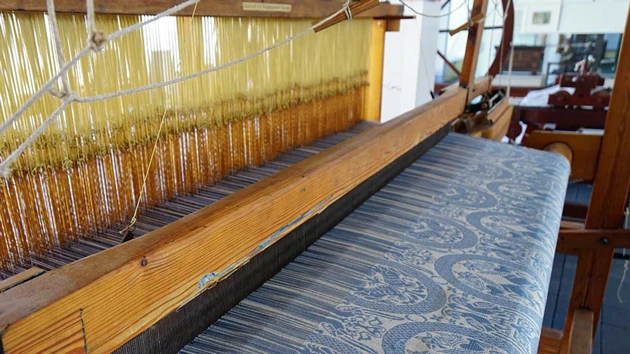
A 150-year-old Jacquard loom uses punched cards to control intricate woven patterns. For Ylva Fernaeus, technologies like this highlight the importance of material knowledge, maintenance and the practices that allow innovations to endure over time.
“There is much to learn from objects and practices that have endured,” she says. “They remind us that innovation can also be about caring for, adapting and understanding what already exists.”
Craft, experimentation and alternative futures
This perspective informs Ylva’s work as chair of the UmArts Post Industrial Making group. The group brings together researchers working across traditional craft and digital design through woodcraft, digital fabrication, recycled and living materials, coding and experimental making.
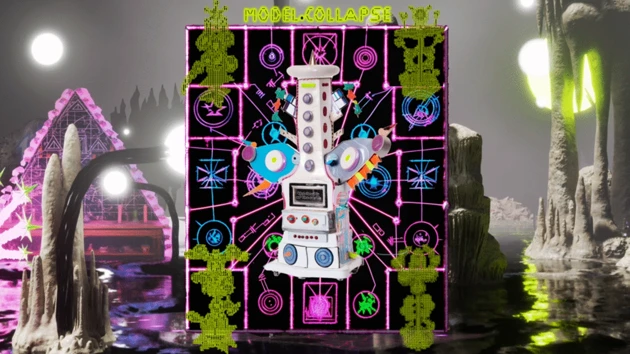
Artists Cyanne van den Houten and Ymer Marinus, creators of Model Collapse, have collaborated with researchers at UmArts through material-focused experimentation that explores alternative forms of making, expression and technological inquiry.
“I am interested in the material core of design, from the embodied aspects of programming to collaborations with craftspeople working in wood, leather, silver and textiles,” Ylva says. “Making can generate technical innovation, but it can also help us think critically about technology.”
This approach treats material practices as forms of research. By making and testing prototypes, researchers can explore how technologies relate to culture, how materials influence interaction and how alternative forms of innovation might emerge.
“A prototype does not have to offer a finished solution,” she says. “It can allow us to ask better questions, uncover hidden assumptions and understand what a technological idea would demand in practice.”
Designing technological futures responsibly
As artificial intelligence, simulations and human-like machines become more present in everyday life, design plays an important role in determining how these technologies are represented and understood.
Ylva’s research suggests that the task is not simply to make emerging technologies desirable or easy to use. Design can also expose the ideas embedded within them, question the futures they promote and create space for alternatives.
“The solution is not to stop using these tools,” she says. “It is to be clear about what is real, what is speculative and what remains unresolved. Transparency is essential if we want to create visions that can be responsibly realised.”
Ylva’s work invites us to look beyond what technology promises and consider what those promises ask us to believe. It positions design not only as a way of developing new products, but as a practice for questioning assumptions, revealing material realities and creating more sustainable technological futures.
Ultimately, her research returns to a deceptively simple question: How can technology become more honest about what it actually is?