


FEATURE When the war broke out in Ukraine, the country had to quickly adapt its capacity to care for the war-wounded and the sick. How can Sweden improve its preparedness in pre-hospital care in complex and dangerous environments, drawing on experiences from Ukraine?
The Knowledge Centre for Disaster Medicine at Umeå University (KCKM) was assigned by the National Board of Health and Welfare to contribute to a national review of medical transport services during crises and wartime. Once the report was complete, the researchers wanted to continue to explore how Ukraine had built up its civil defence and how the pre-hospital care chain – that is, the care provided outside hospitals – functions when the country is under attack.
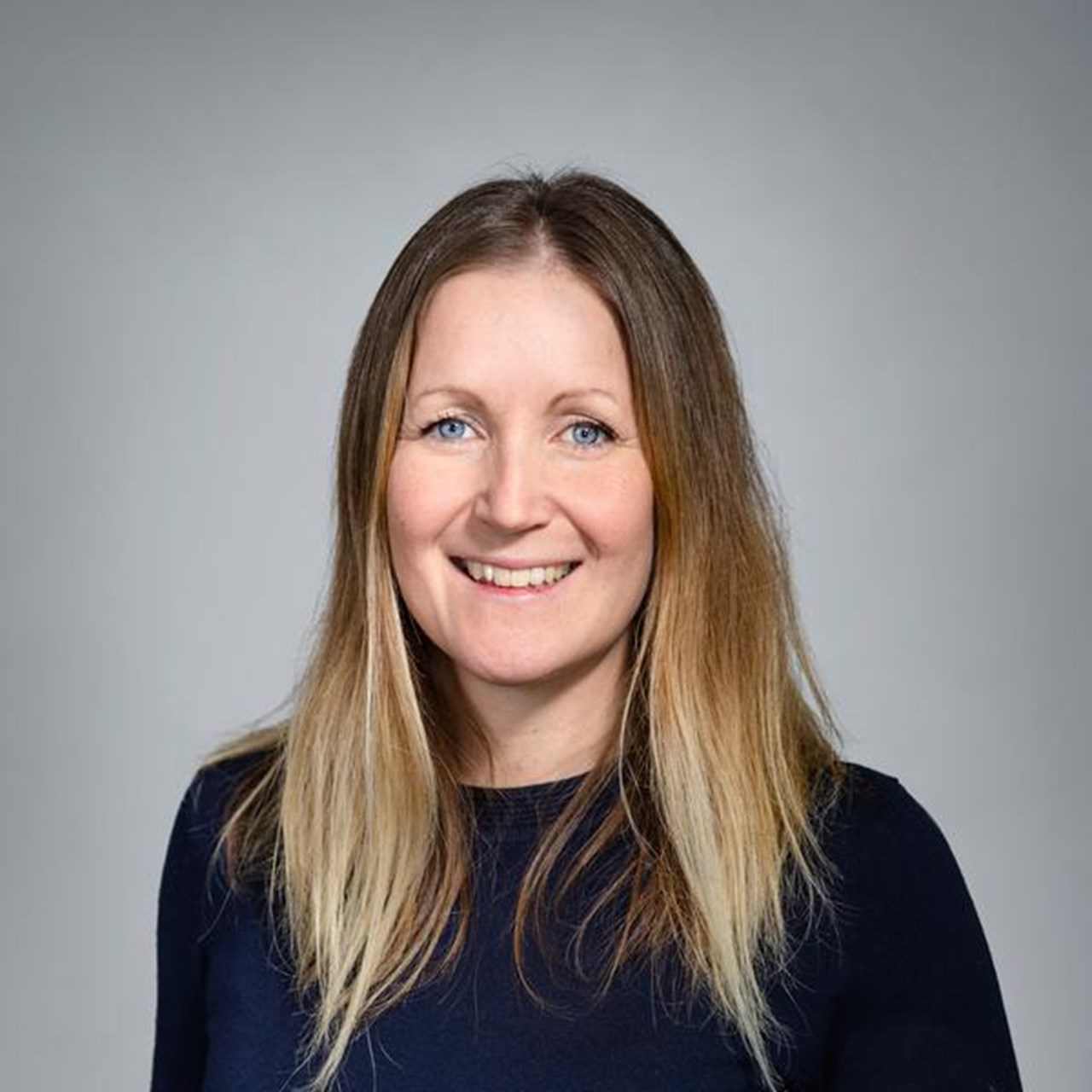
Lina Gyllencreutz, Kunskapscentrum Katastrofmedicin och universitetslektor vid Institutionen för omvårdnad.
ImageMattias PetterssonLina Gyllencreutz, docent and researcher at the Knowledge Centre for Disaster Medicine at Umeå University, went to Ukraine to investigate how Ukraine manages patient transport during wartime and what lessons we in Sweden can learn from this. The mission also involved finding out how healthcare is provided in high-risk areas near the front line, a task that requires particular attention to safety and well-considered decisions.
Through their contacts, the researchers got in touch with medical staff in Ukraine who described how they are converting buses and trains, as well as ambulances.
“In this war, you can’t send out yellow civilian ambulances because they get attacked. Medical services are targeted in war,” explains Lina Gyllencreutz.
By using buses and trains, many injured people can be evacuated, but it turned out that civilian ambulances could not reach the injured at the front without risking attack. The researchers therefore wanted to find out how the healthcare chain functions when ambulances cannot reach the front line. The question they asked was who actually provides medical care closer to the front line and in the dangerous areas. The results show that it is not primarily civilian ambulances that are deployed, but rather modified or converted vehicles. Based on the report’s findings, which indicate that a different type of vehicle is needed than those currently in civilian use, a decision was made to visit Ukraine and observe the healthcare chain in action.
“Sweden wanted to see how Ukraine has organised medical transport. In pre-hospital settings, in areas that have come under attack, it is necessary to use vehicles other than standard ambulances,” explains Lina Gyllencreutz.
The healthcare system must be scaled up for war
What the researchers want to find out is how Sweden can best prepare and ensure it is ready in the event that war comes to Sweden. How vehicles can be converted, how infrastructure can be utilised, and how the pre-hospital care chain should be adapted.
“The healthcare system must be scaled up for war. That is essentially what it comes down to,” explains Filippa Wranne, a master student and intern at the Knowledge Centre for Disaster Medicine.
Visiting Ukraine was an eye-opener. It’s a country that functions well during the day: outdoor cafés are open, trains run on time, and people live their lives. In shops, you can pay by card and make bookings online via your mobile. But at night, the air-raid sirens wail and bombs fall.
“It’s a society that functions even whilst there’s a war on. And all the time, no matter where you go, you have to keep your bag with you and know where the nearest shelter is,” says Lina Gyllencreutz.
The researchers visited a forward-deployed triage centre, one of the first points in the care chain for treating the wounded. These facilities are often located in basements or underground rooms to protect both staff and patients. As it is often not possible to transport the injured directly from the front line to a hospital — either for security reasons or due to a lack of available vehicles — these intermediate locations are necessary. Here, emergency care can be provided before onward transport is possible. The more such stops that are required, the longer it takes before the casualty receives definitive care, and the more advanced care may be needed in the meantime. But given the conditions of war, it is absolutely essential.
From the front line, the wounded are transported by volunteer medics in camouflaged vehicles to these triage centres. Once there, they are received by doctors and nurses from the civilian healthcare system, who treat them; they are then transferred to a hospital or a handover point for civilian ambulances.
Working in these resource-poor and dangerous conditions requires a different kind of expertise. The medical care provided is more akin to military medical care, or wartime medical care, which differs from the standard civilian healthcare we are accustomed to.
“The doctors we met, who have been recruited from civilian healthcare and deployed there, say that they need to relearn things. Or learn how to provide care with extremely limited resources and supplies,” explains Lina Gyllencreutz.
“Of course, gunshot wounds can occur in civilian settings too, but it’s the sheer volume of war injuries that is far greater,” Lina continues.
The aim of the report and the trip to Ukraine is to raise awareness. To gather knowledge about how Ukraine has prepared, so that we in Sweden are better equipped if we find ourselves in a similar situation. If war breaks out in Sweden, we will probably go to work as usual, even though not everything will function as normal. For example, we will also need to learn how to quickly train nurses and civilians to help out.
“You need to be aware of your own situation, prepare yourself and think things through. If something like this were to happen, who would look after my children? How do I manage this initial period so that I can actually go to work?” reflects Lina Gyllencreutz.
We need more vehicles, we need more people who can drive them, and we need the right skills in the right place
Before the war, Ukraine had a functioning civilian ambulance service, much like ours in Sweden. When the war broke out, however, it became clear that they did not have the capacity to provide care in this frontline and dangerous environment, and had to adapt to the situation. One of the findings is that the civilian healthcare system lacked the training and equipment to treat war casualties. As there are not enough ambulances to meet the increased demand for care, groups of volunteer medics have been formed, specifically focused on providing care close to the front line. Through an innovative and flexible approach, they have been able to adapt their training, equipment and vehicles for use in these high-risk environments.
The visit to Ukraine has provided the researchers with new insights, and they have identified several areas where Sweden needs to strengthen and further develop its capabilities. These include more vehicles, but also the mobilisation of voluntary organisations that can adapt quickly and act swiftly when needed.
“We need more vehicles, we need more people who can drive them, and we need the right skills in the right place. We also need people who can carry out security risk assessments in a different way to what we are used to in Sweden,” says Lina Gyllencreutz.
In Ukraine, the volunteer medics have adapted quickly. As well as being camouflaged, their vehicles have also been fitted with drone detectors and other lighting so they can drive in the dark without being seen. This is because it is mainly at night that the injured are evacuated, and they must be able to drive without being detected. They have also developed lighting that makes it possible to carry out operations at night without attracting unnecessary attention.
The trip to Ukraine is part of the total defence capabilities that Sweden now needs to upgrade. Building on the experiences gained from the visit and all the knowledge acquired, the work is now moving forward. This includes several scientific articles currently in progress, as well as an upcoming poster presentation at a conference in the US – the Special Operations Medical Association. The presentation describes how Ukraine has developed its vehicles for the evacuation of the wounded.
“It’s about how these volunteer medics have adaptively modified their vehicles and equipment in an impressive way, based on the conditions on the ground,” explains Lina Gyllencreutz.
The researchers are planning further data collection in Ukraine. This includes clinical skills, doing the right thing in the right way, and having the right level of expertise. Among other things, they want to explore in greater depth what skills are needed to treat the wounded at the front, who should look after them, and find strategies for this that work in Sweden. The knowledge and methods cannot be transferred directly – they must also be adapted to Swedish conditions.
“We want to learn even more and then try to apply it to the Swedish context. Because it’s one thing to bring that knowledge home from there. But we can’t just take that knowledge straight away and say that Sweden should do the same. The tricky part is actually adapting it to the Swedish context,” explains Lina Gyllencreutz.
At the end of last year, researchers at KCKM were informed that they, together with other universities in Sweden, had received funding from the Swedish Research Council to develop and run a research school in disaster medicine. This is important for ensuring a supply of university lecturers with expertise in disaster medicine. KCKM plans to recruit two or three PhD students over the coming years, focusing on crisis and disaster preparedness in the northern region; remote areas, mountain rescue and CBRNE issues.
“KCKM in Umeå will focus on complex, inaccessible environments, and part of that involves warfare and emergency preparedness. We are also working with Campus Totalförsvar, where we will continue to review transport issues in Upper Norrland, given the unique geography and specific conditions we have up here in the north. There, we will look at how resources for pre-hospital transport can be better utilised,” says Lina Gyllencreutz.
We are increasing civil preparedness by 40–50 students every year
Umeå University offers courses not only in the Medical Programme and the Nursing Programme, but also in International Crisis and Conflict Management (IKK). In the event of a crisis or war, it is not only the healthcare system that needs to adapt, but also the educational programmes. This is to enable people to be trained quickly in emergency casualty care and trauma management. In Ukraine, there are reports that people received a great deal of theoretical training but lacked practical training in how to treat war injuries. To practise the practical aspects, IKK includes a field week in its disaster medicine module (30 credits), during which students can practise providing care in the field. One plan is to incorporate more prolonged field care, which involves treating the injured in an inaccessible and dangerous environment whilst awaiting evacuation. This is an aspect that needs practising when the chain of care is different from what one is used to, where treatment times are longer and everything must be done with minimal resources.
“Because it is so difficult to evacuate people during wartime, we need to be able to care for them over a longer period. We may incorporate that aspect a little more into our disaster medicine course. In large-scale wars, a helicopter does not come to collect the injured, and it is not possible to evacuate the injured within the ‘golden hour’ – that crucial hour from the moment of injury to arrival on the operating theatre. For the injured, one hour is considered a time-critical threshold for survival. But as things stand at present, it is many more hours, up to days, and by then they arrive in a much worse condition, which we need to factor into our planning,” says Lina Gyllencreutz.
Students at IKK take a 30-credit (one-semester) course in disaster medicine, receiving thorough training in caring for the injured in difficult circumstances. The course is highly valued and important, not least because civilians also need more knowledge on how to look after themselves and others in the event of prolonged crises or war.
“We are increasing civil preparedness by 40–50 students every year,” says Lina Gyllencreutz.
Find out more about the Knowledge Centre for Disaster Medicine and the research it conducts on its website via the link below.
