"False"
Skip to content
printicon
Main menu hidden.
Porträttbild
Published: 2026-09-16

Pedro Sanches wants to make environmental data in the Arctic more understandable

PROFILE How can people better understand changes in the Arctic environment? And how can data about ice, forests and permafrost become something that more people can experience, interpret and reflect on? As an Arctic Six Chair, Pedro wants to bring design methods that have worked in other parts of the Nordic region into a new context and use them in working with environmental data in the Arctic. He also wants to build a collaboration between Arctic environmental research and participatory design.

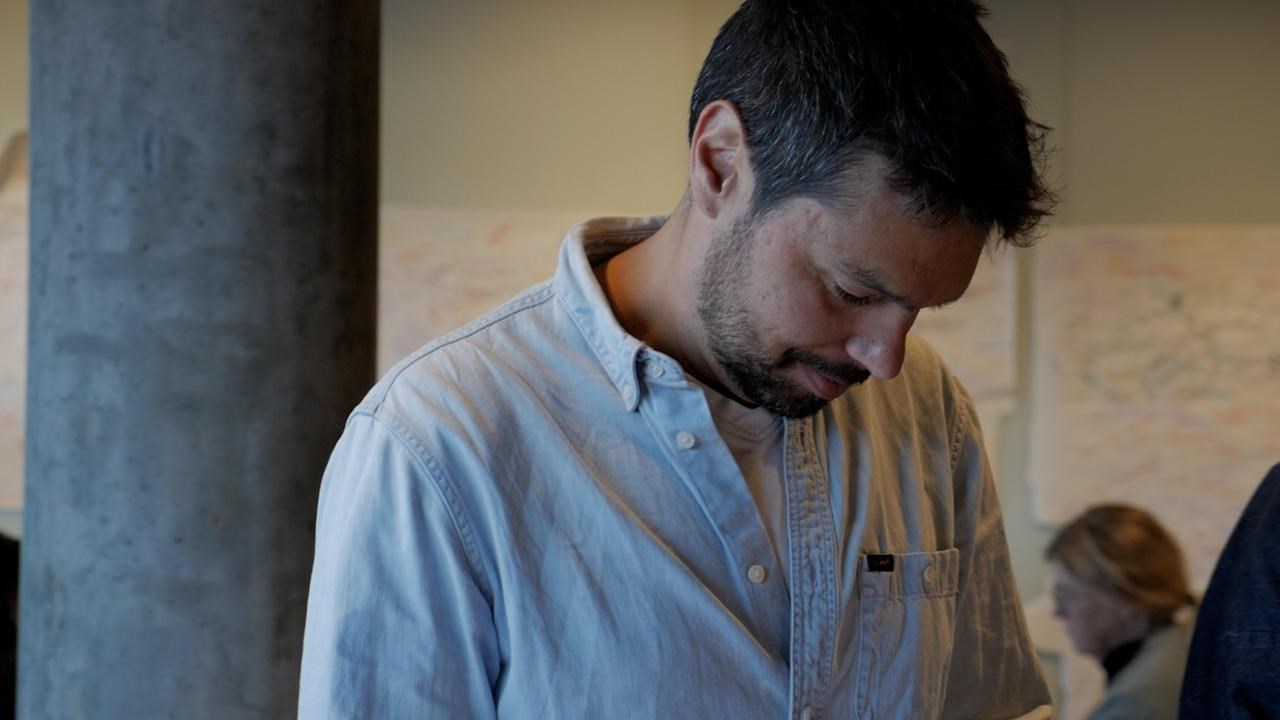
Image: Magnus Mikaelsson
Porträttbild

Design, people and data

Pedro Sanches is Associate professor at the Department of Informatics at Umeå University, working at the intersection of design, human-computer interaction and critical data studies. He is also affiliated with the Interactive Technologies Institute in Lisbon, Portugal. He has published more than fifty peer-reviewed articles and was one of the founders of the Nordic Fabulation Network, a NordForsk-funded network that brought together researchers from Sweden, Norway and Denmark.

His research focuses on how data and digital technologies can be shaped through design, including work on biodata, health and wellbeing. A recurring theme in his research is lived data: data from, for example, biosensors and measures of wellbeing that are connected to how people feel, move and understand themselves.

Environmental data in the Arctic – new ways of experiencing the environment

As an Arctic Six Chair, Sanches has the opportunity to apply his design methods to environmental data in the Arctic.

Sensor data documenting changes in, for example, ice, forests and permafrost are difficult to access for people without technical expertise. The project explores how environmental data can be designed as a shared resource, allowing communities to experience, interpret and act through data together.

Sanches wants to develop design artefacts in the form of so-called probes for different groups living in and moving through Arctic environments. The aim is to make sensor data more understandable and highlight different perspectives on the environment.

"The concrete form could be a visualisation, sound or a physical form. The type of data and the form to be developed will be determined by the research agenda and design questions that emerge during the workshop in the first year", says Pedro Sanches.

The probes could, for example, help municipalities and planners hold public conversations about climate change in ways that go beyond graphs in consultation documents. In schools, they could be used to teach about climate change in more interactive ways.

"A probe is a prototype specially designed to provoke reactions, allowing design researchers to explore how people and organisations could use it and what value it might have. The probes I intend to design will represent real sensor measurements from the Arctic environment and show how such data could be used beyond scientific research", says Pedro Sanches.

Pedro also wants to explore how sensor records confirm or diverge from what people already know about their environment.

"What are the risks of releasing certain types of environmental data publicly? Could they, for example, reveal unintended commercial opportunities or specific infrastructure vulnerabilities?" says Pedro Sanches.

A probe is a prototype specially designed to provoke reactions, allowing design researchers to explore how people and organisations could use it and what value it might have. The probes I intend to design will represent real sensor measurements from the Arctic environment and show how such data could be used beyond scientific research.

A new research collaboration

An important part of the work will be to bring together researchers from different disciplines and universities within Arctic Six. During the first year, Sanches plans to organise an inter-institutional workshop at Umeå University. Researchers in areas including environmental monitoring, geoscience, Indigenous knowledge and environmental humanities, together with representatives from northern municipalities, will identify shared values, disciplinary tensions and areas for collaboration. The aim is to build a larger research collaboration between the Arctic Six universities.

Based on the work in the workshop, Sanches wants to develop so-called relational data probes. These are design artefacts that make sensor data possible to experience and can stimulate reflection and generate knowledge in different contexts. Sanches and his collaborators want to develop one or two such data probes and work on them through recurring collaborative design processes. The work will then form the basis for a larger research application to, for example, NordForsk or Horizon Europe.

Arctic Six is an alliance of six northern universities (Umeå University, Luleå University of Technology, University of Oulu, University of Lapland in Rovaniemi, UiT The Arctic University of Norway, and Nord University in Bodø) that collaborate on research, education, and issues important to the Arctic. There are two strategic research programs within the Arctic Six: the Chairs and the Fellows program. These programs result in new interdisciplinary research networks and collaborations across the six universities. The Arctic Six program is coordinated and delivered by the Arctic Centre at Umeå University.