

"False"
Skip to content
printicon
Main menu hidden.
Published: 2025-12-18

60 Years of Arctic Research at Umeå University

NEWS When Umeå University was inaugurated on 17 August 1965 by King Gustaf VI Adolf, it was built on land that, just a decade prior, had served as winter grazing grounds for the reindeer of Rans Sameby. This intersection of Sápmi, the boreal forest, and the industrialising North—set the stage for the university’s academic future. As we celebrate our 60th anniversary in 2025, we look back on a journey that has transformed a regional teaching institution into a global leader in Arctic research.

Today, the Arctic Centre at Umeå University acts as an interdisciplinary hub for over 300 associated researchers. But the story of Arctic research here is not just one of volume; it is a story of evolution. From the early, distinct disciplines of biology and medicine to the complex, interdisciplinary systems thinking of "The Arctic Six" alliance, Umeå University has consistently defined what it means to study the North.

The following reflection is not intended to be comprehensive, but it highlights many of the significant Arctic events, research, and education activities, as well as notable achievements. Any omissions are unintentional and solely reflect the limits of the author's knowledge.

1965–1974: The Foundations

In North Sweden’s first decade, research was shaped by the region’s defining conditions: vast distances, dispersed settlements, limited access to specialist services, and a policy mandate to build capacity beyond Sweden’s established academic centres. Early medical and dental research addressed the practical challenge of delivering equitable care across sparsely populated counties. In parallel, teacher education and the humanities expanded to address professional shortages and to build the scholarly infrastructure needed to document and interpret northern society and history.

From the outset, the social sciences (including political science from 1965) made "glesbygd" (sparsely populated areas) and centre–periphery relations central analytical concerns. It examined how policy, service provision, and economic restructuring affected coastal towns, inland communities, and governance across vast distances, tracing the historical processes that shaped settlement and development. In this wider regional setting—where Umeå sits within Sápmi—the decade’s significance lay less in narrow “local studies” than in establishing durable research and training systems that could sustain the institutions, workforces, and basis of evidence northern communities relied on.

Leading this geographical inquiry was Erik Bylund (1922–2005), one of the university’s first appointed professors and the founder of its Department of Geography. Known as "The Norrland Professor," Bylund’s work bridged the gap between historical analysis and contemporary regional policy; he utilised his seminal research on the colonisation of Pite Lappmark to inform modern understandings of inland depopulation and glesbygd dynamics. His dedication to the region extended beyond the classroom, laying the groundwork for the future Centre for Regional Science (CERUM) and serving as President of the Royal Skyttean Society. He established a research tradition that viewed the North not merely as a resource frontier, but as a complex social landscape requiring specific, locally grounded scientific inquiry.

1975–1984: Broadening Horizons – Forestry and History

As the university expanded, the forestry industry’s growth into the northern interior spurred research into boreal ecology and silviculture.

However, a significant shift occurred in the humanities. Historians began to challenge the "wilderness" narrative of the North. Lennart Lundmark’s 1982 work, Uppbörd, utarmning, utveckling (Taxation, Impoverishment, Development), offered a critical socio-economic analysis of the transition from hunting to reindeer nomadism among the Sami (Lundmark, 1982). This decade marked the beginning of Umeå’s strong tradition in Sámi studies, moving beyond description to analysing colonial power structures.

In ecology, researchers such as Christer Nilsson initiated long-term studies on riparian vegetation along northern rivers, work that would later become crucial for global discussions on dam removal and river restoration (Nilsson, 1984).

1985–1994: Institutionalising the North – Climate and Culture

In 1985, the university and county council launched a pioneering counter-offensive against the region’s most deadly statistic: Västerbotten’s status as the cardiovascular mortality capital of Sweden. Starting in the small municipality of Norsjö, Stig Wall initiated the Västerbotten Intervention Programme (VIP), which replaced the traditional "wait-and-treat" model with a proactive strategy of mass screening and preventive health dialogues for individuals aged 40, 50, and 60 years old. Lars Weinehall co-developed and coordinated the Västerbotten Intervention Programme (VIP). This massive undertaking not only reversed the region’s premature mortality trends—preventing hundreds of deaths—but also created Biobanken Norr, one of the world’s most valuable population-based biobanks. By linking lifestyle data with biological samples across decades, VIP transformed the sparsely populated North into a global "gold mine" for epidemiological research, enabling groundbreaking studies on the long-term interactions between genetics, lifestyle, and diabetes.

On the cultural front, the Centre for Arctic Cultural Research was established, aggregating research on northern identities. Roger Kvist’s anthologies on Sámi history helped secure the university’s role in northern cultural heritage research (Kvist, 1992).

Sverker Sörlin earned his PhD in the history of ideas at Umeå University in 1988 with the dissertation Framtidslandet: Debatten om Norrland och naturresurserna under det industriella genombrottet (Sörlin, 1988). Here, Sverker lays out that industrialisation in Norrland took on the image of a “land of the future”, where people were expected to move to this new large-scale industrial province, business would flourish, and the riches would spread across Sweden. It was not the first time Norrland played this role, nor would it be the last. Sverker became a Professor in the History of Ideas at the Humanities faculty from 1993 to 2007.

Early warnings of climate change characterised this decade. Leif Kullman’s monitoring of the treeline in the Scandes mountains provided some of the first concrete evidence of vegetation shifts due to summer warming, particularly in the 1930s and 1940s (Kullman, 1993). His work demonstrated that the treeline (an often-cited boundary between the Boreal and Arctic regions) was not static; it was in constant motion.

Lars-Erik Edlund has served as a guardian of Northern Sweden’s linguistic identity, most notably as the editor-in-chief of the monumental four-volume Norrländsk uppslagsbok (1993–1996), which transformed the region from a perceived periphery into a documented centre of knowledge. His research mapped the "linguistic landscape" of the North, analysing how place names reveal centuries of interaction between Swedish and Sami populations. At the same time, his leadership as President of the Royal Skyttean Society further reflects the importance of the region’s academic infrastructure.

1995–2004: The Human Dimension and the Rise of Várdduo

The turn of the millennium marked a pivotal transformation in how the university engaged with Indigenous issues. In 2000, Umeå University established CeSam (Centrum för samisk forskning), which would later evolve into Várdduo – Centre for Sámi Research. Under the leadership of scholars who advocated for Indigenous methodologies, the centre began to pivot research from being on the Sámi to being conducted with and by Sámi peoples.

Central to this era was Peter Sköld, a historical demographer whose influence would come to define Umeå’s Arctic profile for decades. While his doctoral work provided crucial data on the impact of smallpox on northern populations (Sköld, 1996), Sköld’s contribution quickly transcended his own discipline. As the director of CeSam (and later the founding director of ARCUM), Sköld became the primary architect of Umeå’s "Human Dimension" in Arctic research. He positioned the university as a global hub for Arctic social sciences, later serving as president of the International Arctic Social Sciences Association (IASSA). His work tirelessly emphasised that the Arctic was a lived space—a home—rather than just a climate laboratory, a perspective that became central to the policy engagement.

Simultaneously, political science and law gained prominence. As the EU began to look North, Umeå researchers like Carina Keskitalo started to analyse how the "Arctic" was constructed politically. Her work on the vulnerability and adaptive capacity of northern communities challenged the notion that the Arctic was merely a victim of climate change, instead highlighting local resilience (Keskitalo, 2004).

In the late 1990s, the establishment of the Climate Impacts Research Centre (CIRC) in Abisko allowed researchers to move from observation to prediction.

2005–2014: A Global Arctic – Tourism and "Arctification"

The formal inauguration of the Arctic Research Centre (ARCUM) in 2012, with Peter Sköld as its first director, marked the beginning of an era of expansion. The Arctic was no longer just a research subject; it was a global brand.

In medicine, the focus shifted to the intersection of climate change and infectious diseases. Birgitta Evengård co-led pioneering interdisciplinary work on "Climate change and infectious diseases," warning of the spread of zoonotic diseases, such as tularemia, as winters warmed (Evengård et al., 2011).

From CIRC in Abisko, Jan Karlsson and his colleagues reshaped the long-standing paradigm in freshwater ecology, which posits that nutrients are the primary constraint on lake productivity. Their 2009 Nature study showed that in many small, nutrient-poor lakes, light availability rather than nutrient supply often limits ecosystem productivity, which in turn cascades up to invertebrates and fish (Karlsson et al., 2009). This work reframed our understanding of what controls energy flow in unproductive lakes, particularly in northern regions.

In 2009, interdisciplinary ambition materialised in the forests with the launch of Future Forests, a collaborative research program between Umeå University, the Swedish University of Agricultural Sciences (SLU), and Skogsforsk. Breaking the traditional silo where forestry was solely a technical pursuit, the project reimagined the northern boreal forest as a complex social-ecological system. By integrating political science, history, and sociology with silviculture, the program directly addressed the deepening conflicts in Norrland’s interior—where the drive for intensified timber production increasingly clashed with reindeer husbandry, biodiversity conservation, and recreational needs. Under the leadership of Annika Nordin at SLU and Camilla Sandström and, later, Janine Priebe, both at Umeå University, Future Forests moved beyond the deadlock of "preservation versus production," producing over 350 publications that offered evidence-based strategies for managing the forest's multifunctional landscape. This work laid the foundation for a more nuanced understanding of the "Green Transition," proving that sustainable forestry in the North requires not just new planting methods, but a fundamental renegotiation of how the forest is valued.

While Dieter Müller (1968-2025) conceptualised the Arctic as a "pleasure periphery" for global markets, examining the socioeconomic and political forces driving tourism in the region. He discusses the dual role of climate change—as a threat to local ecosystems and as a driver of "last chance tourism"—while addressing the challenges of seasonality and the conflicts between tourism growth and indigenous land use. Müller (2011a) concludes that effective governance is crucial for striking a balance between economic development and the preservation of the Arctic’s fragile environment and social fabric.

In 2014, the university’s Arctic profile deepened its focus on the "European Arctic" with the launch of the Mistra Arctic Sustainable Development program, a major interdisciplinary initiative hosted by ARCUM. Moving beyond the romanticised view of the Arctic as a remote wilderness, this program analysed the North as a complex, industrialised arena where global demand for resources clashes with local livelihoods. Under the scientific leadership of Carina Keskitalo and Peter Sköld, the program examined the friction between competing land uses—forestry, mining, tourism, and reindeer husbandry—providing critical governance strategies for a region under intense geopolitical and economic pressure. By integrating historical analysis with modern political science, the project established that sustainable development in the North is not merely an environmental challenge, but a matter of managing conflicting rights and resources in a globalised world.

2015–2024: The Geopolitical and Green Shift

The most recent completed decade has been defined by the "Green Transition," the re-militarisation of the North, and the cementing of Indigenous research sovereignty. In 2015, CeSam was formally renamed Várdduo – Centre for Sámi Research, taking its name from the Ume Sámi word for "a view with a wide horizon." Várdduo is unique in Sweden, driving research that focuses on decolonisation, language revitalisation, and Indigenous land rights in relation to diverse colonial, state, and industrial contexts.

The Mistra Arctic Sustainable Development program’s scientific legacy was cemented through three flagship outputs that collectively reframed the "European Arctic" as a complex, industrialised arena. Led by Carina Keskitalo, the primary synthesis volume challenged the global "new frontier" myth, conceptualising the region instead as the "Old North"—a landscape defined by centuries of integration rather than remoteness (Keskitalo, 2019). Complementing this, Karin Beland Lindahl and colleagues exposed how regulatory "silos" make land-use conflicts inevitable, particularly between forestry and reindeer husbandry (Beland Lindahl et al., 2018).

Simultaneously, research by Dieter Müller and Arvid Viken revealed the social friction involved in commodifying Indigenous culture for the tourism industry in a region already dominated by extractive powers (Müller & Viken, 2017). Together, these works demonstrated that sustainable development in the North is not merely an environmental challenge, but a matter of managing conflicting rights in a globalised world.

In 2017, Umeå University joined UiT, the Arctic University of Norway, Luleå University of Technology, the University of Oulu, and the University of Lapland to form the The Arctic Five university alliance, which aims to act as a regional development and innovation engine for the European Arctic. Two years later, the European Union published their first European Green Deal strategy, setting the stage for new research into green technologies and industries. More importantly, it led to a diversity of research focused on goal conflicts and justice.

Lars-Erik Edlund published Minority Language Place-Names: A Practice-Oriented Study of the Establishment of the South Sami Kraapohke in Swedish Lapland (Edlund, 2018), examining the administrative and symbolic struggle involved in officially restoring the South Sami place name Kraapohke (Dorotea), arguing that such toponyms are vital for validating Indigenous identity in a post-colonial society. The study demonstrates that the "linguistic landscape"—specifically road signs—serves not merely as a navigational tool, but as a profound arena for cultural revitalisation and political recognition.

Anna Zachrisson and co-authors challenge the dominant "ecological modernisation" discourse—the idea that economic growth and environmental protection are easily compatible (a core tenet of the Green Transition). Beland Lindahl et al. (2016) argue that this consensus often silences alternative views and deep-seated conflicts, particularly regarding natural resource management (forestry and mining) in the North.

Shifting to forestry, Janina Priebe focused on gaining a critical understanding of why environmental policy often faces gridlock despite widespread consensus on climate goals. Priebe et al. (2022) apply systems thinking to the contentious debate surrounding Swedish forestry and climate change. The authors demonstrate that while stakeholders—from industry representatives to environmentalists—agree on the urgent need for action, they predominantly focus on "shallow" leverage points while avoiding the profound, structural paradigm shifts required for genuine sustainability.

In 2024, the The Arctic Five alliance expanded to the The Arctic Six (with the full accession of Nord University), cementing a powerful Nordic research bloc. This era also saw the creation of Sweden’s first Arctic Graduate School, training a new generation of PhDs to think interdisciplinarily - across the borders of disciplines.

2025 and Beyond: The Future

As we stand in 2025, Umeå University is pioneering the use of AI and refining carbon budget models for the boreal and Arctic regions. The European Polar Board (EPB) and the European Polar Coordination Office (EPCO) relocated from the Netherlands to the heart of the campus, adjacent to the Arctic Centre. The EPB and EPCO coordinate Arctic and Antarctic research across Europe, bringing new opportunities for collaboration.

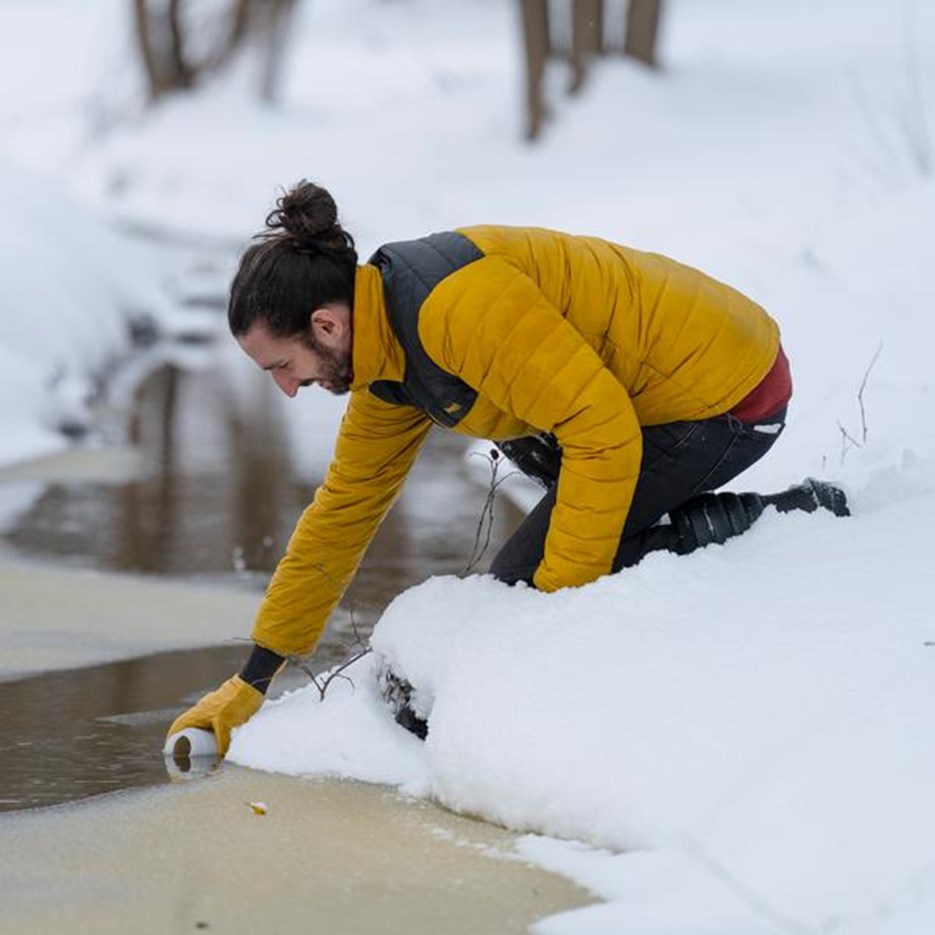
Continuing CIRC's work to better understand the impacts of climate on Arctic ecosystems. Gerard Rocher-Ros initiated his European Research Council Starting Grant project, ARIMETH (A mechanistic understanding of Arctic River methane emissions). The project aims to uncover the mechanisms driving methane emissions from Arctic rivers, a significant but currently underestimated source of greenhouse gases. The research is designed to close the knowledge gap on how these emissions respond to climate change by focusing on the complex interplay between biogeochemical processes and hydrological changes.

The journey from biology to health, Indigenous rights, and global geopolitics continues. We are no longer just studying the Arctic; we are shaping its future.

In Memoriam: Dieter K. Müller (1968–2025)

The Arctic research community lost one of its ambassadors with the passing of Professor Dieter K. Müller in November 2025. A former Deputy Vice-Chancellor for Research at Umeå University and a leader in the field of Human Geography, Dieter was more than a researcher; he was an architect of the modern academic North.

Born in Germany, Dieter made northern Sweden his home and his laboratory. His career began with a focus on second-home tourism, but his vision quickly expanded to encompass the entire phenomenon of mobility in the Arctic. He was among the first to rigorously define and analyse "Arctic Tourism" not just as an economic activity, but as a mechanism that reshapes landscapes and identities. His 2011 book chapter, "Tourism Development in the Arctic," (Müller 2011a) remains a significant contribution, challenging us to view tourism as a driver of regional development rather than a mere byproduct. By viewing tourism as a driver, Müller reveals the political trade-offs involved. If tourism were just a "product," the only question would be "how do we sell more?" By viewing it as a "driver of development," the question becomes "who benefits from this change, and whose land use is displaced?"

Dieter’s influence extended far beyond his own publications. He was instrumental in the founding and success of the Arctic Centre (formerly ARCUM) and Arctic Graduate School, championing the idea that Arctic research must be interdisciplinary. He understood that to solve the problems of the North, a sociologist needed to talk to a climatologist, and a tourism researcher needed to understand indigenous rights.

Perhaps his most enduring legacy is the Arctic Six (formerly Arctic Five) alliance. Dieter was a driving force behind this coalition of Nordic universities, believing that the institutions of the European Arctic were stronger together than apart. He served as an advocate for this collaboration, creating the "Arctic Six Chairs and Fellows" program, a demonstration of transnational research excellence.

As Chair of the UArctic Thematic Network on Northern Tourism, he mentored countless early-career researchers, always generous with his time. He famously argued that the Arctic was not a remote museum to be preserved in amber, but a living, working home for many—a perspective that grounded his research in empathy and reality.


Umeå University, and the circumpolar world, is poorer without him. However, as the next generation of Arctic scholars defends their theses, Dieter’s blueprint

Selected influential publications

1975–1984

Lundmark, L. (1982). Uppbörd, utarmning, utveckling: det samiska fångstsamhällets övergång till rennomadism i Lule lappmark. Arkiv för studier i arbetarrörelsens historia Nr 14.

Nilsson, C. (1984). The effect of stream regulation on riparian vegetation. In Regulated Rivers (pp. 93-106). Springer.

1985–1994

Dynesius, M., & Nilsson, C. (1994). Fragmentation and flow regulation of river systems in the northern third of the world. Science, 266(5186), 753–762. (a landmark paper in global river ecology).

Kullman, L. (1991). Structural change in a subalpine birch woodland in north Sweden during the past century. Journal of Biogeography, 18, 53–62.

Kullman, L. (1993). Tree limit dynamics of Betula pubescens ssp. tortuosa in relation to climate variability in the Scandes of Sweden. Journal of Vegetation Science, 4(6), 761-772.

Kvist, R. (Ed.). (1992). Readings in Saami History, Culture and Language III. Miscellaneous Publications No. 14. Centre for Arctic Cultural Research, Umeå University.

Sörlin, S. (1988). Framtidslandet: debatten om Norrland och naturresurserna under det industriella genombrottet. Carlsson, Stockholm.

1995–2004

Keskitalo, E. C. H. (2004). Negotiating the Arctic: The Construction of an International Region. Routledge. (Highly cited in Arctic political science).

Müller, D. K. (1999). German second home owners in the Swedish countryside. ETOUR (European Tourism Research Institute). (Doctoral Thesis and an early influential work on northern tourism mobility).

Nilsson, C., & Berggren, K. (2000). Alterations of riparian ecosystems caused by river regulation. BioScience, 50(9), 783–792.

Sköld, P. (1996). The Two Faces of Smallpox: A Disease and its Prevention in Eighteenth- and Nineteenth-Century Sweden (Report No. 12). Demographic Data Base, Umeå University.

2005–2014

Parkinson, A. J., Evengård, B., Semenza, J. C., Ogden, N., Børresen, M. L., Berner, J., Brubaker, M., Mulvad, G., ... & Revich, B. (2014). Climate change and infectious diseases in the Arctic: establishment of a circumpolar working group. International Journal of Circumpolar Health, 73(1), 25163.

Karlsson, J., P. Byström, J. Ask, P. Ask, L. Persson, and M. Jansson. (2009). Light limitation of nutrient-poor lake ecosystems. Nature 460:506–509.

Keskitalo, E. C. H. (2008). Climate Change and Globalization in the Arctic: An Integrated Approach to Vulnerability Assessment. Earthscan.

Müller, D. K. (2011a). Tourism development in the Arctic: Some socioeconomic and political insights. In P. T. Maher, E. J. Stewart, & M. Lück (Eds.), Polar tourism: Human, environmental and governance dimensions (pp. 64–80). Cognizant Communication Corporation.

Müller, D. K. (2011b). Tourism development in Europe’s “Last Wilderness”: An assessment of nature-based tourism in Swedish Lapland. In A. A. Grenier & D. K. Müller (Eds.), Polar Tourism: A Tool for Regional Development (pp. 129–153). Presses de l’Université du Québec.

Nilsson, M., et al. (2011). Facing the limit of resilience: perceptions of climate change among reindeer herding Sami in Sweden. Global Health Action, 4(1), 8417.

2015–2024

Beland Lindahl, K., S. Baker, L. Rist, and A. Zachrisson. (2016). Theorising pathways to sustainability. International Journal of Sustainable Development & World Ecology 23:399–411.

Beland Lindahl, K., Stjernström, O., Pettersson, Ö., & Elbakidze, M. (2018). The "High North" or the "Old North": Perspectives on the Planning of Natural Resources in Northern Sweden. Arctic Review on Law and Politics, 9, 166–187.

Edlund, L.-E. (2018). Minority language place-names: A practice-oriented study of the establishment of the South Sami Kraapohke in Swedish Lapland. Names: A Journal of Onomastics, 66(3), 156–165.

Keskitalo, E. C. H. (Ed.). (2019). The Politics of Arctic Resources: Change and Continuity in the "Old North" of Northern Europe. Routledge.

Marjavaara, R., & Nilsson, R. O. (2022). The Arctification of northern tourism: a longitudinal geographical analysis of firm names in Sweden. Polar Geography, 45(2), 119-136.

Müller, D. K., & Viken, A. (2017). Tourism and Indigenous People in the Arctic. In A. Viken & D. K. Müller (Eds.), Tourism and Indigeneity in the Arctic (pp. 3–15). Channel View Publications.

Össbo, Å. (2023). Back to Square One. Green Sacrifice Zones in Sápmi and Swedish Policy Responses to Energy Emergencies. Arctic Review on Law and Politics 14:112–134.

2025–Present

Müller, D. K. (2025). Polar tourism and the changing geographies of the Arctic and the Antarctic regions. Tourism Geographies, 27(3–4), 872–880.