
NEWS During the 2025–2026 academic year, UPL offered a workshop series on course and programme design, bringing together participants from all four faculties and Student Services.
Through six workshops, participants explored questions that many higher education programmes face today: how education can evolve in response to societal change, how student learning can be strengthened, and how courses and programmes can be designed to create coherent and sustainable educational experiences.
One of the perspectives explored was Curriculum Agility, which focuses on how educational programmes can remain flexible and responsive to changing conditions. Against a backdrop of technological developments, generative AI, changing student populations and economic challenges, participants reflected on how education can evolve while remaining aligned with university quality systems.
The workshops encouraged participants to identify and prioritise the changes most relevant to their own educational contexts and to consider how programmes can adapt without losing coherence or quality.
Several workshops focused on Learning Experience Design and how educational design influences students’ opportunities to learn and thrive. Participants worked with concepts such as intrinsic motivation, agency, recovery and well-being, exploring how course and programme design can support meaningful learning experiences.
A recurring feature of the workshop series was the combination of new perspectives and practical development work connected to participants’ own courses and programmes.
Eva Tengman, Director of Studies and Senior Lecturer in Physiotherapy, participated in the workshop series and highlights the value of viewing education through the students’ eyes.
“The Empathic Course Design workshop provided valuable perspectives by placing the student at the centre and reflecting on course design from the standpoint of different student circumstances.” She also emphasises the broader programme perspective:
“In the Learning Experience Design workshop, the programme is analysed from a student and learning perspective. Many different learning and pedagogical perspectives are discussed.”
Another recurring theme was integrated programme design and how courses and programmes can be connected more intentionally. Participants explored questions related to progression, alignment between courses, and the planning of assessment and examination to support student learning and study progression throughout an entire programme.
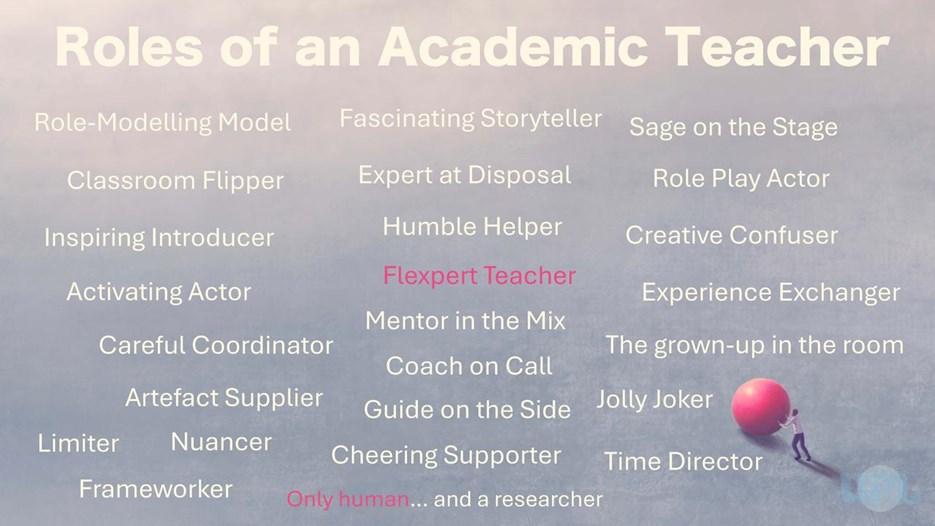
The series also included workshops on the Flexpert Teacher perspective. Participants discussed the importance of clear communication, the relationship between parallel courses, and the many roles teachers take on in higher education, including subject expert, coach and facilitator.
A central idea was that teachers need to move flexibly between different roles depending on the needs of their students and learning context. Participants also reflected on how their own values, beliefs and assumptions about good education influence the choices they make in their teaching through the exploration of different Curriculum Perspectives.
Although the workshop series has now concluded, the questions at its core remain highly relevant. How can courses and programmes be designed to remain coherent and sustainable over time? How can the student perspective be used as a resource in educational development? And how can education continue to evolve in a changing world?
Departments and programmes interested in exploring these questions further are welcome to contact UPL. The workshops can be offered as tailored professional development activities adapted to local needs, providing opportunities for continued dialogue, collaborative exploration and exchange of experiences.