

NEWS Three researchers at the Faculty of Science and Technology, Nicolò Maccaferri, Aleksandra Foltynowicz and Katarina Wulff, received funding for doctoral students projects through the EU programme Marie Skłodowska-Curie Actions Doctoral Network. In all cases, the doctoral projects are part of larger programmes in which researchers from several European countries collaborate in consortia.
Light is at the heart of modern life. It carries data through the internet, enables high-speed communication, powers advanced sensors, and plays a growing role in computing and artificial intelligence. Yet today’s photonic technologies are reaching their limits: they are often static, slow to adapt, and increasingly energy-hungry.
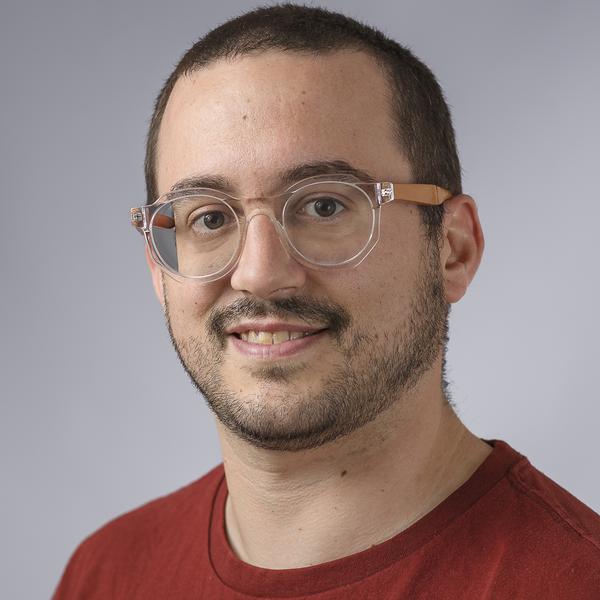
Nicolò Maccaferri.
ImageHans KarlssonTo overcome these barriers, a new European doctoral network in photonics, SPARK — Spatiotemporal photonic technologies — has been awarded 4.5 million euros under the Marie Skłodowska-Curie Actions Doctoral Networks programme to transform how light is generated, shaped, and manipulated.
Running for 48 months, the project will train 15 doctoral candidates through a coordinated research and doctoral education program focused on controlling light in both space and time.
Two of these will be educated at Umeå University, in associate professor Nicolò Maccaferri’s research group at the Department of Physics. The network brings together researchers at universities in The Netherlands, Sweden, Portugal, Belgium, Spain and the United Kingdom.
Read more about the doctoral programme in photonics
Professor Aleksandra Foltynowicz, also at the Department of Physics, is a part of NICEST – Network for Integration of Comb Experimental Spectroscopic Techniques. This network consists of researchers in France, Sweden, United Kingdom, Poland, Austria, Germany and Italy.
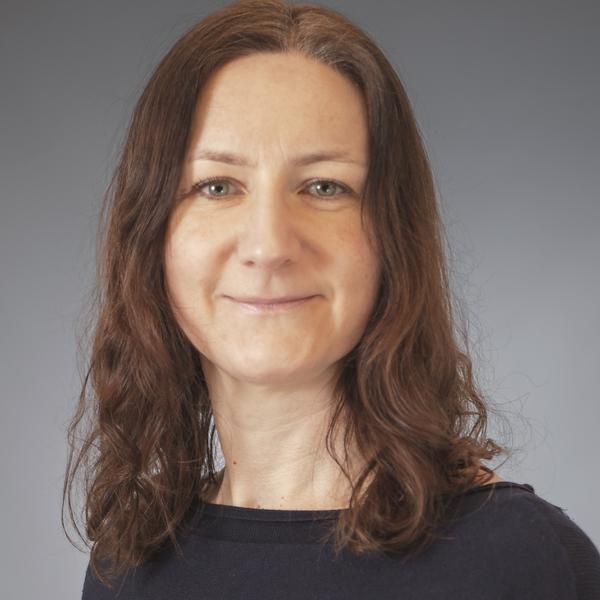
Aleksandra Foltynowicz.
ImageHans KarlssonEleven doctoral projects have received funding, four of them with a direct connection to Umeå university. Aleksandra Foltynowicz will also lead one of the work packages and coordinate one of the consortium conferences and training schools.
NICEST aims at developing and implementing broadband, high-resolution, fast, and highly sensitive absorption spectrometers based on optical frequency combs, which will enable transformative advances in astrochemistry and astrophysics, industrial decarbonization, climate science, and pollution mitigation. The consortium unites complementary expertise from laser physics, precision spectroscopy, combustion and plasma science, and gas-phase kinetics.
Data Science and Genomics Training for Chronobiology in Mental Health (DataGenChrono) is a four million Euro project to advance the understanding of the genetic foundations of sleep and circadian biology in mental health using large population databases and experimental model systems for which it connects world-class experts in human genomics, data science, sleep, chronobiology, artificial intelligence, strategic science communication and career development.
Katharina Wulff, associate professor at the Department of Molecular Biology, is one among twelve international partners from eight countries, Austria, Canada, France, Ireland, Italy, Norway, Sweden and the United Kingdom.
The DataGenChrono network will train eleven doctoral students, one assigned to Umeå University. The doctoral project in Umeå focuses on children’s sleep, genetics and behaviour. The project will explore how light exposure during pregnancy and the first 1 000 days of life influence neurodevelopment. The doctoral candidates will spend time in partner labs and form a collaborative cohort of researchers who will contribute to discovering biological foundations of mental health thereby addressing major public health challenges in Europe and worldwide.
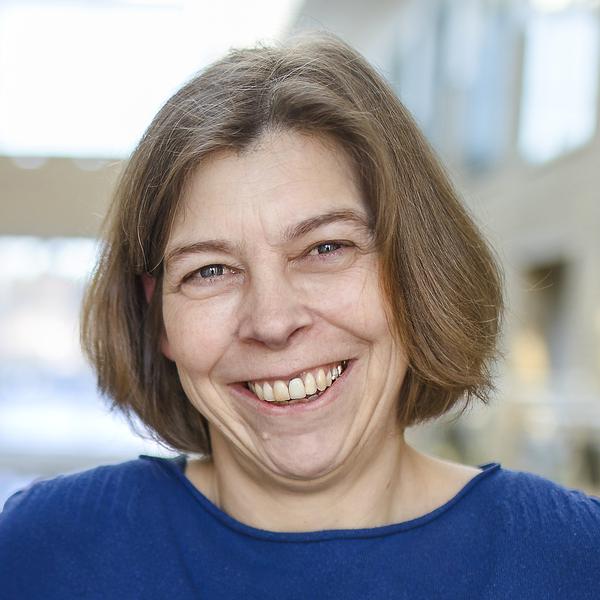
Katharina Wulff.
ImageMattias PetterssonRead more about the doctoral programme in DataGenChrono
About MSCA Doctoral Networks
MSCA Doctoral Networks is part of the EU framework programme for research and innovation. The 2025 call will support a total of 141 doctoral programmes with 617.18 million euros and contribute to the training and skills development of around 2,115 doctoral candidates.