

"False"
Skip to content
printicon
Main menu hidden.
Published: 2026-02-11

Tropical shrimp and fish could be grown sustainably in Umeå

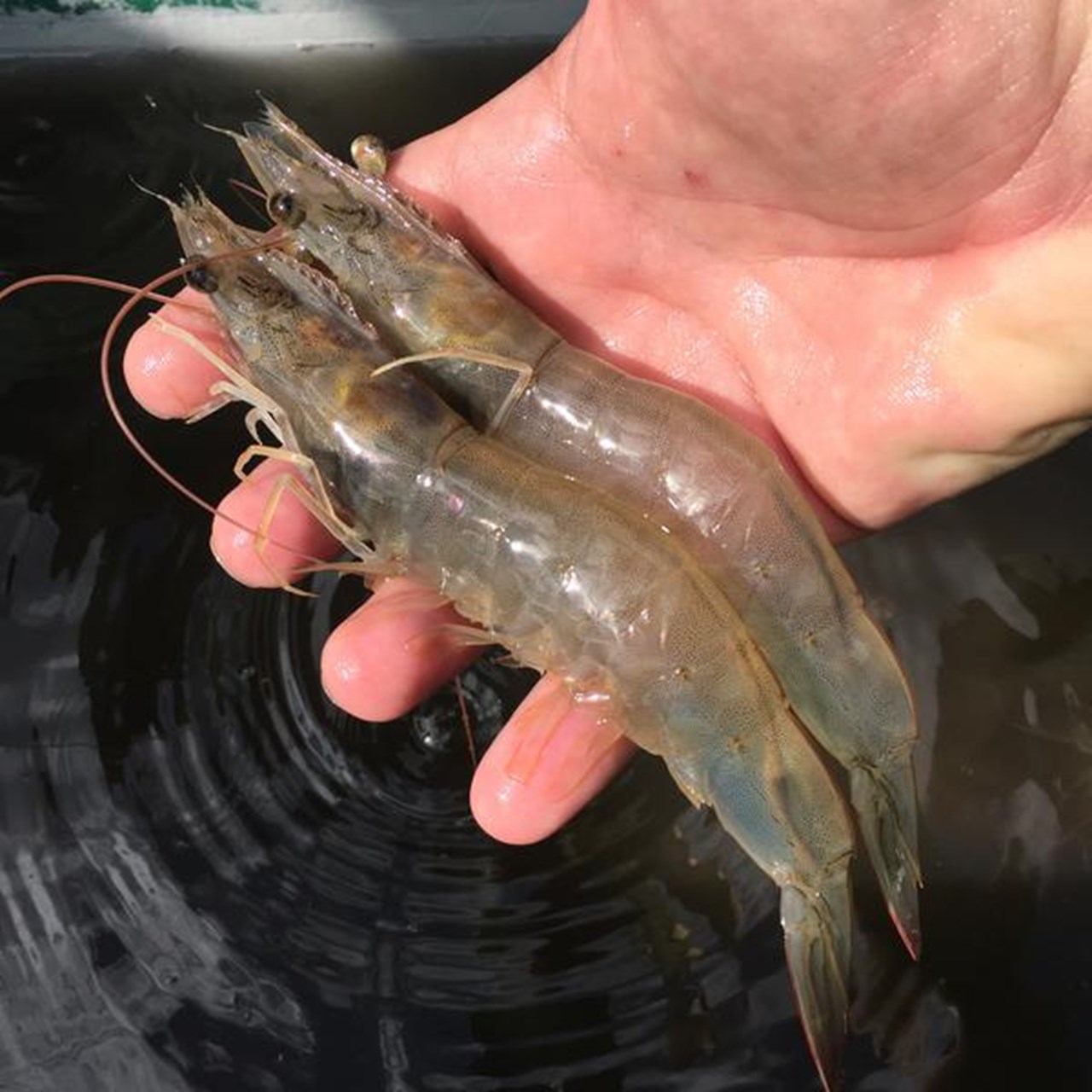
NEWS Soon it may be possible to farm tropical shrimp and fish in Umeå. With support from two EU projects, researcher Olivier Keech will develop a circular farming system with a low carbon footprint that utilises surplus heat from Umeå Energi's combined heat and power plant.

Producing shrimp and fish locally in Umeå is significantly more climate-smart than importing them from the other side of the world. If the farming system is also heated by surplus energy – then the climate benefit will be even greater.

Umeå University has long supported research that contributes to sustainable societal development and the green transition. Soon, the first steps will be taken towards making Umeå – and eventually perhaps the entire region – self-sufficient in shrimp and fish. The project, which recently received funding from the EU's research and innovation programme Horizon Europe, is a collaboration between Umeå University, Umeå Municipality, Umeå Energy and RISE.

But how is it possible to farm species that normally live in Southeast Asia and Latin America, in northern Sweden?

“It's not that crazy if you think about it. After all, anyone can grow vegetables in the winter if they do so indoors. Our normal room temperature is close to that of a tropical climate,” says Olivier Keech, researcher in cell metabolism and sustainable food production at Umeå Plant Science Centre at Umeå University.

Multitrophic farming enables efficient nutrient cycle

The idea is based on something called multitrophic farming. It is a way of growing several species at different levels of the food chain together. The nutrients circulate in a cycle, where the residual products from one species become resources for another. Like a natural ecosystem – but optimised to be as productive and resource-efficient as possible.

Olivier Keech tested it for the first time about ten years ago together with his students. In a one cubic meter system, they grew everything from fish to carrots and parsley. Since then, he has continued to develop the idea.

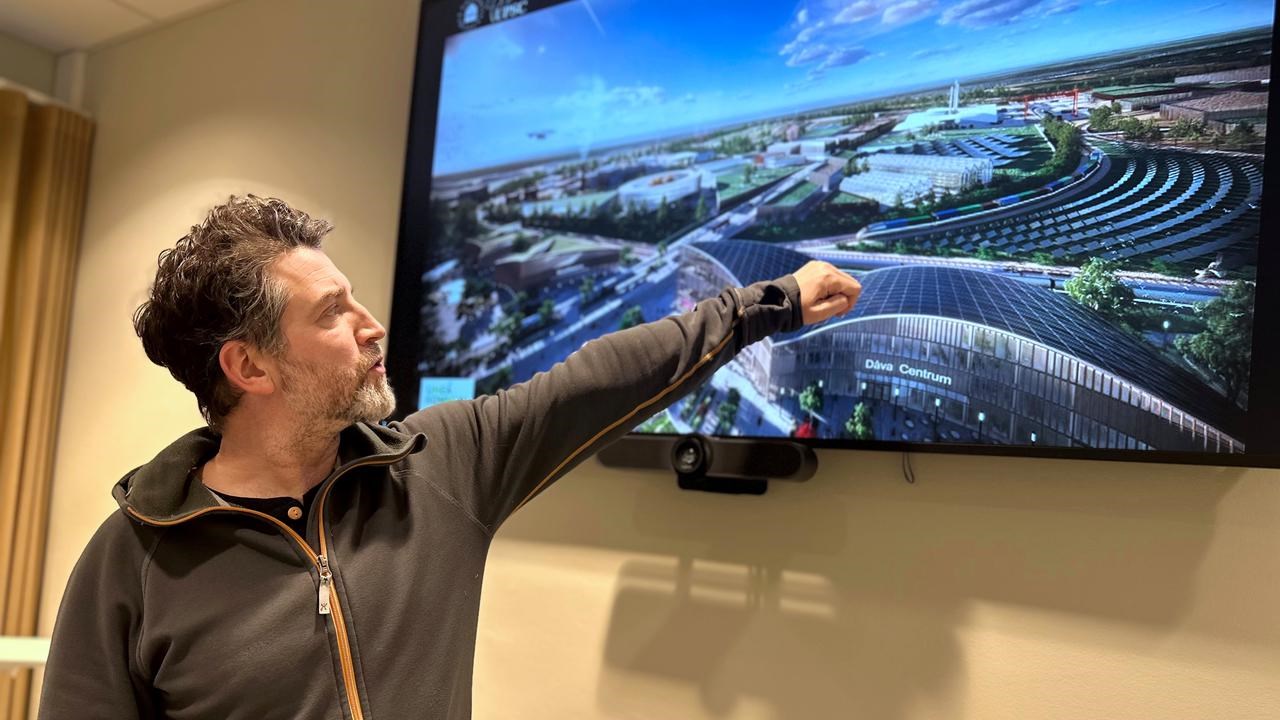
The planned shrimp and fish farm at Dåva CHP plant uses the same principle. It will be a circular aquaculture system with several basins in succession where water and nutrients move in one direction. One basin contains shrimp or fish. Their feces are taken care of in the next step by various microorganisms that in turn convert it into new nutrients.

Multitropical farming requires a complex and carefully balanced mix of different organisms. In the project, Olivier Keech uses modelling, in collaboration with ecologists and mathematicians at Umeå University, to find out how the different animals and plants interact with each other in the system and to optimise the flow.

“This requires large amounts of data and knowledge. There are biological, physical and economic layers that must work together and in symbiosis with the combined heat and power plant,” says Olivier Keech, who at the same time as this project also received funding for a separate basic research project on multitrophic farming.

He has already spent many years developing the farming method, which he believes has great potential. There is today a small pilot plant in Västervik. Through this project, it will be possible to scale up and build the next generation facility in Umeå.

An important step in Umeå's green transition

The first step, which will start as early as spring 2026, is small-scale experiments at Umeå Marine Sciences Centre. The hope is to then be able to build a larger plant integrated in Umeå Energi's CHP plant within a year.

Will Umeå residents be able to buy and eat shrimp from this facility?

“Eventually, yes. But the time frame is a little unclear. It depends, among other things, on permits, and we want to make sure we do this in a good way that works in the long run and that is profitable, or at least economically viable,” says Olivier Keech.

This happening in Umeå is no coincidence. According to Olivier Keech, Umeå is a very dynamic municipality with a strong desire to develop sustainable solutions for the future and to take risks.

“This is an important step in Umeå's green transition and shows that our work with circular solutions is at a high international level. The initiative strengthens our self-sufficiency, increases resilience, and reduces climate emissions by replacing imported food with local production,” says Hans Lindberg, Chair of the Municipal Executive Committee.

The aim: a carbon-neutral food industry

Umeå University is also forward-looking and highlights sustainable food production as one of its priority research areas.

“I have a lot of support from the university, the faculty and my department to engage not only in basic research but also in applied research that explores how the university and the city of Umeå can help each other develop,” says Olivier Keech.

The long-term goal of the project is to make the food industry carbon neutral by taking advantage of surplus energy and biological waste. After the experiments with shrimp and fish, the next step may be to grow mushrooms or vegetables, for example. Olivier Keech hopes that the project will have a ripple effect in other parts of Sweden and the world.

“What excites me the most with this project is the win for everybody. That we can design our cities and our systems to produce food in a better way. Everyone I talk to about the project is motivated. This is a mini-revolution when it comes to food,” says Olivier Keech.

About the two EU-funded projects

Integrating decarbonization and circularity actions in industrial sites to achieve climate‑neutral and sustainable cities

A project exploring how industry and cities can become more circular and climate‑smart, for example by making use of surplus heat.

---

Diversifying aquaculture for the future: inclusion of low‑trophic species for sustainable, innovative, healthy and circular food systems

A project focusing on more sustainable aquaculture, using resource‑efficient species in circular production systems.

Contact

Olivier Keech
Associate professor
E-mail
Email