

The Department of Chemistry at Umeå University is collaborating with Toyota Motor Europe on a research project addressing one of the most important challenges of our time: sustainable recycling of lithium ion batteries. The project is carried out within the Industrial Doctoral School and combines academic expertise with the industry’s need for practical and scalable solutions.
Doctoral student Xiaojing Xu is working on developing a method for precise and energy‑efficient separation of battery components, a technique that can be used for all types of ion batteries, regardless of charge level or chemical composition. The proposed process avoids energy‑intensive pulverization and minimizes the need for solvents, making it particularly attractive from both an economic and environmental perspective.
By combining materials that can be directly recycled with water‑based recovery steps, a closed circular process is created, in which even the treated water is returned to the separation stage.
“It is exciting to work directly with real spent electric vehicle batteries and connect lab research to real‑world challenges.” – Xiaojing Xu
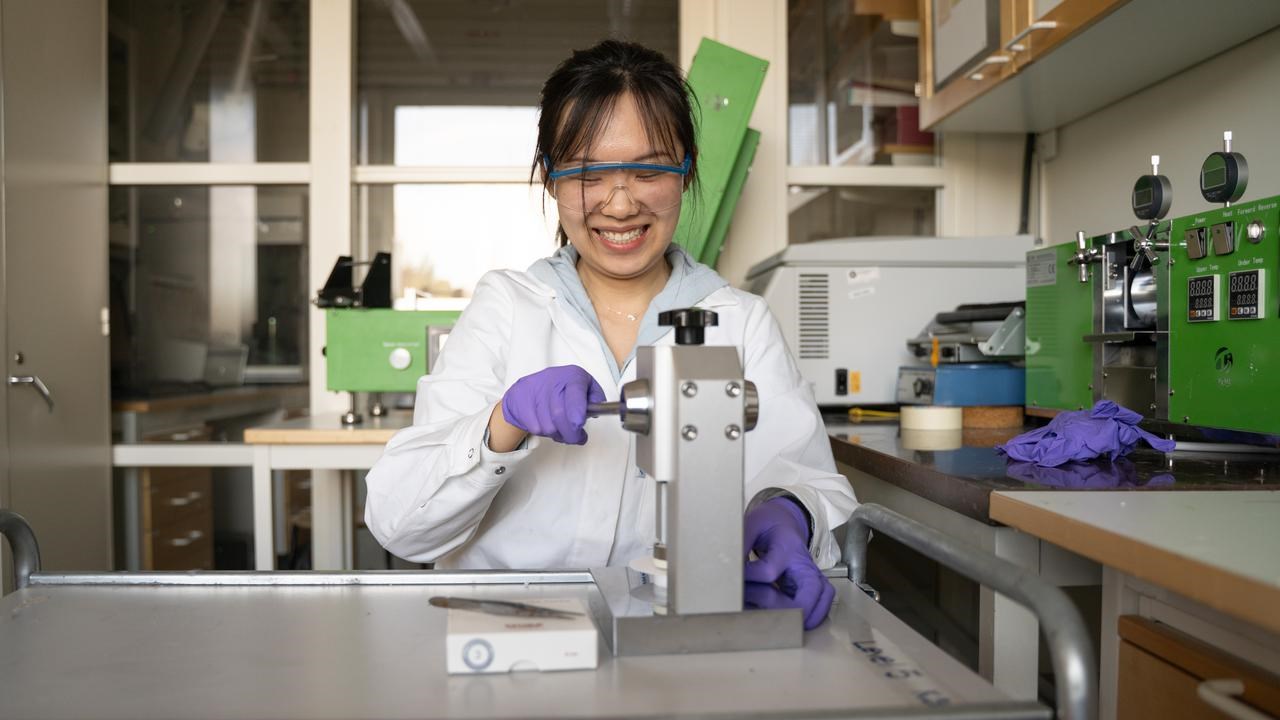
One of the strengths of the collaboration with Toyota Motor Europe, is the opportunity to bring together two different research cultures, academic and industrial. Through regular meetings, Xiaojing receives feedback from experienced industrial researchers, and Toyota Motor Europe also provides access to batteries, materials, and industry knowledge.
The collaboration offers valuable insights into practical challenges in large‑scale battery recycling, while the university contributes new perspectives and method development.
“Through the collaboration, I can see how fundamental research becomes meaningful in an industrial context.” – Xiaojing Xu
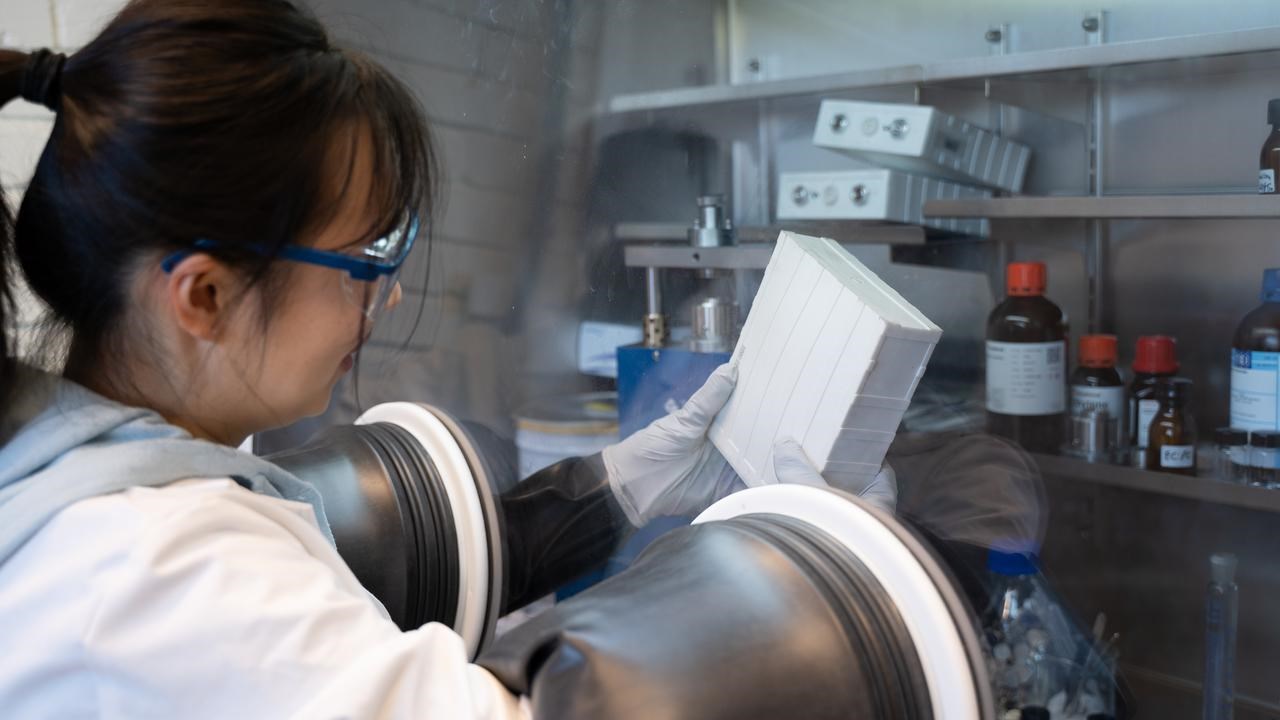
Toyota Motor Europe, in turn, gains access to the university’s extensive expertise in chemistry and materials science. The Department of Chemistry offers advanced analytical techniques and research environments that make it possible to test and validate new methods for recycling battery components.
The close connection to academia creates an environment where innovation can happen quickly and with high scientific quality. The collaboration enables exploration of new technologies and materials in ways that can be difficult within the more strictly regulated development processes of industry.
"At Toyota Motor Europe, collaboration with leading European partners is essential to address Europe’s unique challenges, and our work with Umeå University reflects that approach in battery recycling innovation.” – Mehak Sohail, Xiaojings supervisor at Toyota Motor Europe
The Department of Chemistry provides a broad range of molecular and analytical platforms—an infrastructure central to Xiaojing’s project, where advanced methods are needed to:
• characterize the chemical state of the electrodes
• detect trace metals and dissolved components
• analyze changes in binders
• verify the functional quality of recycled materials
This combination of experimental methods, water‑chemistry analyses, and material characterization makes the department an ideal partner for industry‑driven projects requiring high scientific precision.
The collaboration between the Department of Chemistry and Toyota Motor Europe shows how academia and industry can jointly accelerate the development of sustainable technological solutions. For the university, the projects provide relevant research questions and direct contact with industrial needs, while the collaborator gains access to advanced analytical capabilities and method development that can strengthen future production processes.
"The project explores a lower CO₂, water based direct recycling process in Europe, with the objective of improving technical understanding of potential emission impacts in end of life and recycling stages. The outcomes are intended to support ongoing research activities related to lifecycle environmental performance." – Mehak Sohail, Xiaojings supervisor at Toyota Motor Europe
Through visits to Toyota Motor Europe’s research environments, Xiaojing gains first‑hand insights into scaling challenges, safety considerations, and quality requirements within battery recycling, factors that are rarely visible in purely lab‑based studies. This helps optimize the technical feasibility of the method.
Together, the partners strengthen the knowledge base surrounding battery recycling and contribute to the development of technology that may have significant impact on future energy systems.