

The Department of Chemistry offers a wide range of opportunities for collaboration with schools, public authorities, and industry—locally and internationally. Whether you are looking to solve a specific challenge, develop new knowledge, or build long-term strategic partnerships, we provide access to leading expertise, advanced instrumentation, and flexible collaboration formats tailored to your needs.
Our collaborations span everything from targeted research commissions to large-scale joint projects addressing complex societal and industrial challenges. Many partnerships result in tangible outcomes such as new technologies, innovative processes, and even spin-off companies. We also work closely with industry through co-financed research initiatives, including industrial PhD projects and the Umeå University Industrial Doctoral School—enabling direct knowledge transfer and long-term competence building.
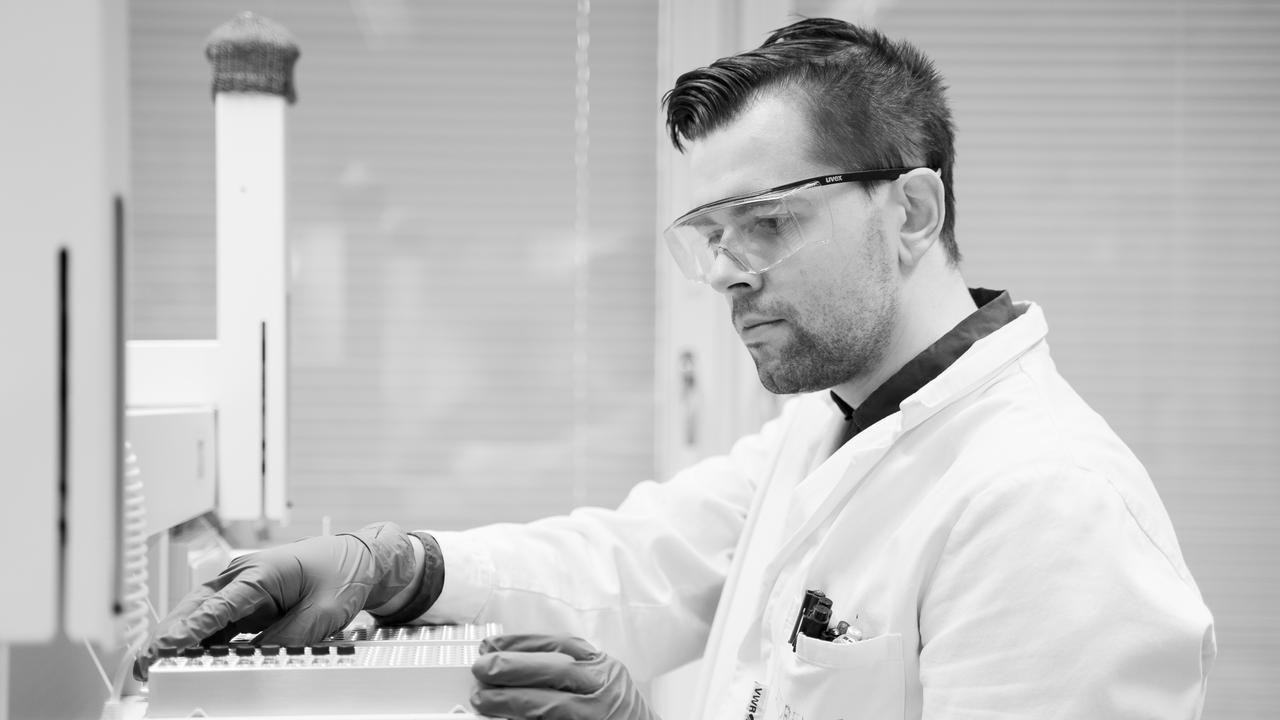
Doctoral student Andreas Eriksson analyzes CHO cell behavior to help develop smarter and more predictable processes in biopharmaceutical production.
ImageSimon JönssonHow can we make the production of biological medicines smarter and more efficient? Doctoral student Andreas Eriksson at the Department of Chemistry works with Sartorius to uncover how CHO cells behave at the molecular level during biomanufacturing. By combining advanced data analysis with mathematical modelling, the project aims to improve process monitoring, boost product quality, and reduce production costs.
The collaboration brings together cutting‑edge academic expertise and real industrial challenges—offering a unique environment for innovation in the future of biopharmaceutical production.
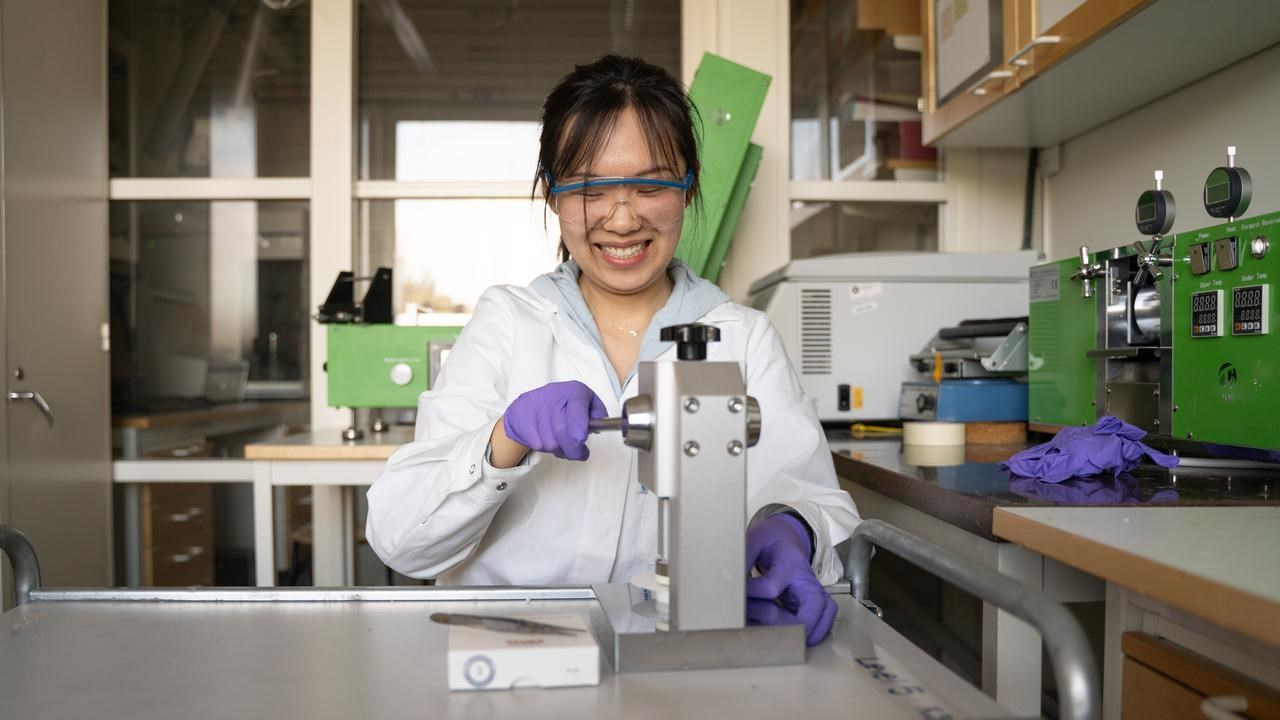
Doctoral student Xiaojing Xu develops innovative and energy‑efficient methods for recycling lithium‑ion batteries in close collaboration with Toyota Motor Europe.
ImageSimon JönssonHow can we recycle lithium‑ion batteries in a smarter, more sustainable, and energy‑efficient way? Doctoral student Xiaojing Xu at the Department of Chemistry is working with Toyota Motor Europe to develop a new precision‑based method for separating battery components—without discharging or pulverizing them. By combining advanced materials research with real industrial data, the project contributes to future circular battery systems and a more sustainable energy landscape.

Develops processes, catalysts, materials, and separation methods for industrial and societal applications.

A dynamic hub for addressing areas such as pollution, sustainability, bioinformatics and large-scale 'omics'.

Explores carbon-based compounds through bioorganic, medicinal, computational, and synthetic chemistry.

The fundamental chemical principles of molecular machines driving biological processes in living organisms.

Access advanced XPS capabilities—collaborate with us to solve surface‑related challenges.

Advanced NMR analysis within a shared research infrastructure, supporting rigorous science across disciplines.
