

Collaborating with the XPS platform in Umeå offers access to unique instrumentation, rapid turnaround times, and specialized expertise in advanced surface analysis. As an open research infrastructure, the platform supports both academic and industrial partners in exploring new applications, solving complex surface-chemistry challenges, and integrating high-quality data and interpretation into active research and development.
At the Department of Chemistry at Umeå University, there is a technical resource that attracts attention from around the world. The XPS platform is, in fact, the only facility in Sweden – and one of the few in the world – that routinely offers cryogenic X-ray photoelectron spectroscopy (Cryo-XPS) for biological samples. Now the platform is growing as an international hub where researchers come to learn the technique and address a broad range of problems, from medical questions to environmental issues.
Traditional surface analysis has long had a fundamental problem: in order to use X-rays in an ultrahigh vacuum, the samples must be dry. For biological materials such as bacteria, viruses, or tissue, this means that cell structures collapse and surface chemistry changes radically when the water evaporates. The solution is found in Umeå in the form of the state-of-the-art spectrometer AXIS Supra+.
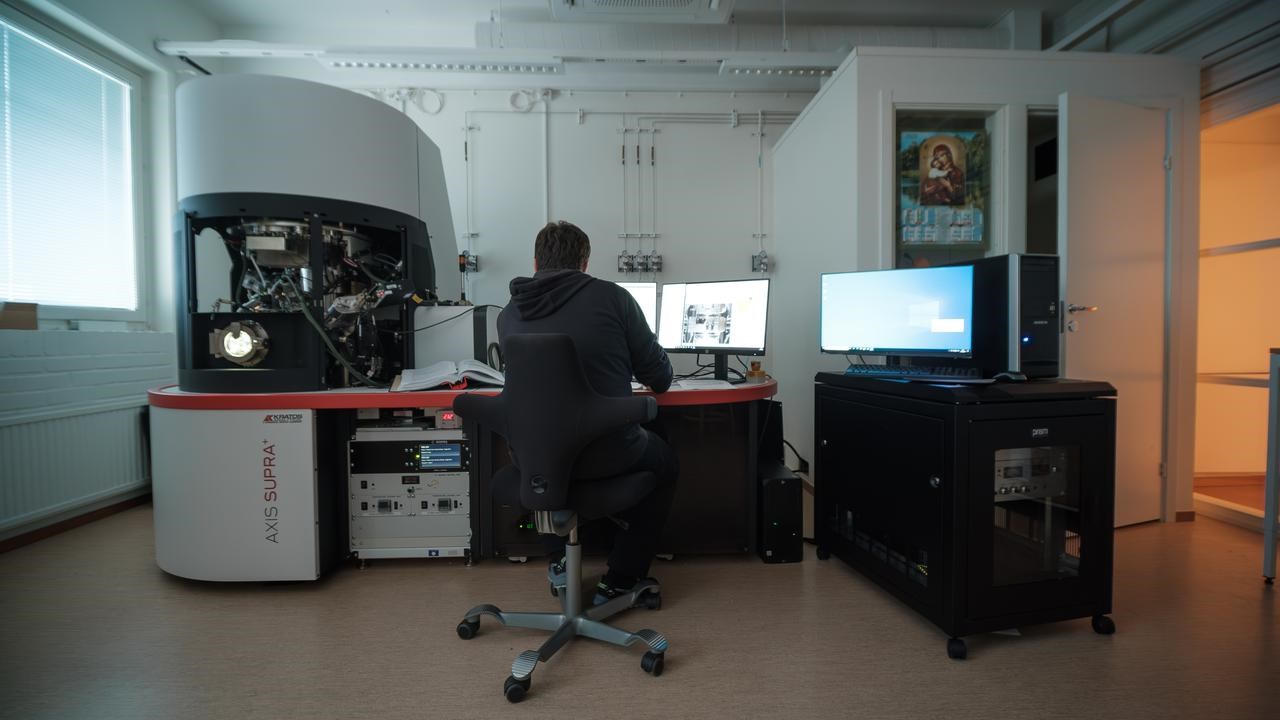
Dmitry Shevela running the AXIS Supra+
ImageSimon JönssonUnlike many closed research environments, the XPS platform in Umeå functions as an open infrastructure. Here, not only the university's own projects are prioritized, but also external users from academia and industry.
– The number of research groups at UmU using or potentially interested in cryo-XPS is limited. Open infrastructure allows us to find new areas of application, expand the use of the technique, and increase our scientific expertise in the field, says Andrey Shchukarev, manager at the XPS Platform.
For companies that want to stay at the forefront, speed and precision are crucial. The platform can typically deliver measurement data within 1–3 days, making it possible to integrate the advanced analyzes into intensive development phases. Moreover, the team in Umeå not only offers raw data but also the unique expertise – often referred to as the "Umeå method" – required to interpret the complex chemical spectra from frozen samples.
– We see a growing level of interest, says Madeleine Ramstedt, professor at the Department of Chemistry. –Researchers travel to Umeå specifically to learn our freezing protocols and to understand how to handle these complex samples on site.
The core of Cryo-XPS technology is a method for rapid freezing to approximately -170°C. By freezing the sample so quickly, so-called amorphous ice is formed, allowing microorganisms and liquid interfaces to be studied in a state very close to their natural, "wet" environment.
This opens up possibilities for a range of different research fields:
• Medical technology: How bacteria attach to material surfaces and form biofilms on, for example, catheters.
• Environmental research: Analysis of sediments, soil samples, and how microorganisms interact with environmental toxins in water.
• Astrobiology: Studies on how minerals and water behave under extreme conditions.
– The biggest challenge is to understand that water is “allowed” inside the Ultra High Vacuum (UHV) system, and that it is possible to study wet samples by XPS, says Andrey about the mindset of new users at the platform.
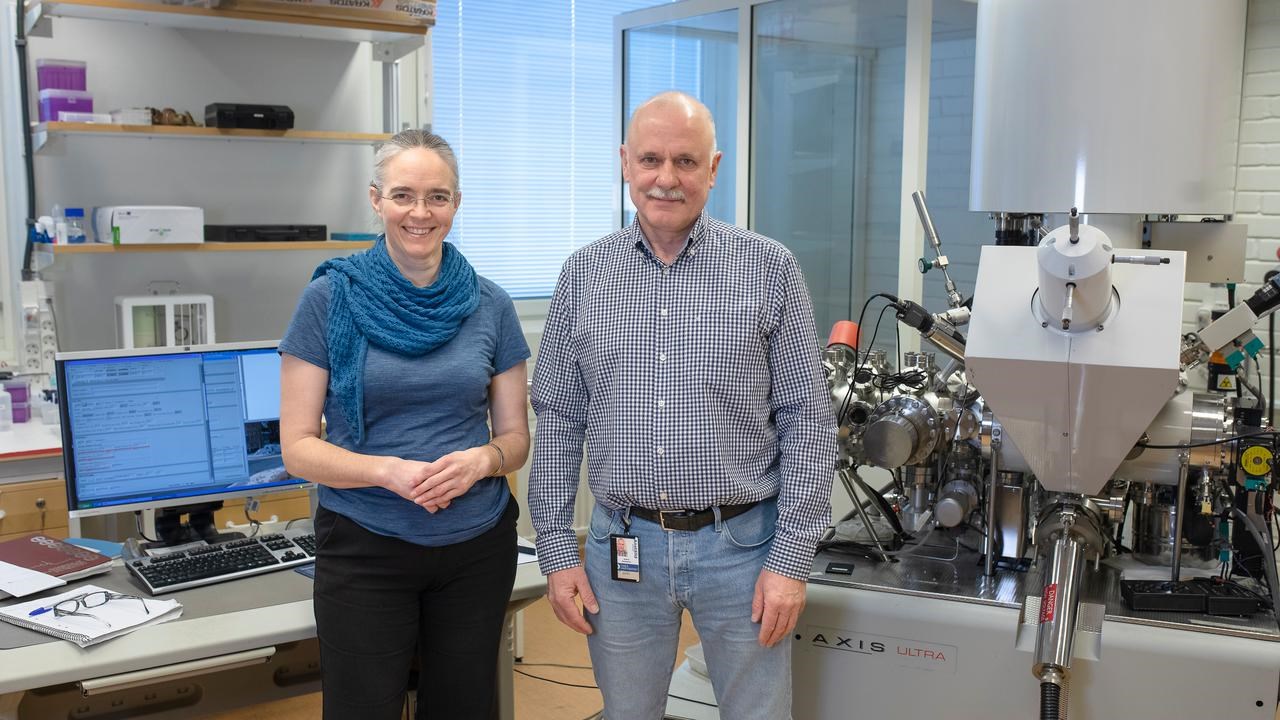
Madeleine Ramstedt and Andrey Shchukarev.
ImageMattias PetterssonThe institution's role as a knowledge disseminator has become increasingly important. By publishing detailed experimental protocols and reference data in international journals such as Surface Science Spectra, the Umeå team acts as a mentor for the global research community.
Research groups come to Umeå not only to have measurements done, but to engage in long-term collaborations where they gain access to the expertise required to interpret the complex spectra generated by the instrument. This makes the Department of Chemistry a central point on the international map for life sciences and materials research.
With the latest expansion of the platform—now also including techniques such as LEIPS, Low‑Energy Inverse Photoelectron Spectroscopy, offered routinely for the first time in Sweden—the platform’s position is further strengthened. For researchers who aim to remain at the cutting edge, the path to Umeå has become an obvious choice.
– UPS and LEIPS extend our ability to attract new projects from microelectronics and materials science, Andrey explains.

