
"False"
Skip to content
printicon
Main menu hidden.
Emmanuelle Charpentier hedersmedborgare 2025
Published: 2025-12-08

Emmanuelle Charpentier on the role of science in society

PROFILE At a time when science is being questioned, it is more important than ever for researchers to show how research contributes to solving societal challenges. “We should raise our voices as a community, stop and explain what we do,” says Emmanuelle Charpentier.

Text: Evelina Åberg, Josefin Laestadius
Image: Mattias Pettersson
Emmanuelle Charpentier hedersmedborgare 2025

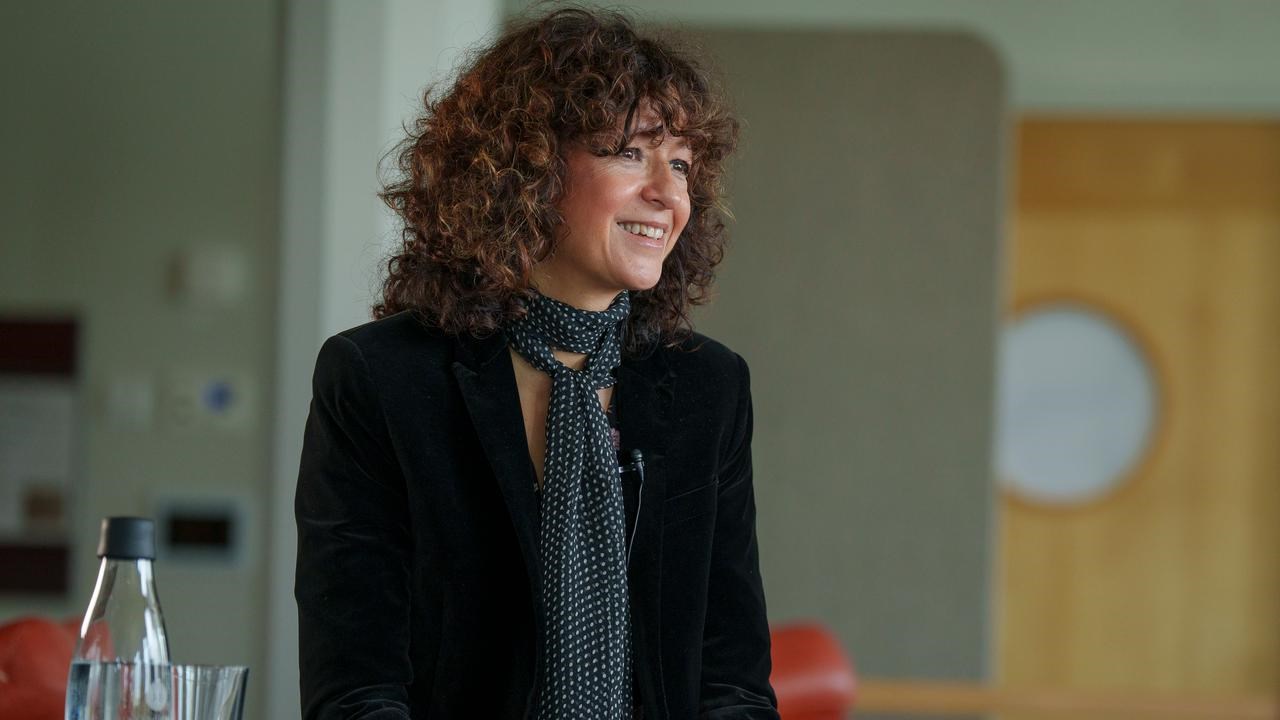
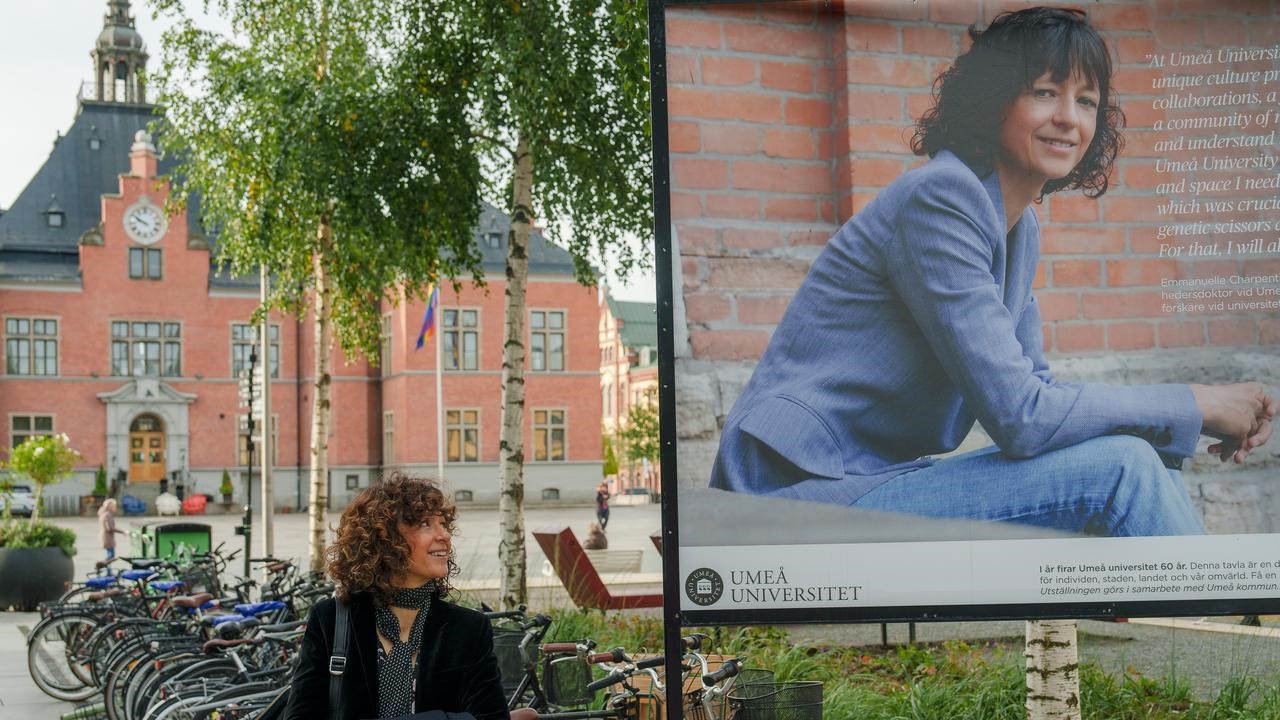
Five years after the announcement of the Nobel Prize in Chemistry, Nobel laureate and professor Emmanuelle Charpentier made an eagerly awaited visit to Umeå University, the place where the gene-editing tool CRISPR-Cas9 was discovered.

The gene-editing tool has been called the sharpest tool in genetic engineering and, today, it is used by researchers all over the world in a number of research fields. Researchers are focusing on developing new treatment methods to combat serious diseases and resilient plants that can withstand climate change, to name a couple of examples.

Now that you are back at Umeå University – is there any particular memory or moment that comes to mind?

“One of my memories is from January 2008 when I arrived around midnight on the last flight from Stockholm and landed in Umeå at midnight. My first encounter with snow was the sound of, let’s say, stillness and crispness as I walked in the snow.”

“Another memory is from the day I was interviewed about my projects. I had decided to take a short tour around the city and went to a supermarket. There I found crispy salad – I love salad – and the ‘crisp’ was there again. That gave me the confidence I needed to come to Umeå University and continue my work with CRISPR,” recalls Emmanuelle Charpentier.

It was the right time, the right place and the right colleagues who supported me and gave me the opportunity to think in the way that was necessary for the development of the CRISPR project.

What do you think made it possible for such a pioneering discovery as the gene-editing tool to come about at Umeå University?

“I think it was the right time for me to develop the research project that I had started at the Max F. Perutz Laboratories (now Max Perutz Labs) at the University of Vienna. At that time, there were circumstances that made me think I might need a different scientific environment, which I found at Umeå University and in the group of molecular biologists and microbiologists who were so welcoming. It was the right time, the right place and the right colleagues who supported me and gave me the opportunity to think in the way that was necessary for the development of the CRISPR project.”

It was also about having the opportunity to think outside the box, as Emmanuelle Charpentier says, to look beyond the project itself and what the gene-editing tool technology and its applications could lead to.

How would you describe the research culture at Umeå University?

“There is really a sense of community, and what I found very remarkable at Umeå University is that researchers are genuinely happy about other scientists’ success, for example when awarded a scholarship or given an opportunity to publish an article in a prominent scientific journal. There is really pride and happiness for the other person.”

“The reasoning is that what is good for Umeå University is good for society, and what is good for you as a researcher is good for the research community. I think that’s very agreeable.”

How should Umeå University act to preserve and build on the legacy of your work and your discovery, to attract promising researchers also in the future?

“I think it’s about continuing the work to make this research culture flourish, so that newcomers continue to feel welcome. Umeå University is known for receiving many researchers, whether to give lectures or for short or long stays, and in that way it is very attractive.”

Interdisciplinary research is key

Emmanuelle Charpentier puts special emphasis on the research environment and good conditions that exist at Umeå University to conduct interdisciplinary research.

“It’s very easy to collaborate and go to a department or a laboratory and say ‘I would like to do this’ and get support. Almost all types of research can be done in Umeå.”

Is there really any limit to the gene-editing tool technology, beyond the ethical one?

“I think there are a very large number of application areas where the possibilities are limitless, given that, for example, we are discovering ever more genetic diseases as we increase our knowledge of the genetics behind these rare diseases. These are areas where the CRISPR technology could be used for new types of medicine.”

Emmanuelle Charpentier highlights areas such as sustainability and climate change, where she believes that CRISPR technology can help develop new methods to protect ecosystems and create more sustainable agriculture. The more needs and challenges humanity faces, the more often we will ask ourselves the question: can the gene-editing tool help find a solution?

“In terms of ethical issues, they are the same as they were 15 years ago, but they are also the same as 60 years ago when we understood that molecular biology made it possible for us to develop genetic engineering with cloning and other methods, which have now been used by biologists for many years. These techniques were questioned in the late 60’s and early 70’s, and we asked ourselves: ‘will it be dangerous from an ethical point of view to have the ability to create a new human being?’ The CRISPR technology is just one more technology that revives these concerns.”

Approved medicines for hereditary diseases

So far, of the many applications of the gene-editing tool, which of these applications are you so far most pleased with?

“Among the technologies that I’ve fallen most, let’s say, in love with is its application in medicine to treat genetic diseases in humans,” she says.

After eight years of hard work, Emmanuelle Charpentier and her research colleagues were able to see the innovative result: CRISPR-Cas9 gene therapy in the form of an approved drug to treat the hereditary blood diseases of sickle cell anaemia and beta thalassemia.

We live in an age of denial of facts, disinformation and increasingly widespread scepticism of science. This is an issue that Professor Charpentier feels strongly about.

In general, how do you view science today when we see what is happening globally?

“It’s clear that we are facing and living in worrying times. We also know how much science has contributed to the world we live in and all the technology we use every day. The entire field of medicine has made huge progress over the past 50 years, if you look at, for example, the possibilities of curing certain cancers – something that was completely impossible 50 years ago. You just have to look at what a hospital looked like then and compare it with today.”

Researchers need to raise their voices

Emmanuelle Charpentier is surprised that people today allow themselves to be influenced by movements that question science, spread negative perceptions of vaccines and advocate that research on, for example, cancer and infectious diseases should be avoided – despite these two groups of diseases being among the most common medical causes of death globally.

We live in a time when researchers have to ask themselves about their responsibility to society and find ways to explain what science is about.

“I would like people to take the time to reflect and use their common sense. Then they would realise that they benefit from science and medicine, which now make it possible for us as humans to live longer and even to cure certain metabolic diseases, for example.”

What can academia and the research community do to counteract these trends in society?

“It’s nothing new that researchers may not be that proactive when it comes to defending their field – maybe that is because the essence work itself is quite competitive and we always have to be on the go, working and producing. We don’t take the time to reflect on the fact that there is a problem and that we should raise our voices as a community, stop and explain what it is we are doing. I’m sure that if all research stopped for a month, the world would become aware of the consequences. Not because it should be a solution, but we live in a time when researchers have to ask themselves about their responsibility to society and find ways to explain what science is about.”

For more information contact

Emmanuelle Charpentier
Other position
E-mail
Email