
"False"
Skip to content
printicon
Main menu hidden.
Johanna BjörklundProfessor vid Institutionen för datavetenskap
Published: 2026-09-30

Under the hood of AI and behind several successful companies

PROFILE Johanna Björklund wants to make AI less overconfident. Using theoretical computer science, she investigates how today's AI systems can become better at understanding their own limitations and thereby become more reliable. She is a newly appointed professor, a serial entrepreneur and someone who finds it hard to resist putting new ideas into practice. “Research and entrepreneurship are similar in many ways,” she says.

Image: Alexandra Granath
Johanna BjörklundProfessor vid Institutionen för datavetenskap

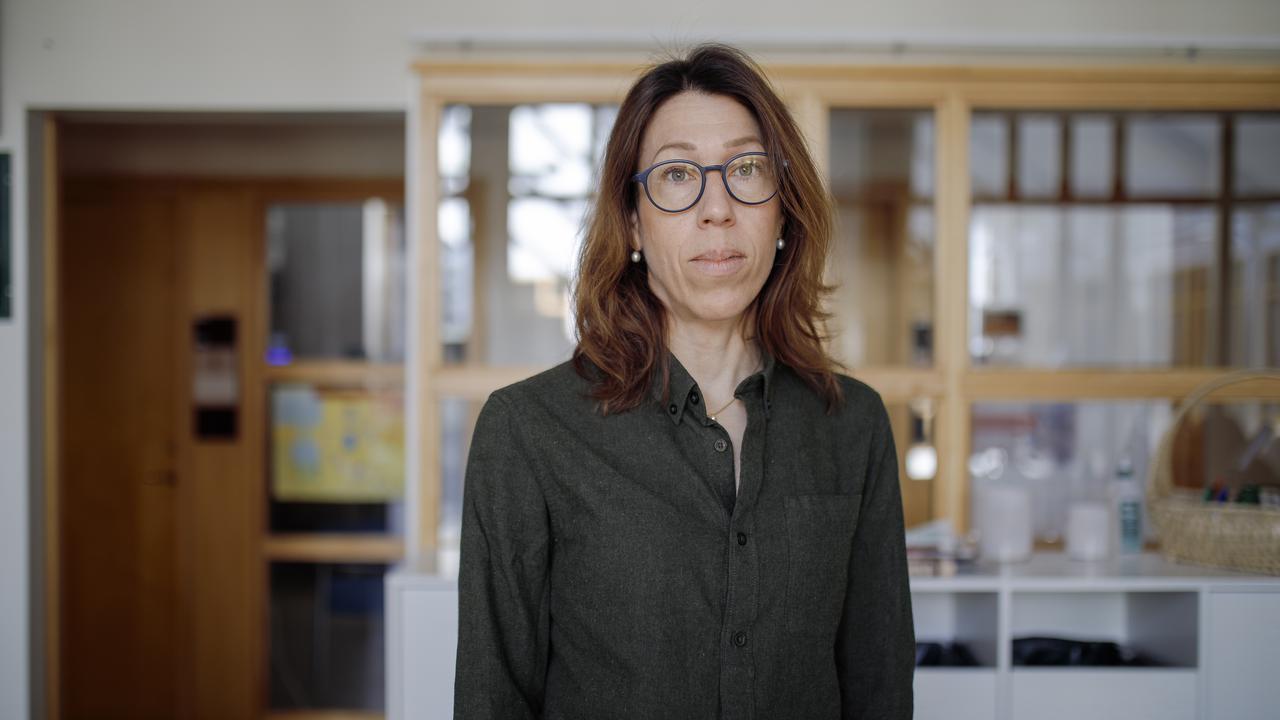
Johanna Björklund has a lot on her plate right now. But that is nothing unusual. She combines her work as a professor at the Department of Computing Science with running companies and always seems to have a new idea ready to be tested.

“You learn a lot by trying things out in the real world,” she says.

That also sums up her professional life quite well. For Johanna Björklund, theory and practice go hand in hand. She received her doctorate in theoretical computer science at Umeå University in 2007. The following year, she and fellow student Rickard Lönneborg founded their first IT company, Codemill. Since then, the company has grown into an internationally competitive business that provides technical solutions for digital video management to several major media organisations, including the BBC.

The AI systems are like a black box. We know what we put in and what we get out, but we do not have enough understanding of what happens in between.

Johanna is not a typical researcher, if such a person even exists. She is just as passionate about entrepreneurship and networking as she is about science. And she sees no contradiction between those worlds.

Her research spans from fundamental mathematical research to questions about how future AI systems should function. In the theoretical part of her work, she uses her favourite subject, mathematics, to develop algorithms capable of handling calculations involving large amounts of data from many different sources.

“We want to find ways to make computations as fast as possible, even when dealing with enormous amounts of data, such as in a social network with billions of users.”

Rather than analysing every part of a network individually, the researchers work with what can be described as compact blueprints of how the network is structured. These blueprints make it possible to describe large, or even infinite, structures in a manageable way.

When AI needs to understand its limitations

In the applied part of her research, Johanna dives under the hood of today's generative AI systems and the large language models on which they are based. And there is a problem.

“They are like a black box. We know what we put in and what we get out, but we do not have enough understanding of what happens in between,” she says.

Generative AI systems like ChatGPT or Copilot can produce convincing answers to almost any question – but they are not particularly good at self-criticism. Their responses can be incorrect or undesirable, as the systems do not understand their own limitations. They also fail to distinguish between statistical assumptions and actual evidence.

“When these systems are used in practice, there has to be predictability. What we can contribute is frameworks that monitor the systems and ensure that their responses stay within those boundaries.”

By incorporating mechanisms and logical reasoning into AI systems, the researchers hope to make them better at analysing their own capabilities and assessing the reliability of their responses.

“This will make the systems safer and more transparent,” says Johanna.

Research that becomes reality

For Johanna Björklund, the connection between research and society is important. Research should create value beyond the university, while at the same time, she believes that engagement with society also improves research.

She describes herself as an “energetic opportunist”. It is therefore perhaps no surprise that the step from academia to entrepreneurship was a short one. Together with Rickard Lönneborg, she founded Codemill, which over time has specialised in web-based tools for video production and achieved international success.

The company develops software that helps television broadcasters, streaming services, and other media companies manage, analyse, and distribute large volumes of video content.

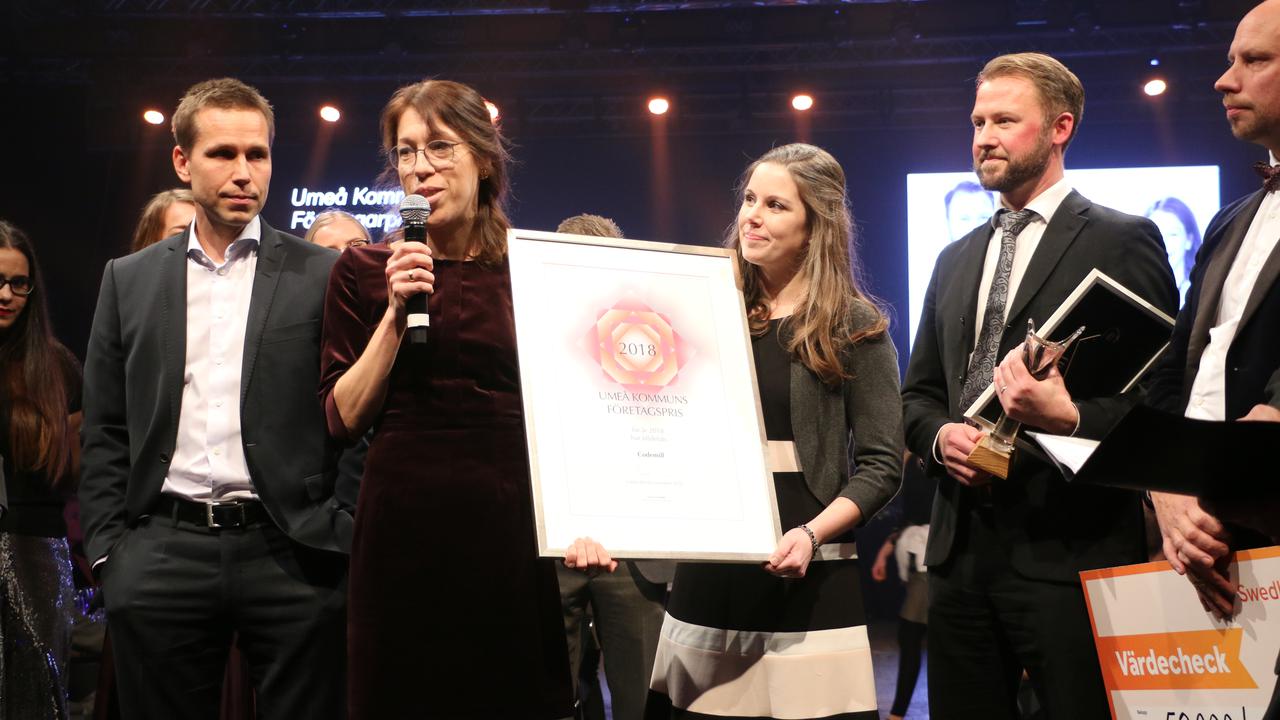
The company’s success has also been recognised. In 2012, Codemill received the award as Spin-off Company of the Year at Umeågalan. In 2016, Johanna was named one of Sweden's ten most innovative entrepreneurs. And in 2018, Codemill received Umeå Municipality's Business Award.

Today, Johanna has a more advisory role than an operational one at Codemill. She is also involved in the spin-off company Aeterna Labs, which works with contextual advertising in digital news media, and Deep Tensor, which develops AI solutions that help companies manage large amounts of data securely.

“Research and entrepreneurship are similar in many ways. Both are about creating something new that does not yet exist. It can be a new product or service, or new knowledge. You also have to find your market: Who is interested in this?” she says.

Both research and entrepreneurship also require the right skills, organisation, funding and the ability to reach out.

“The difference is that, as a researcher, you can take greater risks and explore a question in much greater depth.”

What do we want AI to do?

In recent years, Johanna Björklund has become increasingly interested in how generative AI systems should be evaluated. It is not enough to steer systems in the right direction. We also need to determine whether they are actually doing what we want them to do. Otherwise, it is difficult to know whether they are truly improving.

But the question is not as simple as it may first appear. What actually makes a good AI system?

AI is like a little psychopath. You can make it behave more empathetically, but it is not empathetic.

Take bias as an example. If someone asks about a nurse, the system may automatically assume that the person is a female.

“If the data contains unfair distributions, do we want that to be reflected in the model, or do we want the model to reflect how we wish the world looked?”

A technology that changes more than how we work

The rapid development of AI in recent years has affected both Johanna's research and her entrepreneurial activities.

“I was not prepared for the pace of this development, and I am afraid I will continue to be surprised. AI is a technology that accelerates development, so the better it becomes, the faster everything moves. I am not convinced, however, that it accelerates solidarity or empathy.”

The development also raises a number of ethical questions.

“AI is like a little psychopath. You can make it behave more empathetically, but it is not empathetic. The question is whether we want it to behave as something it is not, or whether it is better to make it obvious that it lacks the ability to understand human emotions.”

According to Johanna, a common misconception is that AI will reduce the amount of work people need to do. She believes instead that the technology will change what work is done, who does it and who benefits from the gains it creates.

In the future, Johanna believes that AI will become better at assessing the reliability of its own answers and at combining different types of intelligence, such as linguistic understanding, mathematical reasoning and expert knowledge.

For her part, she continues to move between academia and industry. With AI development at full speed, there is unlikely to be any shortage of new questions to explore or ideas to test in the real world.