

MIMS Spotlight Series: Louise meets Sanja Vanhatalo
Louise Lindbäck had a chat with Sanja Vanhatalo, a postdoctoral fellow in the lab of MIMS Group Leader Björn Schröder, where she explores how interactions between the gut microbiota and the mucus layer contribute to inflammatory bowel disease (IBD).
Published: 2025-12-03 Text: Louise Lindbäck
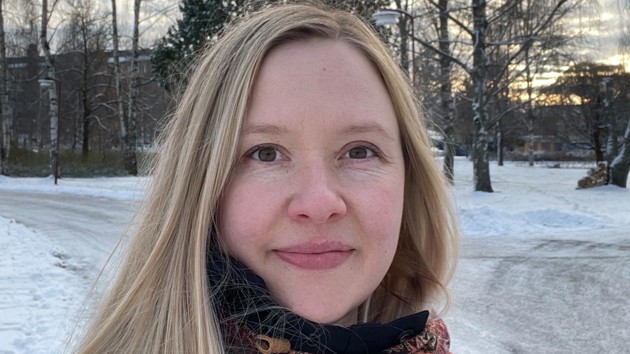
Sanja Vanhatalo, postdoctoral fellow with MIMS
ImageSanja VanhataloMeet Sanja Vanhatalo
MIMS postdoctoral researcher Sanja Vanhatalo is part of Björn Schröder’s group at the Department of Molecular Biology, Umeå University. Her work focuses on understanding the functional relationship between the gut microbiota and the intestinal mucus layer, an interplay that plays a crucial role in inflammatory bowel disease (IBD). Originally from Finland, Sanja joined MIMS after completing her PhD in Turku and has since embraced both Umeå’s research environment and its family-friendly lifestyle. Let’s meet Sanja!
Can you tell us about your role at MIMS and what you are currently working on?
I am a postdoctoral researcher in Björn Schröder’s lab at the Department of Molecular Biology, Umeå University. My research focuses on the function of mucus and the gut microbiota in inflammatory bowel disease (IBD). By bridging human clinical samples with mechanistic experiments in mouse models, we aim to improve our understanding of how the microbiota and mucus interact in the context of IBD.
What were you doing before you joined MIMS, and what attracted you to start a position here?
Before moving to Umeå, I completed my PhD at the University of Turku in Finland. My thesis examined the microbial and immunological characteristics of acute appendicitis, including the role of appendicoliths and the appendiceal microbiome. I defended my thesis in June 2025.
I hadn’t heard of Umeå University before seeing the postdoctoral opening in the Schröder group, so the main attraction for me was the research topic host-microbiota interactions and gut health. Once I learned more about Umeå and visited, it seemed like the perfect place for me both professionally and personally.
What motivated you to become a postdoc researcher?
Continuing in academia and building an independent research career has always been my first choice. Having lived in Finland my whole life, I wanted an international postdoctoral experience to broaden my perspective. At the same time, it was important to find a place that would be a good fit for my family, including my two daughters.
What has been the most rewarding aspect of your postdoctoral experience so far?
The most rewarding part has been adapting to a completely new environment and learning new methods and ways of working. I’m very grateful for the support I’ve received from everyone in the Schröder group, as well as the opportunity to take the necessary time to learn and develop.
How do you maintain a work-life balance as a postdoc?
Having children helps me maintain clear boundaries between work and home. When I leave the lab, I focus fully on my family which also helps me use my time at work more efficiently and intentionally. I prioritize tasks, stay focused on my own project, and try to let go of the idea that everything must be perfect. It’s an ongoing process, but an important one.
What impact do you hope your research will have on your field and beyond?
I hope that our findings will help identify microbial and dietary factors that can be used to develop new treatment strategies for people suffering from IBD. Millions of people are affected by IBD, and because its underlying causes are still not fully understood, current therapies focus primarily on managing symptoms rather than providing a cure.
Short facts about Sanja
Interests: All kind of animals, especially horses and dogs
Watching: Anything in Swedish, to improve my language skills
If I had a time machine: I would travel to the 80s and enjoy the good music
Enjoys with Umeå: Adventure playgrounds for kids
Most memorable experience: Attending ASM Microbe in San Francisco followed by a road trip to Yosemite with a friend
Favourite cuisine: All Asian
Most inspiring book: Lab Girl by Hope Jahren
Favourite time of day: Morning

Infection biology
Umeå University is at the international forefront in the research area of infection biology.

Björn Schröder Lab
Gut microbiota and intestinal mucosal barrier function.

Department of Molecular Biology
The Department is affiliated to both the Faculty of Science and Technology and to the Faculty of Medicine.
Nordic EMBL Partnership for Molecular Medicine




Supporting organisations


