

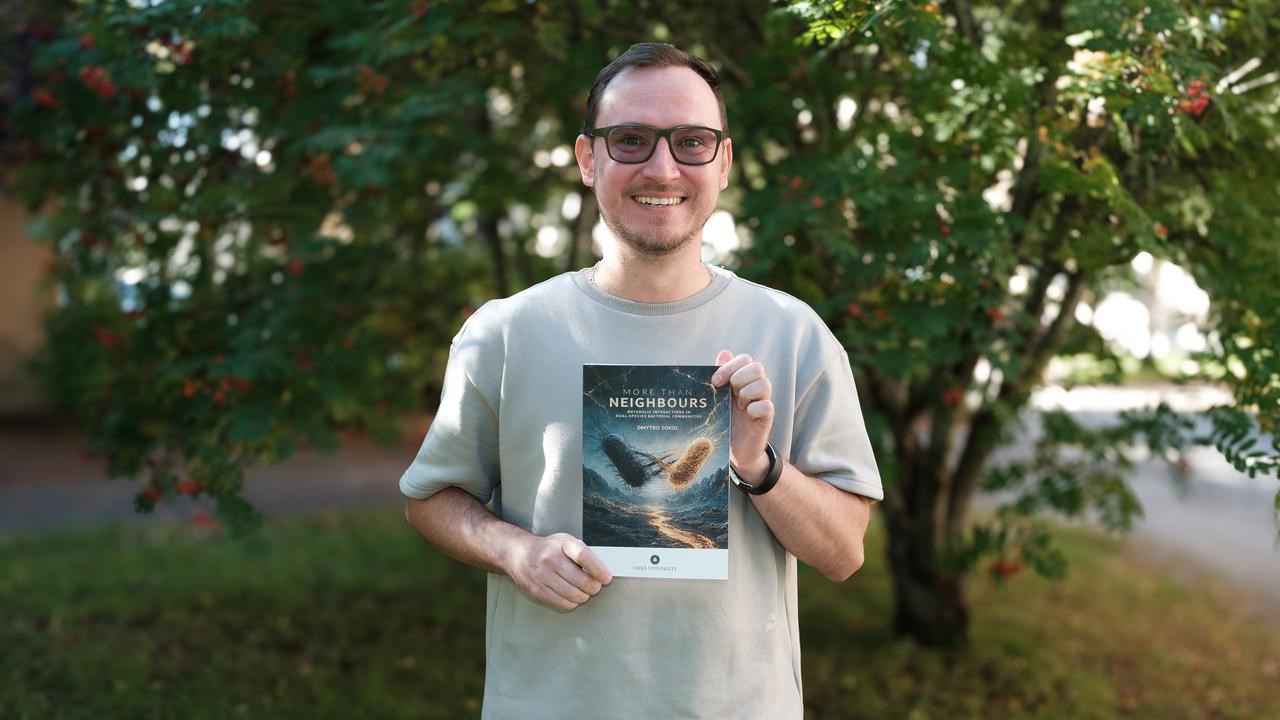
NEWS Bacteria that cause infections can exchange nutrients and change their behaviour when they live together. In his doctoral thesis, Dmytro Sokol shows why infections may need to be understood as entire bacterial communities, rather than as individual species.
Bacteria can attach themselves to surfaces in the body or to medical equipment, such as urinary catheters and breathing tubes. There, they can form what is known as a biofilm.
A biofilm is a community of bacteria that sticks to a surface and surrounds itself with a protective layer. It can be thought of as a thin coating in which the bacteria live close together. This environment can help protect them from antibiotics and the body’s immune system, making infections more difficult to eliminate.
In his thesis, Dmytro Sokol studied how bacteria behave in these communities. Rather than examining one bacterial species at a time, he investigated what happens when two species grow together.
The results show that neighbouring bacteria can affect each other in several ways. They may compete for nutrients, but they can also make use of substances released by the other species. Their behaviour is also influenced by the nutrients available in their surroundings.
One part of the research focused on two bacterial species found together in patients with urinary catheter-associated infections: Escherichia coli, commonly known as E. coli, and Pseudomonas aeruginosa.
To find out whether the bacteria exchanged nutrients, the species were grown one after another in the same liquid. This allowed Dmytro to follow the substances that each bacterium released or consumed.
The clearest result concerned a substance called succinate. E. coli accumulated succinate outside of the cell as it grew in the medium containing glucose. When P. aeruginosa was introduced afterwards into the medium containing chemicals released by previous bacteria , it possibly consumed the substance, since its level in the medium was greatly decreased.
In other words, what was left behind by one bacterium became food for the other.
– The results show that bacteria living together are not simply competing for the same resources. A substance released by one species can become a nutrient for another and help it survive in the community, says Dmytro Sokol, doctoral student at the Department of Chemistry at Umeå University.
The researchers found signs that several other substances could also be involved in the interactions. However, these relationships were more complicated, and further research is needed to understand exactly how they work.
The behaviour of the bacteria depended strongly on their surroundings.
In experiments designed to resemble conditions in a urinary catheter, P. aeruginosa generally became the dominant species when grown together with E. coli. When more nutrients were available, however, E. coli competed more successfully and could become the dominant species.
The thesis also examined bacteria found in respiratory samples from mechanically ventilated patients. When Staphylococcus aureus and P. aeruginosa grew together, the available nutrients affected their growth, their metabolism and which species became more abundant.
These results suggest that knowing which bacteria are present may not be enough to understand an infection. The conditions surrounding them, and the other bacteria with which they share the space, can also change how they behave.
– The same bacterial species may behave differently depending on which other bacteria are present and which nutrients are available. To understand a biofilm, we therefore need to study the community and its surroundings, says Dmytro.
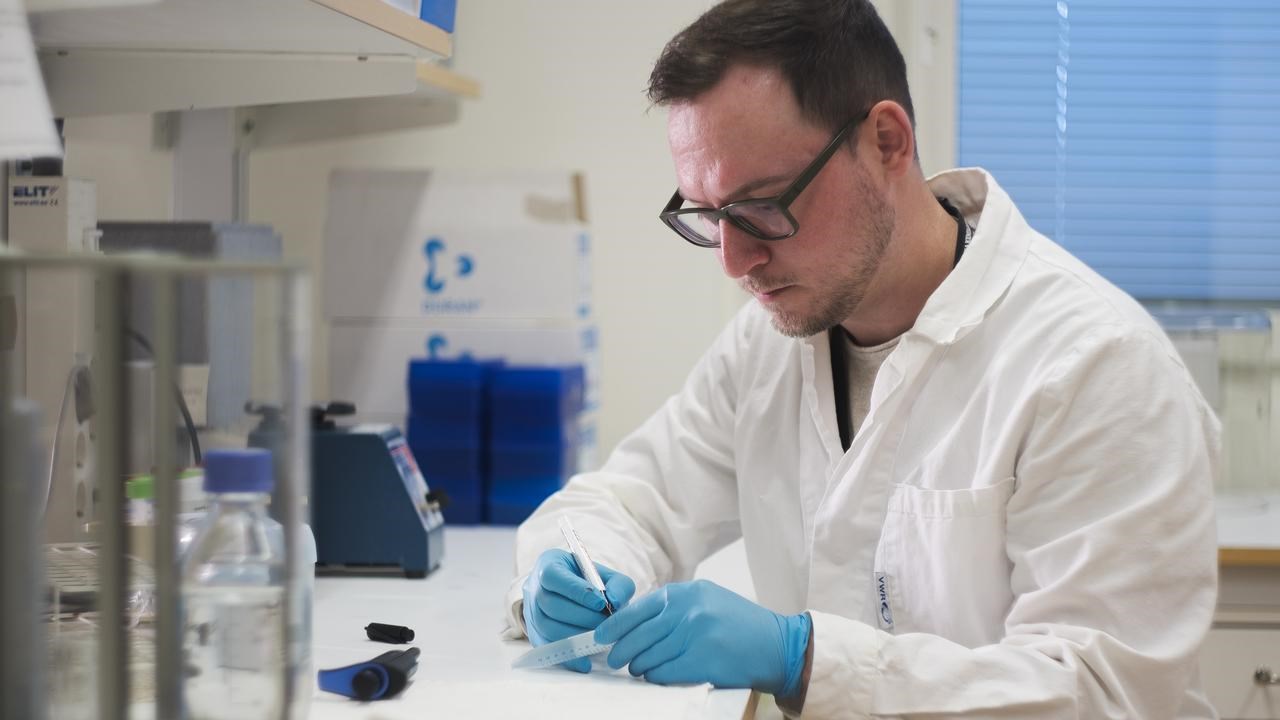
The research also shows that the overall size of a biofilm does not reveal everything about the bacteria living inside it.
When two species were grown together, they sometimes created more biofilm than either species did alone. But this did not necessarily mean that both species were thriving. When the researchers counted the living cells, they found that one species could increase while the other declined.
This means that measuring only the total amount of biofilm may hide important changes within the community. Researchers also need methods that show which species are present and how numerous they are.
The thesis provides new knowledge about how bacterial species may coexist and persist in infection-related biofilms. In the longer term, understanding the dependencies between bacteria could help researchers identify new ways of weakening or disrupting these communities.
Future studies could use models that more closely resemble the flow of urine through a catheter or the conditions in a mechanically ventilated airway. Researchers could then observe how biofilms develop over time and investigate whether disrupting the exchange of nutrients makes them easier to prevent or treat.
The findings nevertheless underline a central message: bacteria in an infection do not necessarily act alone, and the behaviour of the polymicrobial biofilm is usually different from the behaviour of the biofilm members grown alone. To understand why some biofilms persist, researchers may need to examine not only which species are present, but also how they live together.
Title: More Than Neighbours: Metabolic Interactions in Dual-Species Bacterial Communities
Author: Dmytro Sokol, Department of Chemistry, Umeå University
Main supervisor: Madeleine Ramstedt