

NEWS Quinoa stalks, Jerusalem artichoke stalks and residues from mushroom cultivation can become raw materials for new bio-based materials. In a doctoral thesis at Umeå University, Diego Alejandro Miranda shows how bacteria originating from extreme environments can be used to convert such residual biomass into biopolymers. The research could contribute to processes that make use of renewable resources and reduce dependence on fossil-based raw materials.

Diego A. Miranda
Image Simon JönssonPlastics and many other materials used today are still based on fossil resources. One alternative is biopolymers, materials that can be produced by living organisms. However, for these materials to become a competitive alternative, the raw materials and processes used to produce them are also of considerable importance.
Diego Alejandro Miranda has investigated whether residual biomass from agriculture and food production could become part of the solution. His work has included quinoa stalks, artichoke stalks and mushroom substrate. These materials are rich in carbon, but the carbon is bound within the recalcitrant structure of the plant material and must first be made available to the bacteria.
For bacteria to use the plant residues, parts of the material need to be broken down into simpler sugars. At the same time, the thesis demonstrates that a balance must be struck: more intensive treatment can release more of the carbon, but can also generate compounds that inhibit bacterial growth.
One of the raw materials, however, had already received some assistance. The substrate from shiitake mushroom cultivation had been biologically processed by the fungus during cultivation. The material could therefore be broken down enzymatically without the hydrothermal pretreatment used for quinoa and artichoke stalks. Under the conditions investigated, the resulting material could also be used for bacterial cultivation without the external addition of nutrients.
–I was surprised by how efficiently quinoa stalks could be processed, requiring only five minutes of pretreatment with very dilute acids while still achieving high recovery. More interestingly, spent mushroom substrate required no pretreatment, and the bacteria could grow and produce biopolymers using only this residue, synthetic nutrients were not necessary, says Diego.
The next challenge is to find microorganisms capable of coping with the chemically complex environment that arises when the residual biomass is broken down.
Diego used bacteria originating from extreme environments in the Bolivian Andes, among others. One of these, Vreelandella boliviensis LC1, was isolated from the highly saline soil surrounding Laguna Colorada at an altitude of approximately 4,300 metres. In such environments, microorganisms are exposed to factors including high salinity, intense ultraviolet radiation, temperature fluctuations and limited nutrient availability.
In the laboratory, V. boliviensis was gradually adapted to increasing concentrations of hydrolysate from quinoa stalks. Following adaptation, the bacterium was able to use the material and produce PHB, a biologically produced polyester stored inside the bacterial cell. Other salt-tolerant bacteria included in the studies were able to produce extracellular polymeric substances, known as EPS, from several of the residual materials investigated.
This is also the basis of the thesis title, Biopolymers inside and out. The bacteria can function as small cell factories, producing polymers both inside and outside their cells.
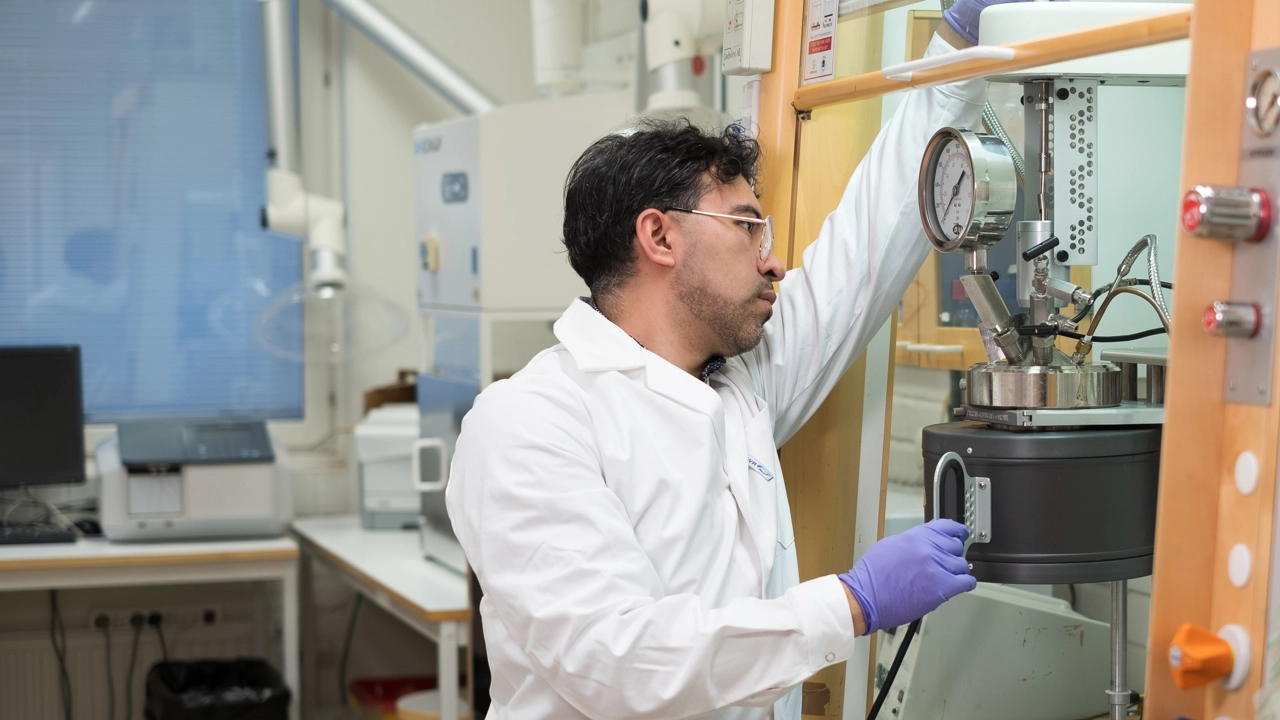
Diego preparing the reactor.
ImageSimon JönssonThe choice of raw material and bacterium is not all that matters. The way in which the bacteria are cultivated can affect what they produce. When V. boliviensis was cultivated in two different types of bioreactor, the results differed. In an airlift reactor, the bacteria grew more rapidly and EPS production per unit of reactor volume was faster. In a mechanically stirred tank reactor, however, the bacteria were able to continue accumulating PHB inside their cells while also producing EPS.
The results therefore show that the process can influence not only how rapidly the bacteria grow, but also how the carbon is used and which biopolymers are formed.
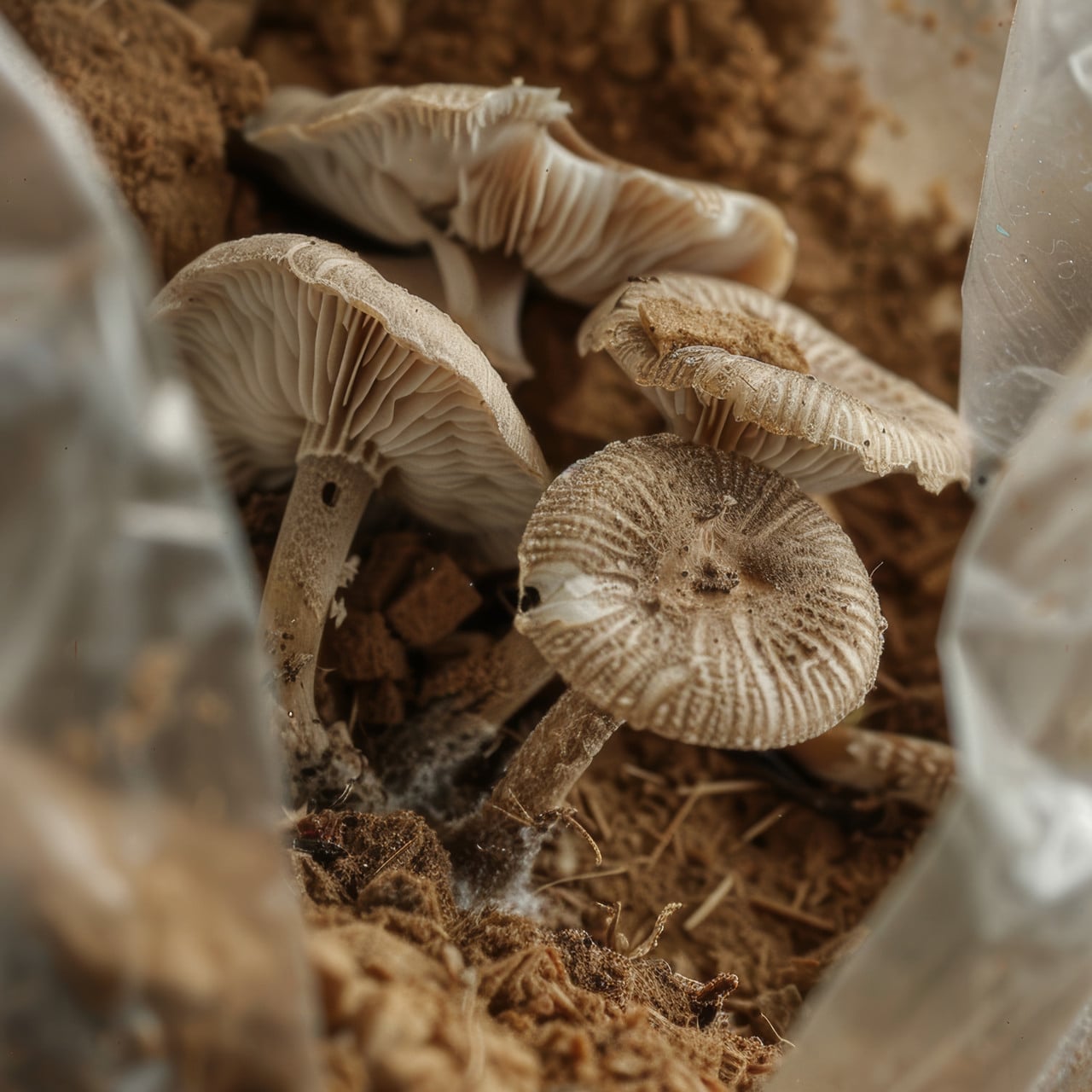
A group of mushrooms sitting in substrate.
Imageyuranikof - Magnific.comAn important conclusion of the thesis is that identifying residual biomass containing a large amount of usable carbon is not sufficient. The carbon must first be released in a way that the bacteria can tolerate. The microorganism must be able to use it, while the cultivation conditions must support the production of the desired polymer.
The biopolymers produced from the residual biomass retained their chemical properties compared with corresponding polymers produced using synthetically. However, molecular weight, thermal stability and other material properties could vary depending on the raw material and cultivation conditions.
The next step is to develop processes that remain effective when the properties of the raw materials vary, and to investigate how production can be scaled up. In the longer term, the aim is to make better use of residual streams and convert them into valuable materials as part of a more circular bioeconomy.
– We could develop flexible processes that use different types of locally available biomass and resources, and integrate them into regional biorefineries. I don't think we will replace conventional plastics anytime soon, but we could start with specific products where biopolymers could offer an alternative to single-use plastics, says Diego.
Diego Alejandro Miranda will defend his doctoral thesis, Biopolymers inside and out: Bacterial cell factories for biopolymers production from residual biomass, on 27 November 2026 at 09:00 in Aula Biologica at Umeå University.
The public defence will be held in English.
