

"False"
Skip to content
printicon
Main menu hidden.
Published: 2026-06-01

Continuous cover forestry favour hair lichens

NEWS Industrial forestry has through clearcutting caused a large-scale decline of hair lichens in Sweden’s forests. Researchers in Umeå University, University of Northern British Columbia, Canada, and Norwegian University of Life Sciences have in a large-scaled field-experiment shown that partial cutting can increase abundance of hair lichens. The study is published in Forest Ecology and Management which publishes original research in forest ecology.

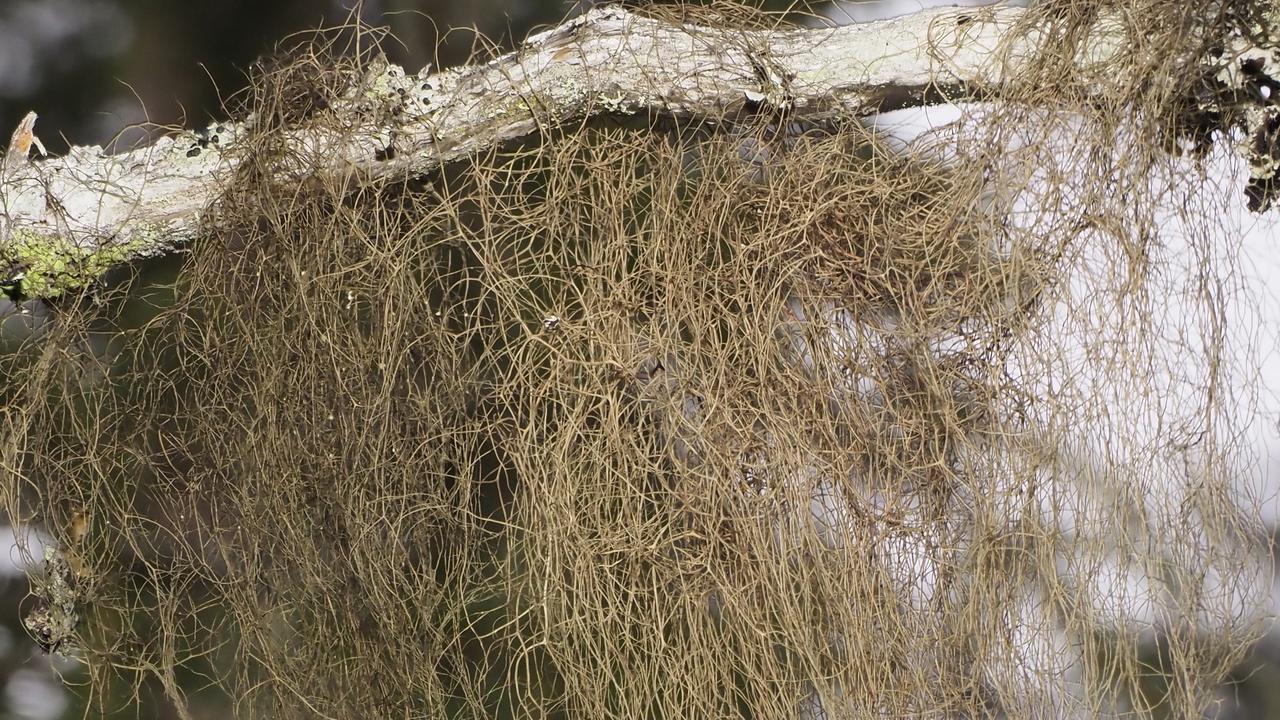
“Hair lichens have important functions in coniferous forest ecosystems and provide forage, habitat and nest material for mammals, birds, insects, and spiders. These lichens are particularly important for reindeer husbandry and can be decisive for the survival of reindeer in winter when ground lichens are unavailable. Knowledge of how environmental factors regulate abundance of hair lichens is important to develop forest management methods that can maintain hair lichens, and to understand how lichens are affected by climate change” says Per-Anders Esseen, professor emeritus at the Department of Ecology, Environment and Geoscience at Umeå University.

About the study

• The unique study long-term study (2008–2019) was led by Per-Anders Esseen, together by Matthias Siewert, Umeå University, Darwyn Coxson, University of Northern British Columbia, Prince George, Canada, and Yngvar Gauslaa, Norwegian University of Life Sciences, Ås, Norway.

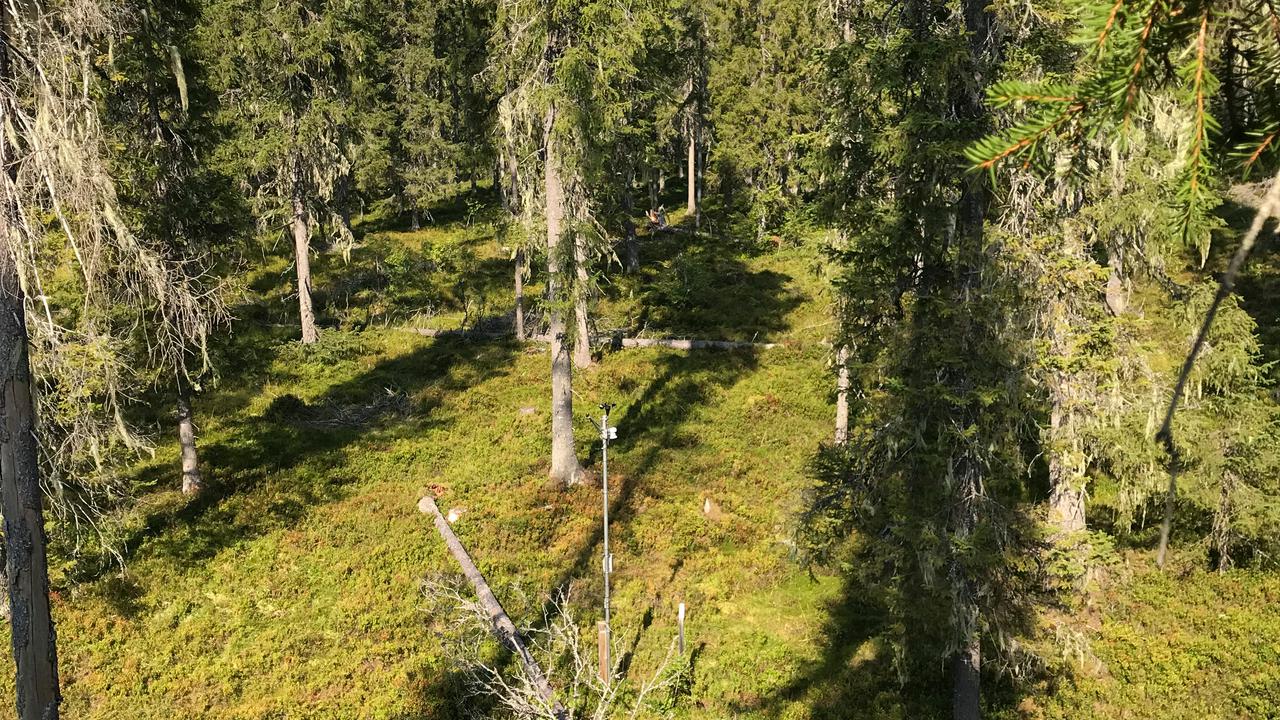
• Fifteen sample plots (80 m × 80 m) were laid out in an old spruce-dominated forest in Vindeln Experimental Forests, Swedish University of Agricultural Science, northeastern Sweden. Partial cutting treatments where one-third and two-thirds of the trees were logged were compared with unlogged control plots.

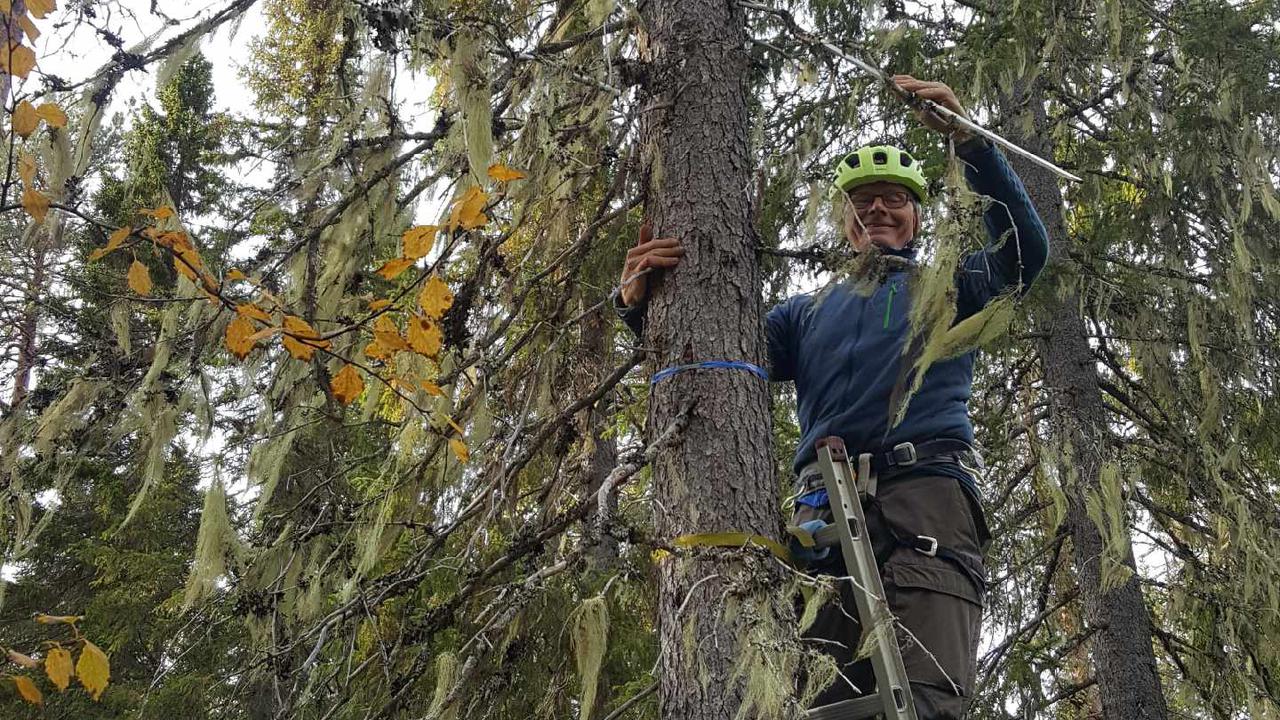
• Forest data, temperature and light were measured over eleven years. The researchers measured the biomass of hair lichens up to a height of seven meters by using ladders. The objective was to analyze how forest structure and microclimate influence hair lichens with different functions traits by comparing the pale lichen witch’s hair (Alectoria sarmentosa) with dark horsehair lichens (Bryoria).
Strong thinning decreased hair lichens

“The lichen mass in a forest depends on the balance between colonization, growth and losses, and is regulated by the amount of available substrate, microclimate, the lichen’s colour and dispersal capacity” says Per-Anders Esseen.

The lichen mass per tree decreased shortly after logging but thereafter decreased up to four times in partial cuts, with largest increase in the lower part of the trees. The stand-level lichen mass increased after moderate thinning, but decreased after strong thinning, due to fewer host trees and loss of lichens by strong wind.

“Increased light is the most important factor promoting hair lichen accumulation after partial cutting” says Per-Anders Esseen.

Dark hair lichens increased faster

Lichens are complex partnerships between fungi and photobionts (an alga, or a cyanobacterium), which passively take up water. The researchers found that dark hair lichens with melanin pigments increased faster with increased thinning level than pale lichens. The algae in dark lichens receive less light than algae in pale lichens. Dark lichens have lower photosynthesis in dense forests than pale lichens but have higher photosynthesis and growth in thinned forest with high availability of light.

“Our results show that continuous cover forestry can significantly increase the amount of hair lichens in managed forests, which is particularly important in important winter grazing areas for reindeer” says Per-Anders Esseen.

Original article

Esseen, P.-A., Siewert, M.B., Coxson, D.S., & Gauslaa, Y. (2026). Canopy structure and microclimate drive long-term dynamics of hair lichens after partial cutting. Forest Ecology and Management, Volume 617, 123891. https://doi.org/10.1016/j.foreco.2026.123891

Read the scientific article

For more information, please contact:

Per-Anders Esseen
Professor emeritus
E-mail
Email