

NEWS Four researchers from Umeå University have been appointed Arctic Six Chairs for the period 2026-2028. The appointment provides funding to develop research collaborations with five other Arctic universities in Sweden, Norway and Finland. The appointments show how Arctic issues concern health, technology, working life, resources and living conditions in northern societies.
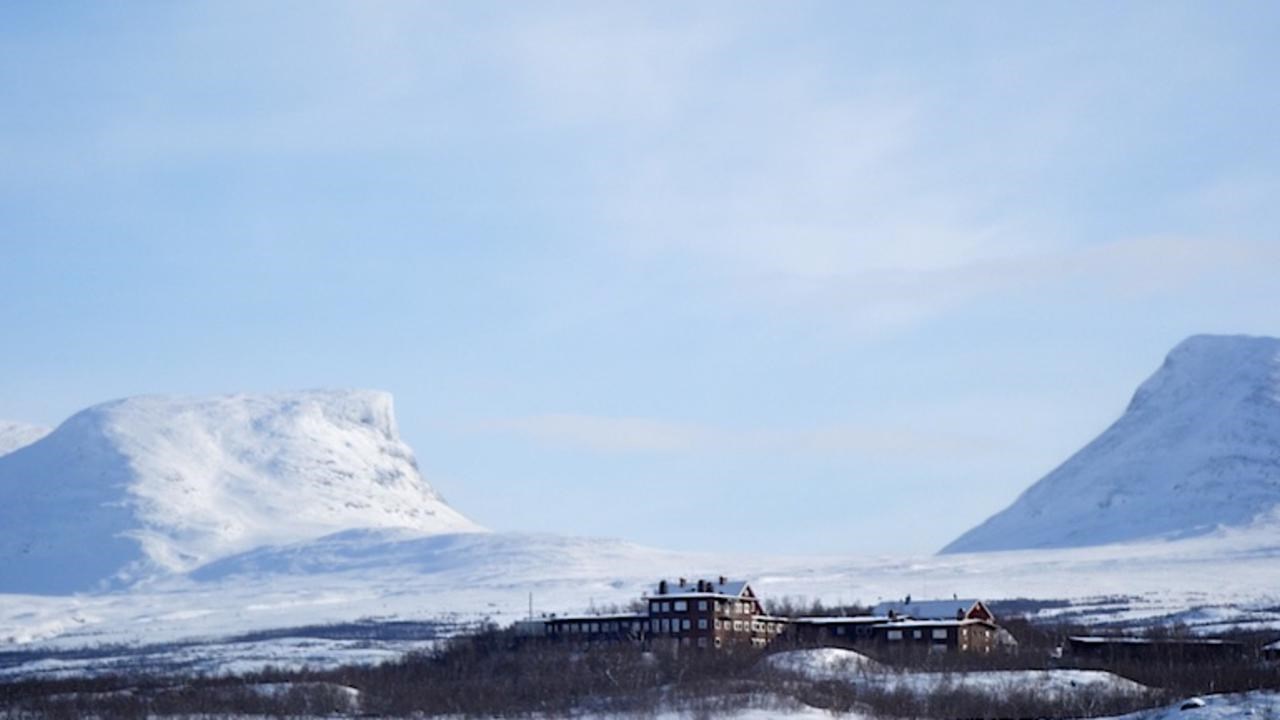
Abisko Scientific Research Station, ImageScott Wilson
Arctic issues rarely stay within one discipline, one university or one country. They concern climate, health, technology, working life, resources and societal development at the same time. This calls for research collaborations that bring together knowledge across disciplines and national borders.
This is a key part of the Arctic Six Chairs programme. Being a Chair means both becoming part of a wider network and receiving funding to build relationships, formulate shared research questions and develop collaborations that can lead to larger projects and applications.
Together, the four appointments show that Arctic research at Umeå University is about more than climate and geography. It also concerns health, technology, working life, healthcare, resources and the concrete conditions that shape life in northern societies.
Anna Baranowska-Rataj, Pedro Sanches, Marcus Schmitt-Egenolf and Linda Lundmark from Umeå University have been appointed Arctic Six Chairs for the period 2026-2028.
Linda Lundmark, at the Department of Geography, studies sparsely populated Arctic areas and how people, places and economies are affected when resources, climate and societal conditions change. Her research asks what is needed for people to live and work in northern regions over time, and what development means in places where distance, infrastructure and natural conditions shape everyday life.
Pedro Sanches, at the Department of Informatics, works at the intersection of design, human-computer interaction and critical data studies. His research examines how bodies, data and digital technologies become entangled, and how design can make visible the assumptions often built into measurements and digital systems. As an Arctic Six Chair, he wants to bring these design methods into an Arctic context and build a collaboration that connects environmental data, Arctic environmental science and participatory design.
Anna Baranowska-Rataj, at the Centre for Demographic and Ageing Research, CEDAR, studies how labour markets, family and health are connected. Her research shows how changes such as unemployment can have consequences far beyond the individual and affect the wellbeing of entire families. In northern societies, where labour markets, distances and welfare structures can differ, such connections are important to understand.
Marcus Schmitt-Egenolf, at the Department of Public Health and Clinical Medicine, studies the individual and societal burden of psoriasis and melanoma in a Nordic context. His work highlights how people living with chronic diseases are affected when social solidarity and equity in healthcare are under pressure. As an Arctic Six Chair, he wants to explore how patient empowerment, shared decision-making and the meeting of traditional and modern health concepts can point to new ways of improving health in Arctic societies.
The Arctic Six is a collaboration between six Arctic universities in Sweden, Norway and Finland: Luleå University of Technology, Nord University, UiT The Arctic University of Norway, Umeå University, University of Lapland and University of Oulu.
Through a joint Arctic Agenda, the universities work to promote and share knowledge, education, research and innovation for a more sustainable Arctic. Arctic Six Chairs is one of the alliance’s central programmes for developing research collaboration.
“The overarching aim is to strengthen the ability of the Arctic Six universities to secure external funding, thereby supporting our shared goal of developing research-based solutions to the joint challenges facing our northern societies,” says Jørgen Berge, Director of the Arctic Six.
For Umeå University, the appointments strengthen the university’s role in Arctic Six and in the Nordic Arctic research landscape. For researchers, partners and funders, they point to areas where new collaborations can grow during the period 2026-2028.
Would you like to know more? Contact us at the Arctic Centre.