

NEWS International research networks, joint research funding applications and participation in EU-funded initiatives. These are some of the results achieved by five researchers at Umeå University who served as Arctic Six Chairs during 2024–2026, with the aim of strengthening research collaboration between six northern universities.
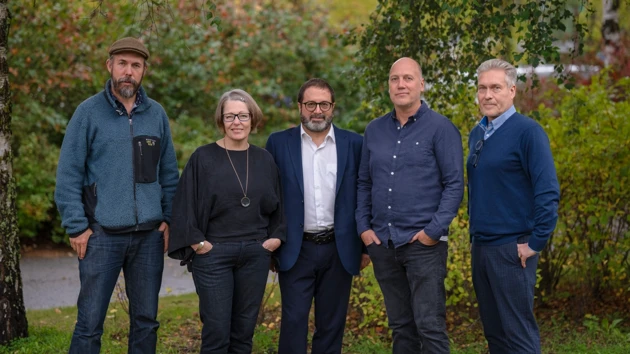
The Arctic Six Chairs 2024-2026: Daniel Metcalfe, Danielle Wilde, Armando Perez-Cueto, Björn Norlin and Niklas Eklund. Photo: Mattias Pettersson
For Niklas Eklund, whose research focuses on Arctic security and Nordic cooperation, the appointment has created new opportunities to develop research projects and participate in international collaborations. He has led the preparation of an application to the Swedish Research Council for a strategic research area focusing on total defence in northern Sweden and initiated a Horizon Europe application together with researchers from several countries. This international collaboration has, in turn, led to participation in two EU-funded Joint Actions.
Björn Norlin has worked with researchers from different disciplines to develop collaboration on how Sámi content can be included in teacher education programmes at universities in Sweden, Norway and Finland. The work has led to joint research funding applications to NordForsk and the EU Framework Programme, joint conference panels and a forthcoming anthology.
The Arctic Six Chair appointments have also helped establish more long-term forms of international collaboration. One example is Armando Pérez-Cueto, whose research focuses on sustainable food transitions in the Arctic. Together with researchers from several universities, he has taken the initiative to establish a UArctic Thematic Network, Arctic Food Transitions. He has also developed a collaboration with Université Laval in Canada on a joint research funding application.
For Armando Pérez-Cueto, his connection with the Arctic Centre has also been valuable beyond the specific research collaborations.
“The connection with the Arctic Centre has helped me gain a better understanding of the Arctic, to listen more and better to the stakeholders themselves and, above all, to establish closer contacts with Sámi researchers,” says Armando Pérez-Cueto.
Danielle Wilde has also worked on issues relating to food and sustainable futures in the Arctic. Her work has included international research collaborations and activities involving other stakeholders. In her role as an Arctic Six Chair, she organised Arctic Forum Food in Umeå in 2025, featuring workshops and speakers from several countries. She also conducted a series of workshops in connection with the Sámi youth organisation Sáminuorra's annual celebration in Arjeplog.
Danielle Wilde has also co-authored two articles in Nature, her first publications in the journal, together with researchers from across the circumpolar Arctic. She has also been invited to co-chair UArctic's Thematic Network on Ocean Food Systems and has deepened her collaboration with the Vindelälven–Juhttátahkka Biosphere Reserve.
“This work will enable me to contribute to changing how decision-makers understand the impact of research in the North,” says Danielle Wilde.
Research collaborations within Arctic Six have also led to joint activities across national borders, ranging from fieldwork and research visits to conferences and international symposia.
Daniel Metcalfe, whose research focuses on the role of Arctic and boreal forests in the climate system, has conducted a research visit to the University of Oulu and worked with colleagues on a Fennoscandian forest network. As part of the network, equipment has been installed in ten test forests.
Daniel Metcalfe emphasises that the research visit and fieldwork would not have been possible without the funding and collaboration within Arctic Six.
“Greater collaboration and more connected research spanning larger geographical regions will provide more holistic and cohesive insights into societal problems such as climate change and unsustainable landuse practices, and potential solutions,” says Daniel Metcalfe.
For Björn Norlin, cross-border collaboration has instead involved bringing together researchers from different academic backgrounds to address issues relating to education and Sámi perspectives. This work has included an international symposium on truth commissions and teacher education in the Arctic, which he helped organise.
“I am most pleased with the opportunity to work closely with new colleagues, through conducting research, publishing together and preparing joint applications on very important topics,” says Björn Norlin.
The researchers' various collaborations have not only opened up new opportunities for research but also created connections with stakeholders outside academia. For Niklas Eklund, the Arctic Six Chair appointment has also increased his visibility and provided opportunities to participate in discussions where research and policy intersect. He has also been appointed Senior Policy Fellow at the Swedish Institute of International Affairs, something he believes is linked to the increased visibility and outreach opportunities provided by his Arctic Six Chair appointment.
“The Arctic Six Chair appointment is important because it creates a platform for both academic and policy-related discussions that otherwise would not take place,” says Niklas Eklund.
Although the appointment period has now ended, the researchers have several plans to further develop the collaborations they have established. For some, the next step involves securing funding for continued research, while others aim to develop networks and deepen international collaborations.
For Niklas Eklund, the next step is to gain greater clarity about funding for the research programme on total defence in northern Sweden for 2027–2031. Armando Pérez Cueto, meanwhile, wants to build on international collaborations relating to sustainable food systems in the Arctic. Through the Arctic Food Transitions network, he aims, among other things, to deepen discussions on the decolonisation of food systems.
Questions concerning the ethical responsibilities of research are central to Danielle Wilde's future work. She is preparing a book proposal based on her experiences as an Arctic Six Chair, in which she wants to explore why institutional ethical guidelines are not always sufficient to ensure that research is conducted ethically and welcomed by those affected by it. She also intends to apply for a UArctic Chair position to further develop her work and expand it to other parts of the circumpolar Arctic.
For Daniel Metcalfe, the next step is to establish functioning monitoring sites at selected locations to support continued research. Björn Norlin, meanwhile, wants to deepen the international research collaborations that have been established, including by seeking new funding and creating opportunities for guest professorships.
The results demonstrate how the Arctic Six Chair appointments have contributed to collaboration across several research fields. From Arctic security and education to food systems and climate research, the researchers have established connections and developed joint initiatives that they can continue to build on.