

NEWS It all started as it often does in the gaming world: with a game jam – an event where participants collaborate to create games within a limited time frame. In the fall of 2024, a group of students sat down and did just that.
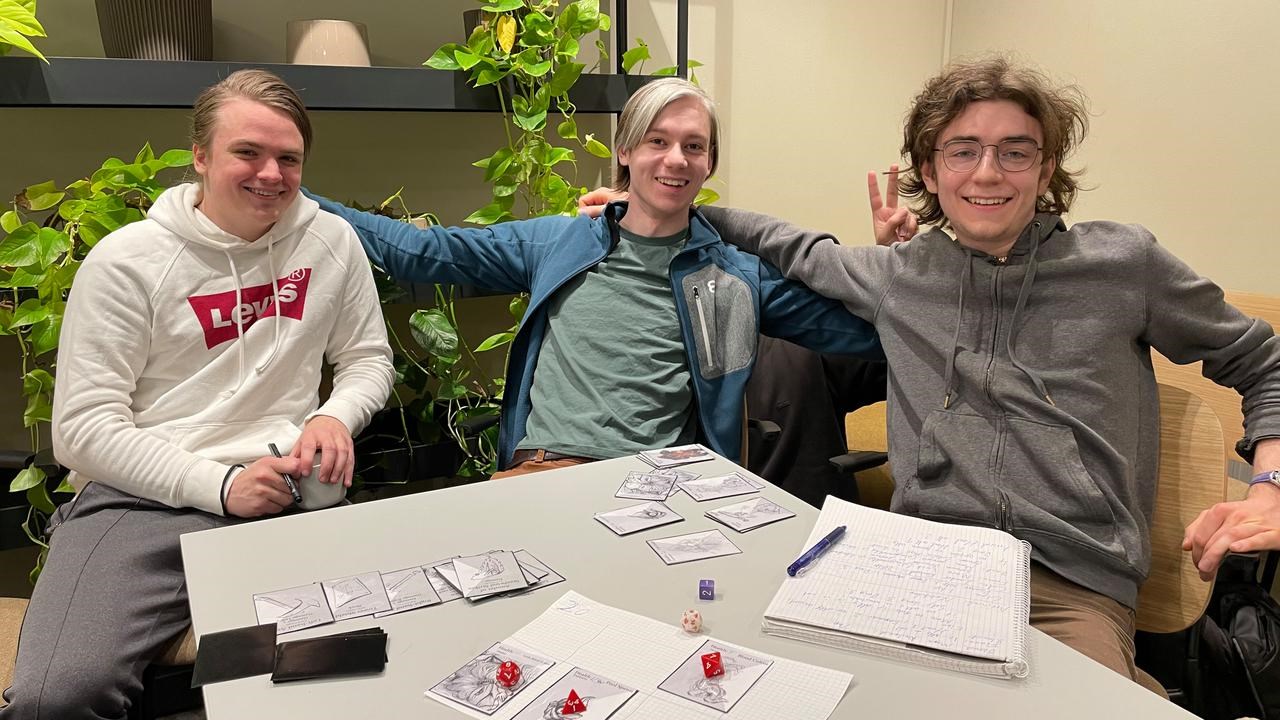
Tobias Norden, Simon Cederfjärd, and John Hörvall from Fools Gambit. Group members Ahmad Kalash and Emelie Nordfelt are not pictured.
ImageEvelinn AppelkvistOne weekend, one theme, too little sleep and far too many ambitions. There were more ideas than hours, and the game didn’t turn out as polished as they had imagined. Somewhere along the way, the seed of something bigger was planted.
Friends Simon Cederfjärd and Ahmad Kalash had already begun talking about starting a game studio while working as teaching assistants at the university. The dream of building something of their own grew stronger after many long conversations in the office, where discussions about game ideas, techn.
Together with Tobias Nordin and John Hörnvall, they began turning their idea into reality during the game jam. The following spring, Emelie Nordfelt joined the team, and the company was later named Fools Gambit — the game studio they are now building together. Today, the team consists of five people from diverse backgrounds, united by a shared passion: to create games.
"It's fun to see how different gaming systems grow and interact with each other. But above all, it's fun because it's incredibly creative. You get to be there and see how everything (code, design and ideas) comes together into something that actually works," says the group.
Their first project, Expired Dungeon, is a digital card-based dungeon crawler where players battle monsters and search for rare loot. What sets it apart is that the items players discover are worn and corrupted, something that is also reflected visually through experimental pixel work, with shifted colors and distorted details.
The game is currently in the prototype phase. An initial physical version has been developed and is being tested to evaluate the core concept, game mechanics and overall user experience. The next step is to develop a playable digital demo.
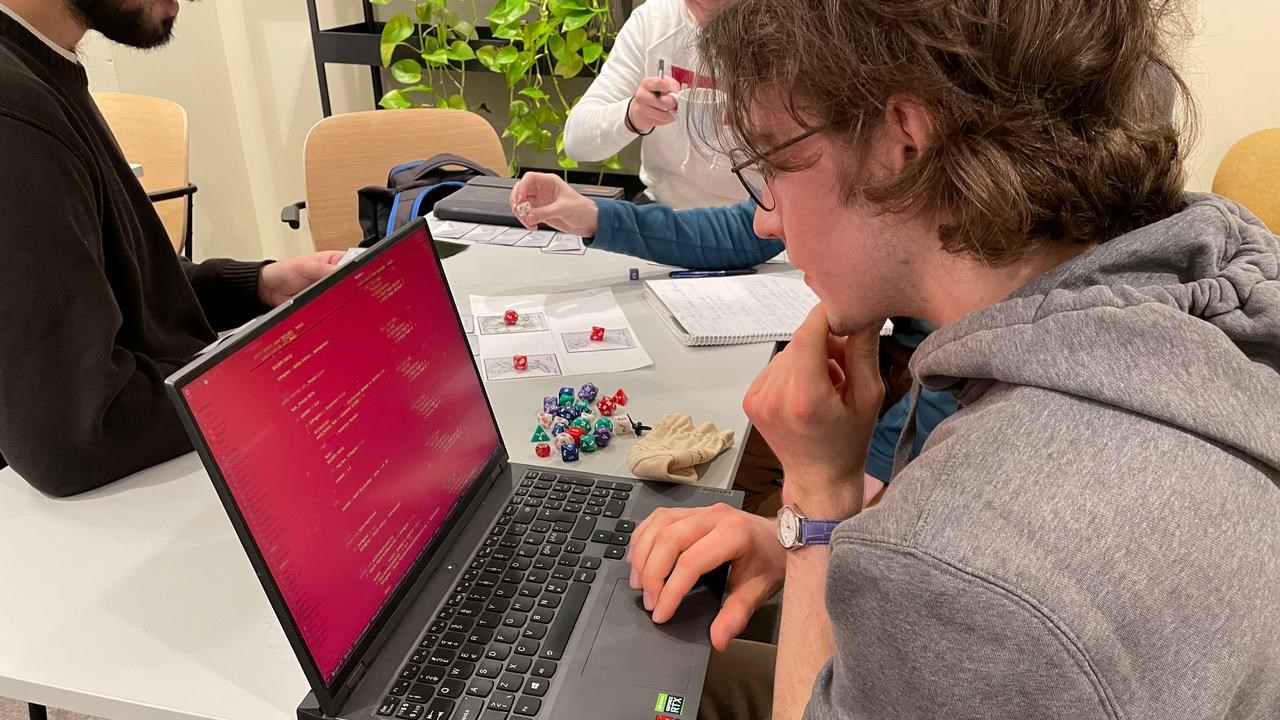
John Hörvall works with code on his laptop.
ImageEvelinn AppelkvistThe journey from idea to where they are now hasn’t been entirely straightforward. The biggest challenge is time. Between lectures, part-time jobs and personal projects, the game is taking shape slowly. Everyone in the team is either studying or working, so development happens whenever their schedules allow. They often collaborate in pairs and are actively pushing to bring the game to a testable stage.
"The challenge is that we want to succeed in producing a testable version of the game and not get stuck in an early stage. So we'd rather scale down so that we can try it out and see what really works," says Simon Cederfjärd.
The name Fool's Gambit was chosen with a tongue-in-cheek approach and a healthy dose of self-awareness. Starting a game studio alongside full-time studies is, as they themselves say, almost a "fool's errand." For them, however, it’s less about the risk and more about the desire to experiment and have fun.
"If we hadn't had so much fun together from the start, we probably would never have gone for it. But we know what we want to do. Now it's just a matter of doing it and seeing how far it can take us," says the group.
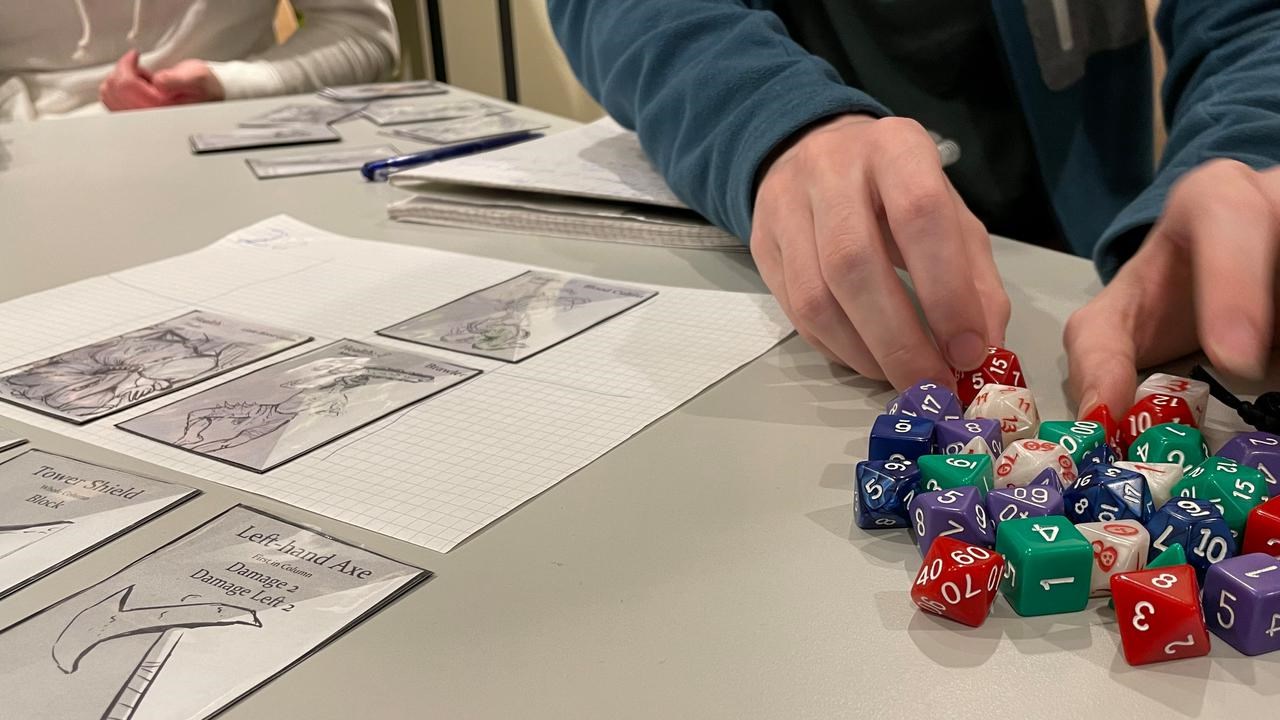
Close-up of prototype and dice.
ImageEvelinn AppelkvistWhile developing their first game, Fool's Gambit is gradually taking shape as a fully functioning game studio. With support from the Innovation Office, the team has had the opportunity to participate in various events and connect with valuable contacts in the gaming industry. They have also received guidance in market-validating their game concept, providing important insights for further development.
In the next two to three years, they hope to have published their first game—and perhaps even be working on their next project—with their sights firmly set on realizing their dream of running their own game studio.
Do you have an idea you want to explore? Learn more about the Innovation Office workshop series, “Kickstart,”