"False"
Skip to content
printicon
Main menu hidden.
Published: 2026-08-24

From summer meetings to Arctic collaboration

NEWS Three significant Arctic events took place before the summer break. The Arctic Arts Summit brought focus to Umeå University's geographical location as a higher education institution in Sápmi and the Arctic. The Arctic Security Forum showed that Arctic security concerns many more research fields than security studies. And the UArctic Congress highlighted routes to international collaboration, with the next Congress coming to Umeå in 2028.

Build on Umeå University’s Arctic position 

What does it mean for a university to be located in Sápmi and the Arctic? Arctic Arts Summit offered several answers through research, art and public discussion.

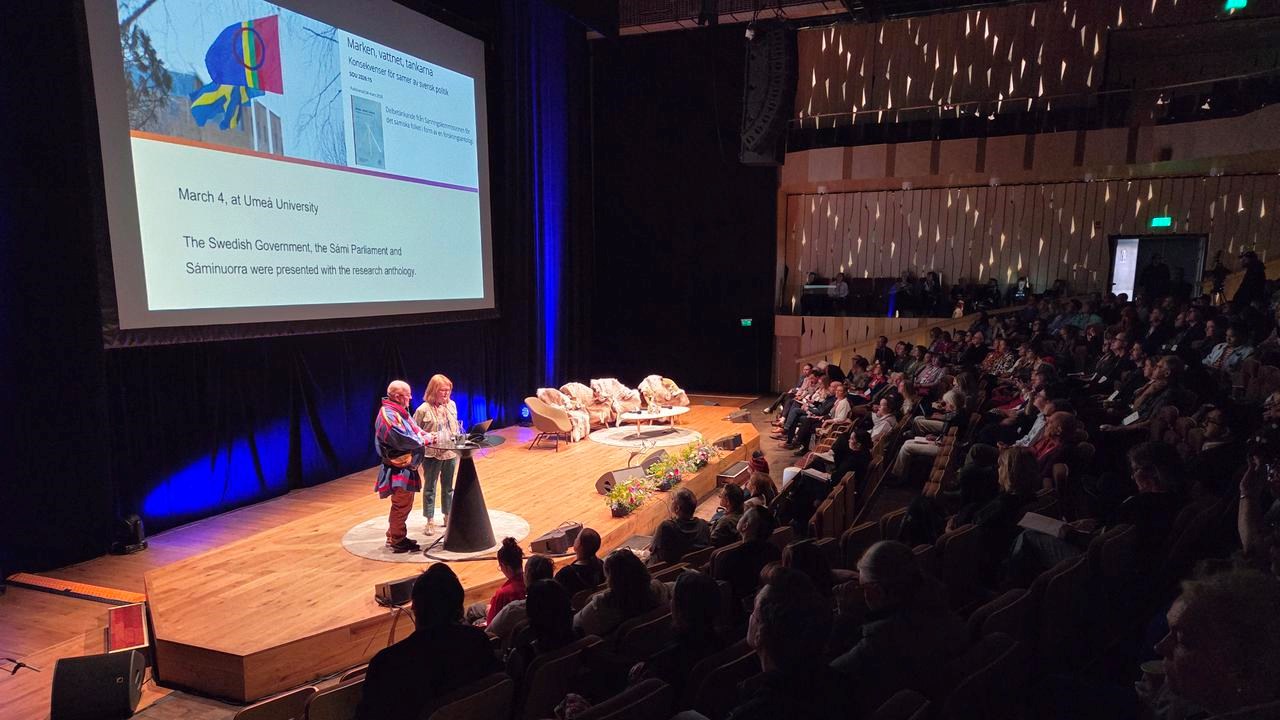
Held in Ubmeje/Umeå on 16-18 June, the summit gathered around 700 artists, researchers, cultural practitioners and policymakers. It was the first Arctic Arts Summit held in Sweden, under the theme Land, Power and Art and with Indigenous perspectives at the centre. Vice-Chancellor Tora Holmberg opened the summit by emphasising Umeå University’s place in Sápmi and the Arctic from geographical, academic and cultural perspectives. 

That position was also visible across the programme. Várdduo – Centre for Sámi Research, the Arctic Centre, UmArts and the Arts Campus connected Sámi perspectives, research and artistic practice through panels, workshops and artistic research. A well-attended session with Krister Stoor from Várdduo and Sámi Truth Commission Chair Kaisa Syrjänen Schaal brought questions of truth and knowledge-building into the wider Arctic discussion. 
For researchers, the opportunity is to build on Umeå University’s position in Sápmi and the Arctic – and explore whether an Arctic perspective could add relevance, new questions or new partners to work already underway. 

Use Arctic Six to widen the security conversation 

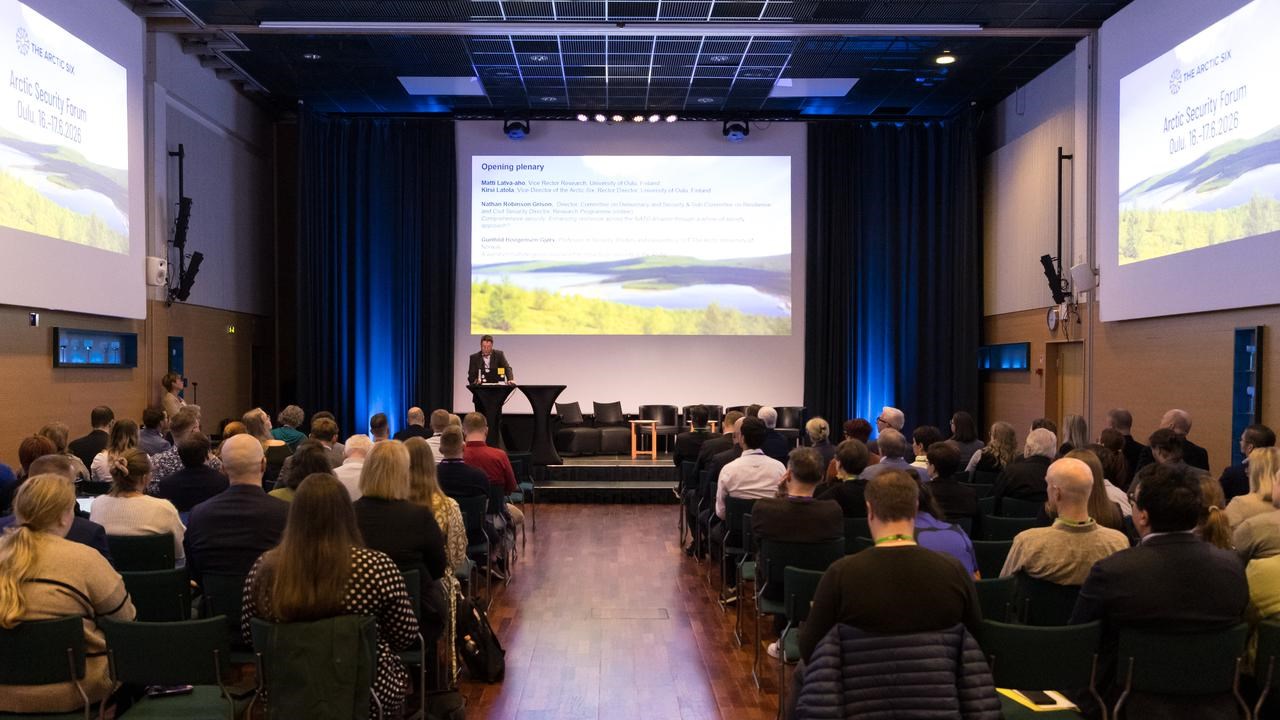
Arctic security is relevant to researchers who may not think of themselves as working on security at all. The Arctic Security Forum in Oulu made that clear. Organised by the six universities in Arctic Six, it brought academia together with policymakers, defence, cities, communities and businesses around total defence, transportation and preparedness in the North. The second day focused on developing new cooperation, projects and plans. 

Arctic security is no longer something we can understand through defence policy alone. Infrastructure, food systems, digitalisation, trust and resilience are all part of the picture. 

The discussions went well beyond military defence. Gunhild Hoogensen Gjørv of UiT The Arctic University of Norway highlighted competition in cyberspace and outer space, where private actors may control critical digital infrastructure and satellites. She also stressed that cohesion and trust make societies harder to destabilise. 

Umeå University Professor and Arctic Six chair 2024-2026 Niklas Eklund moderated a panel on total defence and comprehensive security: 

 – Arctic security is no longer something we can understand through defence policy alone. Infrastructure, food systems, digitalisation, trust and resilience are all part of the picture. 

For researchers, this opens several possible routes into the security discussion. Expertise in digitalisation, infrastructure, food, resilience, trust or society may be useful in addressing Arctic security challenges even when security was never the starting point of the research. Arctic Six also offers an existing Nordic setting for exploring those questions with researchers and other partners. 

Use UArctic now – and build towards 2028 

The UArctic Congress in Tórshavn brought close to 1,400 participants from nearly 40 countries together around research and Arctic cooperation – and showed the breadth of the international community available to Umeå researchers. For Lena Leimgruber Haraldsson, doctoral student at the Department of Language Studies, one message stood out: 

 – One of the strongest impressions from the Congress was the growing emphasis on collaboration across disciplines, sectors and knowledge systems.

Together with colleagues from UiT, she co-organised Creating & Communicating Arctic ArtScience and presented her own research, receiving feedback from an international and interdisciplinary audience while strengthening existing collaborations and establishing new ones. 

One of the strongest impressions from the Congress was the growing emphasis on collaboration across disciplines, sectors and knowledge systems.

Many Umeå researchers are already active across UArctic. This year, two new provisional Thematic Networks hosted by Umeå University were added: Arctic AI and Arctic Food Transitions. Arctic AI, led by Frank Dignum (department od Computing Science, Umeå University), plans an AI literacy programme focused on what AI can do, but also what it cannot or should not be used for. Arctic Food Transitions, led by Armando Perez-Cueto (department of Food, Nutrition and Culinary Science, Umeå University), brings together researchers around food systems and change in northern communities. The new networks offer additional ways to find colleagues and develop ideas with international partners. 

With the UArctic Congress and Assembly coming to Umeå on 12–16 June 2028, the next two years offer researchers a clear opportunity to build collaborations across the wider Arctic community. 

Could your research have an Arctic dimension, or could your expertise help address a challenge in the North? Contact the Arctic Centre. We can help you explore the relevance, find researchers, networks and funding opportunities, and discuss possible next steps.