

NEWS On 23–25 March, researchers from diverse backgrounds gathered at Umeå University for the inaugural Introduction to Metabolomics Data Analysis course. Highlights included a session on pre-processing metabolomics data with MS-DIAL, led by Dr. Stefano Papazian, and a guest lecture by Dr. Gabi Kastenmüller on “What Stories Can Metabolites Tell? Exploring data from cohorts to the individuals”
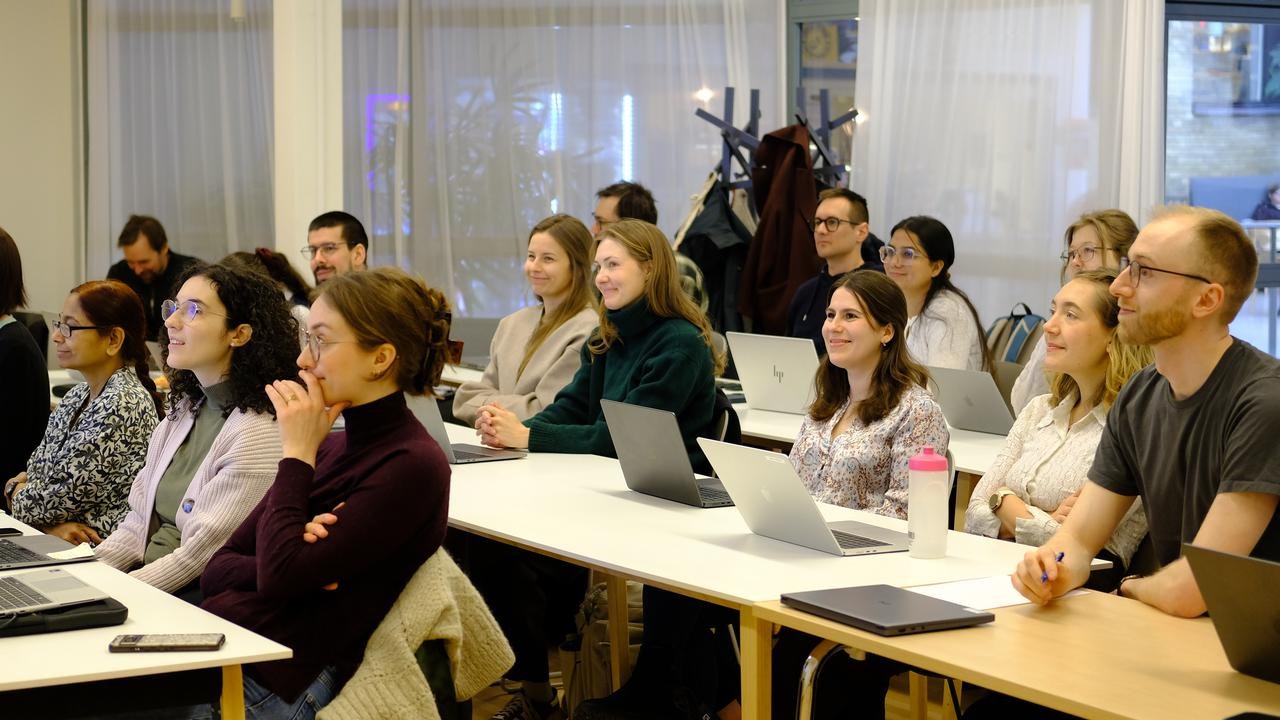
Participants of the metabolomics data analysis course
ImageAinhoa Querejeta
Metabolomics is the large-scale study of small molecules, or metabolites, within cells, biofluids, tissues, or organisms. It plays a key role in understanding biochemical processes, with applications ranging from diagnosing diseases to identifying resistant crop varieties.
The course attracted participants from diverse life science fields and countries. PhD students from Malmö, Uppsala, Stockholm, and Lund attended, working on skin barrier biology, dental tissue metabolomics, and neuron-like cell responses to drugs of abuse. Veterinary researchers explored metabolic differences in horses with different subtypes of asthma. International participants travelled from the Czech Republic, Finland, and Spain. Many came to gain hands-on guidance with data analysis and management, while others aimed to strengthen their ability to interpret metabolomics data collected from their platforms.
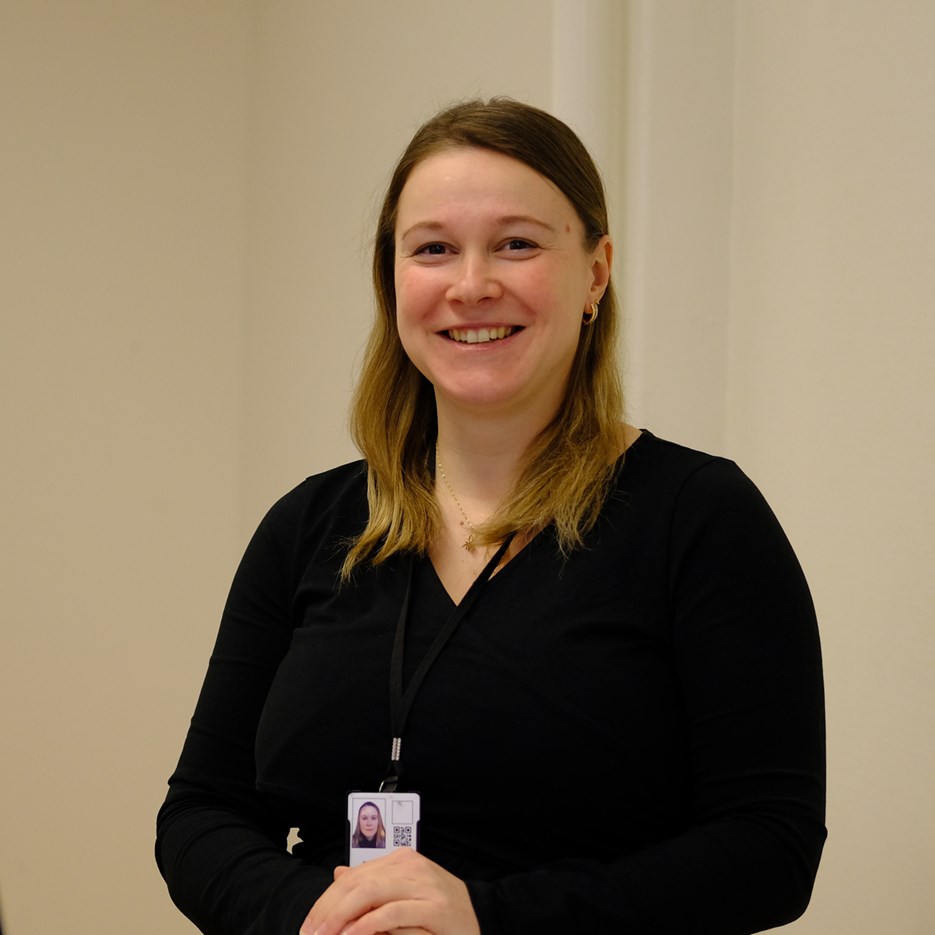
Organiser of the course Dr. Elena Dracheva
Image Ainhoa QuerejetaThe aim of Dr. Elena Dracheva, NBiS organiser, was to introduce participants to the key steps of a typical metabolomics workflow, from study design to data analysis. The course covered the principles of commonly used analytical techniques, including LC-MS, GC-MS, and NMR.
Ilona Dudka and Mattias Hedenström presented the NMR platform and processing NMR Data at Umeå University, while Prof. Carl Brunius (NBiS) gave an interesting session on general aspects of modelling. Participants received training in instrument‑derived data processing and subsequently applied multivariate statistical methods, including PCA, (O)PLS, and (O)PLS‑DA, for downstream data analysis using R and SIMCA software. The course addressed the assumptions, strengths, and limitations of these approaches, and supported participants in interpreting the biological relevance of their results. By the end, participants were equipped to select appropriate data processing and statistical methods for addressing their research questions.
“It has been fun and interesting,” says Linnea Good, a PhD student in bioinformatics at Uppsala University. “The course was very technical, showing how the instruments work. Dr. Stefano Papazian’s session on MS-DIAL for data preprocessing was particularly helpful. I wanted to learn the entire workflow, from sample preparation to data analysis, and my expectations have been met.”
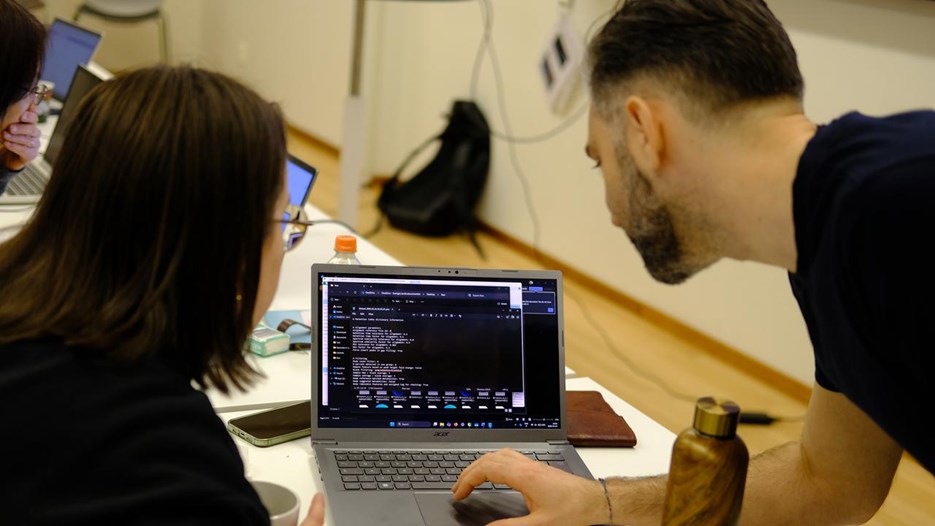
Dr. Papazian showing MS-DIAL
Image Ainhoa QuerejetaDr Stefano Papazian, Head of the National Facility for Exposomics at Stockholm University and part of the SciLifeLab Metabolomics and Exposomics Platform, led a session on LC-MS data pre-processing. He explained the differences between data-dependent and data-independent acquisition (DDA and DIA), before guiding participants through a hands-on exercise using MS-DIAL. Working with real exposomics data, participants gained practical insight into key steps such as peak detection, spectrum deconvolution, and alignment, while being introduced to workflows used to study complex chemical exposures in humans and the environment.
Three participants from the Czech Republic; Vladimír Skalicky, Ondřej Hodek, and Štěpán Strnad reflected on their experience at the course:
“Attending the course has been very useful,” says Štěpán Strnad, research assistant at the Institute of Organic Chemistry and Biochemistry of the Czech Academy of Sciences. “I wanted to gain more knowledge to provide better analysis and advice. Ondřej Hodek aimed to compare different software tools, and I wanted to learn how to visualize large datasets. We are looking forward to the last day.”
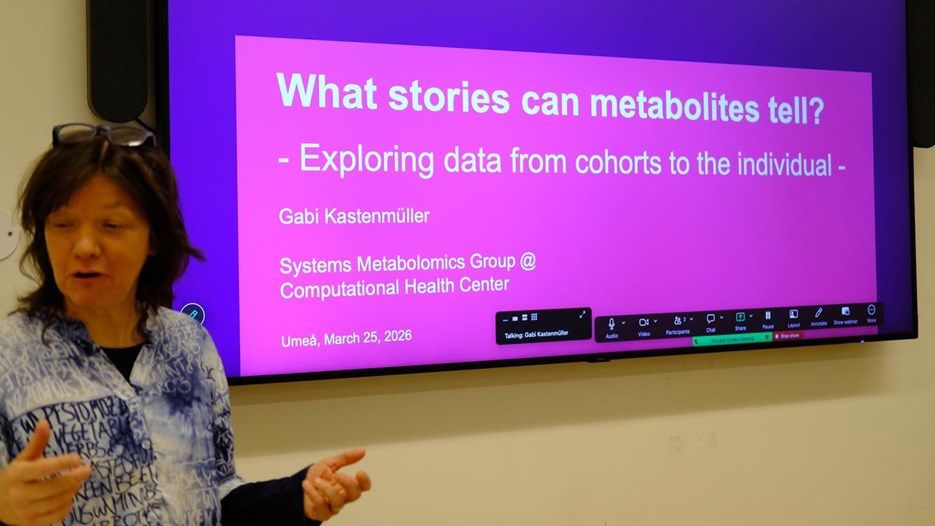
Dr. Gabi Kastenmüller, Head of the Systems Metabolomics research group at Helmholtz Munich
Image Ainhoa QuerejetaDr Gabi Kastenmüller, head of the Systems Metabolomics research group at Helmholtz Munich, focuses on understanding how metabolism and metabolic individuality shape human health and disease. With a background in chemistry, computer science, and bioinformatics, her work centers on integrating and interpreting large-scale metabolomics data. In her presentation, she showed how combining data from cohort studies and targeted investigations can reveal links between metabolism, genetic risk, environmental exposures, and health. Using examples from her research, she illustrated how genetic variation influences metabolite levels, how combined metabolite and genetic data can support patient stratification, and how longitudinal metabolite profiles can capture individual changes over time.
By introducing participants to metabolomics workflows, analytical techniques, and data analysis tools, the course strengthened researchers’ ability to turn complex datasets into meaningful scientific insights – helping them apply metabolomics across diverse biological questions and projects.
Logotype of the National Bioinformatics Infrastructure Sweden (NBIS)
Image NBIS