

NEWS SciLifeLab Infrastructure Day gave participants a clearer picture of the infrastructures and support systems available for life science research in Umeå. At the same time, the event highlighted both the complexity of today’s research data landscape and the ongoing efforts to make it easier to navigate, particularly during the panel discussion on data management where the audience played an active role in shaping the conversation.
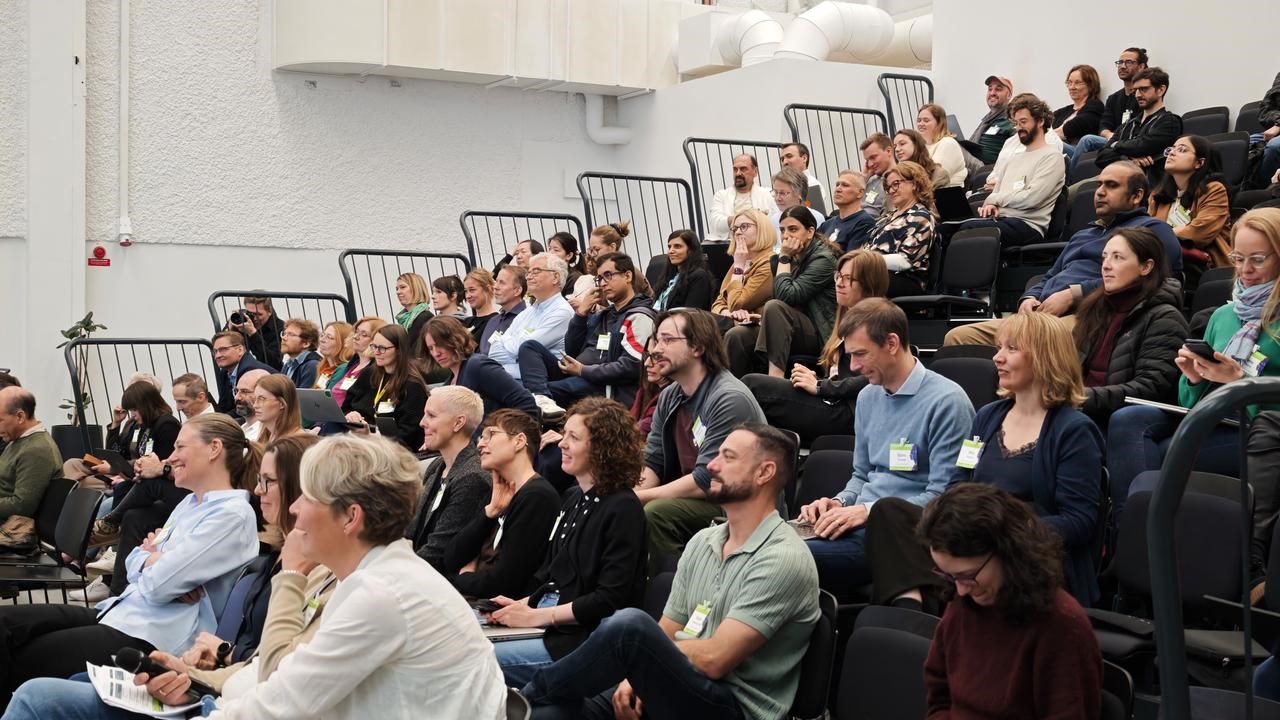
Participants of the SciLifeLab Infrastructure Day 2026 at Umeå University
ImageAnna ShevtsovaFor one day, a little over 130 researchers, technical staff and support functions gathered at Umeå University to discuss the infrastructures behind modern life science research. Participants from SciLifeLab, SLU, Umeå University and Region Västerbotten came together around a shared question: how can research infrastructures and data management better support science?
Throughout the day, participants moved between infrastructure pitches, presentations and poster sessions showcasing a broad range of technologies, infrastructures and support functions linked to life science research. Some were connected to the national SciLifeLab network, while others represented local initiatives and research environments from Umeå University, SLU and Region Västerbotten.
Overall, SciLifeLab Infrastructure Day offered participants both a clearer understanding of the infrastructure available within the national SciLifeLab network and a space for new conversations around future collaboration. The event reflected both the complexity of today’s research landscape and the ongoing efforts to build systems that allow researchers to spend more time on science and less time navigating fragmented infrastructures.
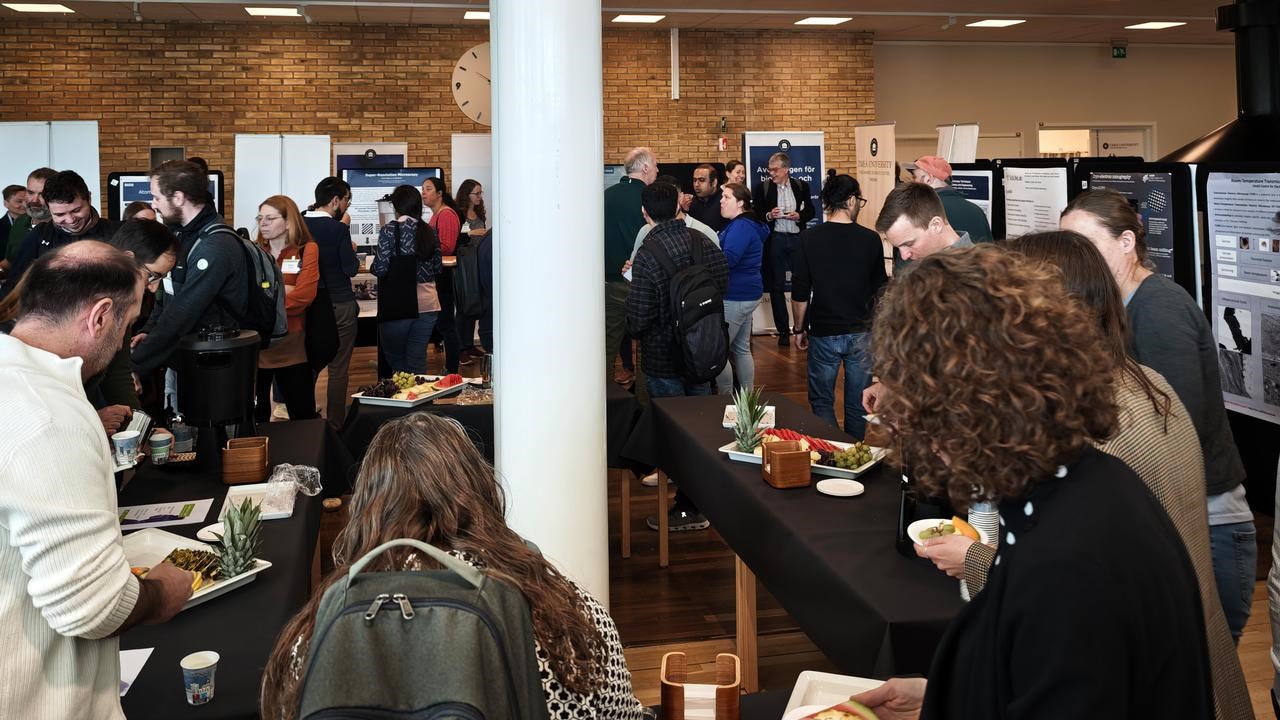
Participants of the SciLifeLab Infrastructure Day 2026 at Umeå University are mingling during the poster session
ImageAnna Shevtsova
While the day covered a wide range of infrastructures and technologies, one part of the programme focused specifically on the growing challenges connected to research data management. Vivien Horváth Wallemberg fellow, who joined Umeå University in 2025 commented on the day:
“I think the day was great and it was a very good opportunity to hear about the available infrastructure at Umeå University, especially for someone like me who recently joined as a group leader. I thought the topic of the panel discussion was very important and timely and it seemed that the facilities and responsible staff are aware of the challenges that we face when it comes to data storage and analysis, especially sensitive data, and I hope that in the future they will actively work on trying to find solutions.”
One of the most engaged discussions of the day centred on the practical realities of working with research data. The panel discussion highlighted challenges many researchers recognise: fragmented systems for storing and accessing data, increasing legal and security requirements, and the amount of time needed to organise data correctly throughout a project.
The panel brought together perspectives from several parts of the infrastructure landscape. Dr. Björn Nystedt represented NBIS, the national bioinformatics infrastructure, while Dr. Björn Torkelsson discussed the role of the high-performance computing infrastructure HPC2N and member of NAISS. Dr. Nicolas Delhomme, Coordinator for Data and Computational Support within the Wallenberg Initiative for Forest Research (WIFORCE), spoke about the challenges he is currently facing in research data management in connection with the establishment of the new data and computational support centre for WIFORCE.
Dr. Kelly Swarts reflected on the challenges researchers face when generating and organising large amounts of data in practice and said that she spent a lot of time at the beginning of her project thinking through and drafting a clear plan for how the data her research would be managed and used. Elisabeth Mach, legal officer at Umeå University, also highlighted how legal and ethical requirements surrounding research data are an important part of research workflows and that should not be overviewed.
Throughout the session, the audience contributed through Mentimeter questions that helped shape the discussion in real time. The format illustrated how many different competences are involved in supporting modern research data management, from bioinformatics and computing infrastructure to legal expertise and practical research experience.
Several participants including members of the panel, described current data management systems as difficult, fragmented and time-consuming. A recurring theme throughout the discussion was the need for more coordinated solutions that allow researchers to spend less time navigating systems and more time focusing on science.
“There is a need to simplify how researchers work with data”
was a message that was expressed by Teresa Frisan and agreed by both panel and participants.The discussions also pointed toward ongoing national efforts to improve coordination between infrastructures, support functions and data systems. Shared platforms, national registries and improved support services were highlighted as important steps toward making research data easier to handle securely and efficiently, particularly when sensitive data are involved. Several speakers also pointed to ongoing efforts to improve coordination between infrastructures, support functions and data systems. Shared platforms, national registries and improved support services were highlighted as important steps toward making research data easier to handle securely and efficiently, particularly when sensitive data are involved. At the same time, it was noted that researchers also need to understand the importance of following institutional guidelines and regulations, and of attending relevant training and courses in data management to ensure good research practice.
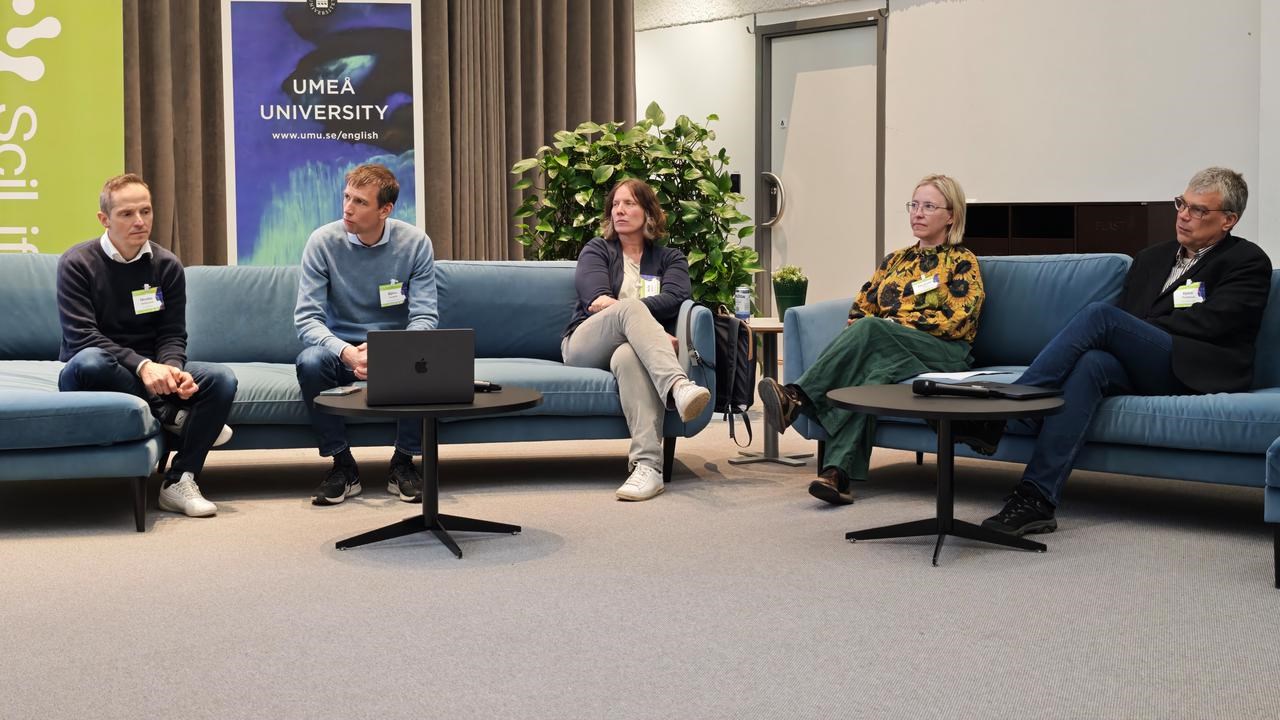
Members of the panel discussion on Data Management at the SciLifeLab Infrastructure Day, 11 May 2026, at Umeå University. From left to right: Nicolas Delhomme (Coordinator for data and computational support for WIFORCE), Björn Nystedt (NBiS, UU), Kelly Swarts (DDLS Fellow, SLU & UMU), Elisabeth Mach (Legal Officer at Legal and Infromation Management Office UMU), Björn Torkelsson (Assistant Director of HPC2N, UMU)
ImageAnna ShevtsovaBeyond the discussions on data management, the event also highlighted SciLifeLab Site Umeå role within the national SciLifeLab network. Through the network, local expertise is connected to shared large-scale infrastructures and services across Sweden, allowing researchers access to technologies, support and collaborations beyond their own institutions.
Throughout the day, the conversations reflected both the opportunities and the growing complexity of modern life science research. More importantly, they showed how collaboration between researchers, infrastructures and support functions is becoming increasingly essential in a research landscape shaped by growing amounts of data.
Throughout the day, the conversations reflected both the opportunities and the growing complexity of modern life science research. More importantly, they showed how collaboration between researchers, infrastructures and support functions is becoming increasingly essential in a research landscape shaped by growing amounts of data.
The event was originally aimed at users, postdocs and young PIs. Still, several infrastructure representatives joked that the intended audience seemed somewhat difficult to spot in the room.
One thing became clear during SciLifeLab Infrastructure Day, it is that modern life science research no longer depends only on producing data — but also on understanding how to work with it together. The challenge for future events may simply be convincing even more PhD students, postdocs and young group leaders to step away from the lab bench for a day and join the conversation.