

About the scientific publication:
Habault, J. et al. (2026). MDM2 suppresses c-Myc synthesis by binding to the 5' mRNA translation regulatory sequence. Proceedings of the National Academy of Sciences, 123(26).
NEWS Researchers at Umeå University have developed a new strategy to slow the growth of tumour cells. By targeting the genetic instructions that control the production of a key cancer-related protein, they were able to inhibit tumour cell growth. The findings have been published in the prestigious journal Proceedings of the National Academy of Sciences (PNAS).
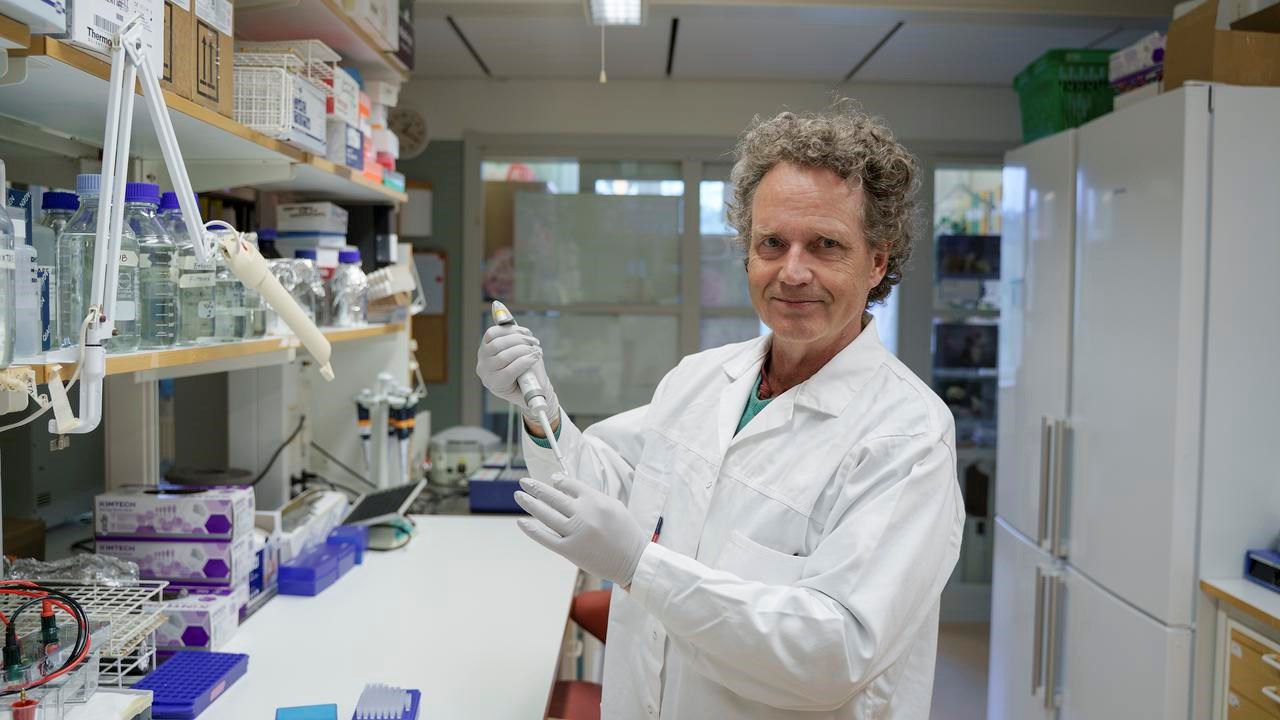
Despite decades of research, the cancer protein c-Myc has remained a challenging drug target. Robin Fåhraeus and colleagues now show that cancer cell growth can be slowed by targeting the genetic instructions responsible for producing the protein.
Imagesimon ohman jonsson inhousebyranApproximately 70 percent of cancers overexpress the c-Myc protein
"Approximately 70 percent of cancers overexpress the c-Myc protein, and therapies that inhibit c-Myc have long been a priority in the search for new cancer treatments," says Robin Fåhraeus, Professor at the Department of Medical Biosciences at Umeå University.
The c-Myc protein is an oncogene that plays a central role in driving tumour growth. Despite decades of intensive research, it has proven extremely difficult to develop drugs that directly inhibit c-Myc. One major reason is that the protein lacks well-defined binding sites where small molecules can attach and block its function, making it a classic example of an "undruggable" target in cancer research.
In the new study, the researchers took a different approach. They show that c-Myc mRNA, the genetic blueprint that cells use to produce the protein, can itself be targeted for treatment.
Using a drug that had previously been tested in clinical trials for a different purpose, the researchers were able to induce the protein MDM2 to bind to c-Myc mRNA. This blocks the production of c-Myc and causes tumour cells to stop growing.
"Finding new applications for existing drugs is an attractive way to accelerate the development of new treatments," says Robin Fåhraeus.
The strategy represents a new way of targeting one of cancer research's most challenging drug targets. Rather than attempting to eliminate the protein itself, the method blocks its production at the RNA level. The findings therefore open up new possibilities for drug development, particularly for cancers in which c-Myc plays a crucial role.
"We hope these findings will pave the way for new treatments for cancers driven by c-Myc. At the same time, we hope to inspire other research groups by showing that mRNA can be used to selectively regulate the production of proteins associated with a wide range of diseases," says Robin Fåhraeus.
The next steps will include testing the strategy in additional models, evaluating its clinical potential, and further optimising the drug. If successful in future studies, the approach could lead to new treatments for multiple types of cancer in which c-Myc plays a central role.
Habault, J. et al. (2026). MDM2 suppresses c-Myc synthesis by binding to the 5' mRNA translation regulatory sequence. Proceedings of the National Academy of Sciences, 123(26).