

About the doctoral thesis
Katarina Eklund, Department of Community Medicine and Rehabilitation, Umeå University: Interdisciplinary Pain Rehabilitation in Primary Care: A Health Economic Perspective. Doctoral thesis, 2026
NEWS A new doctoral thesis from Umeå University shows that pain rehabilitation in primary care can improve health outcomes, reduce the need for healthcare services, and help more people return to work. When several healthcare professions collaborate around the patient, the treatment also becomes more cost-effective than traditional care based on isolated interventions.
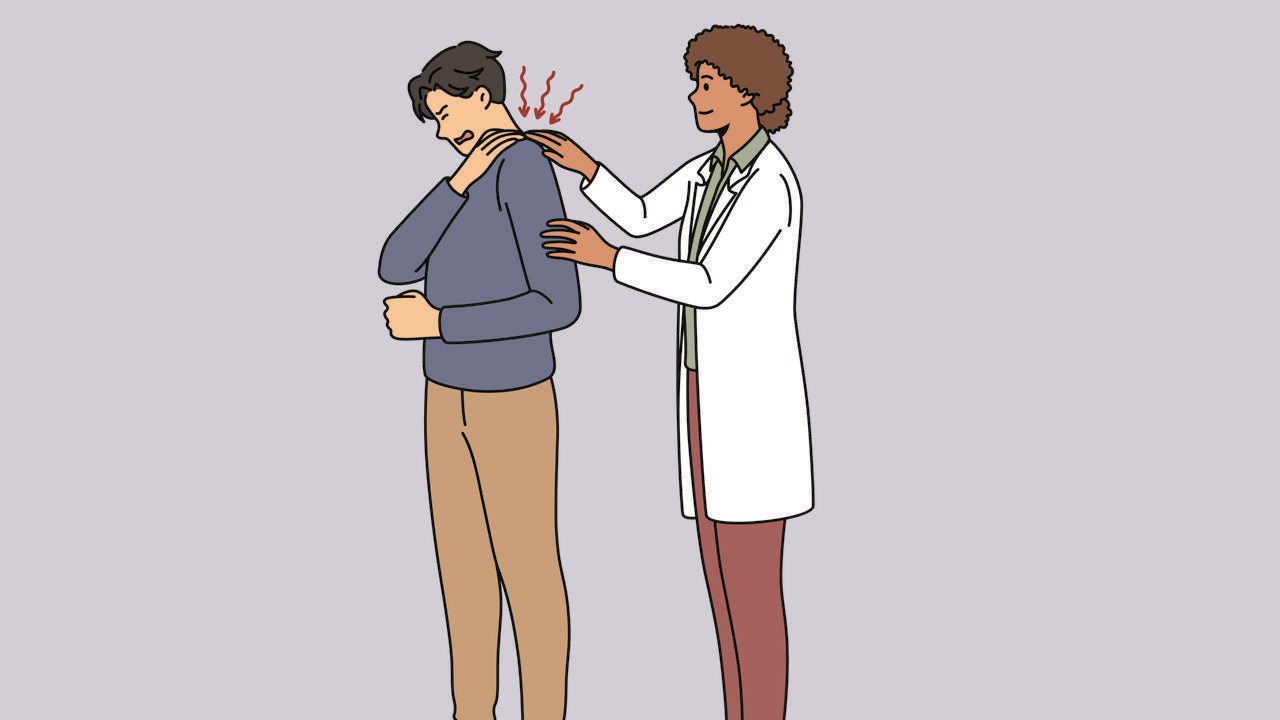
Physiotherapist help male patient with backache.
ImageJohnérLong-term musculoskeletal pain is a common and costly public health problem
Long-term musculoskeletal pain is a common and costly public health problem. Many patients seek help in primary care, and the need for effective treatment methods is substantial. The new research shows that interdisciplinary pain rehabilitation programmes – where different healthcare professionals work together – can be an important part of the solution.
The findings show that both sick leave and the need for future healthcare decrease following rehabilitation. The reduction is particularly evident in visits to general practitioners and physiotherapists. This not only improves patients’ quality of life but also enables healthcare resources to be used more efficiently.
At the same time, the study indicates that it is not only medical needs that determine the level of care patients receive. Socioeconomic factors such as education, obesity, and gender appear to play a significant role in whether a patient is offered rehabilitation in primary care or specialist care.

Katarina Eklund, Physician and previous PhD student at the Department of Community Medicine and Rehabilitation, Umeå University
ImageHans Karlsson“There is therefore a need for clearer clinical guidelines to ensure more equitable healthcare and better access to evidence-based rehabilitation,” says Katarina Eklund, physician and previous PhD student at the Department of Community Medicine and Rehabilitation at Umeå University.
The thesis also highlights the importance of a holistic perspective in which biological, psychological, and social factors are taken into account. Early interventions are emphasized as crucial for reducing both individual suffering and societal costs.
The results are based on four sub-studies combining patient-reported data, registry data, and health economic analyses. By following patients’ health and healthcare utilization before and after rehabilitation, the research was able to demonstrate both the medical and economic effects of the treatment.
Katarina Eklund defended her doctoral thesis at Umeå University on 28 May.
Katarina Eklund, Department of Community Medicine and Rehabilitation, Umeå University: Interdisciplinary Pain Rehabilitation in Primary Care: A Health Economic Perspective. Doctoral thesis, 2026