

Research group Stina Jansson Lab conducts research at the interface of environmental chemistry, thermochemical conversion, and the environmental fate of persistent organic pollutants. The group investigates how organic contaminants- particularly fluorinated and other halogenated species - form, transform, and degrade under high temperature conditions. Current research focuses on environmentally and societally relevant waste streams, including municipal solid waste, biomass residues, and industrial by-products.
The lab combines laboratory-scale thermochemical experiments with advanced analytical chemistry to address key knowledge gaps in pollutant behavior, resource recovery, and carbonaceous material formation.
The lab maintains extensive capabilities in:
A major research focus examines the formation, transformation, and persistence of per‑ and polyfluoroalkyl substances (PFAS) in waste‑to‑energy systems. The group has documented PFAS occurrence in, for example, ashes and process water, demonstrating that these compounds frequently survive industrial incineration temperatures. When degradation occurs, it is often incomplete and results in the formation of smaller fluorinated transformation products.
The lab’s pioneering discovery of self‑generated carbon (SGC) - a previously undescribed carbonaceous solid that spontaneously forms in HTC filtrates - has established a new research direction. SGC differs chemically and structurally from hydrochar and represents a potentially valuable carbon product originating from the largely understudied liquid fraction of HTC processes.
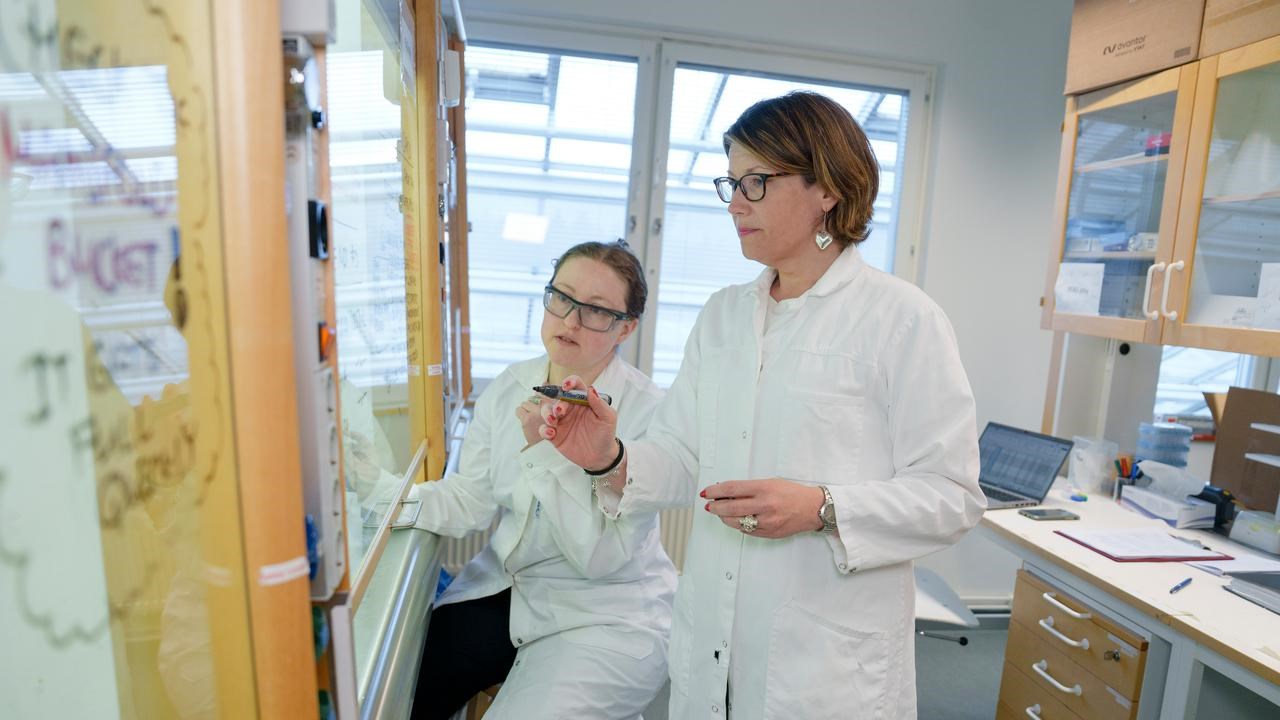
Doctoral projects typically involve strong cross‑sector collaborations and industrial partnerships, providing access to both laboratory- and pilot‑scale systems. Researchers joining the group can expect to engage in multidisciplinary work spanning environmental chemistry, materials science, and process engineering.

Common PFAS substances are difficult to capture once they have entered the environment, new thesis shows.
