
A workshop model illustrating the complexity of wildfire scenarios. Through research-driven exercises, students mapped stakeholders, challenges, and response stages to inform strategic design proposals for crisis logistics.
Publication date: 2026-08-20
Mobility when it matters most
When disaster strikes, mobility can decide whether help arrives in time. Working in collaboration with Volvo Construction Equipment, MFA Transportation Design students explored how future vehicle concepts could support crisis logistics in earthquakes, storms, and wildfires.
Text: Jens Persson

Mission: Coordinated Mobility brought together MFA Transportation Design students, UID faculty, and Volvo CE professionals to explore how strategic transportation design can strengthen crisis preparedness, response, and resilience.
Image:Benjamin FodorDeveloped within the strategic design course Mission: Coordinated Mobility, the project challenged students to look ahead to 2036 and propose purposeful, brand-led vehicle concepts that could operate as part of wider logistic systems in crisis-hit situations. The course invited them to connect real-world needs with Volvo CE’s expertise in construction equipment, transport, logistics, and sustainable innovation.
The relevance of the brief has become increasingly clear during a summer marked by severe natural disasters across the globe. In June, twin earthquakes caused widespread destruction in Venezuela, while August saw Typhoon Dolphin bring flooding, transport disruption, and evacuations in eastern China, as well as intensified monsoon rains in parts of the Philippines. Across Europe, extreme heat and drought have fuelled major wildfires, forcing evacuations in several countries and underlining the growing need for resilient crisis logistics.
Against this backdrop, the students’ work speaks directly to a growing global need: how can mobility, logistics, and industrial design better support people before, during, and after crisis? Natural disasters place extreme pressure on mobility systems, often determining whether people, aid, and resources can reach affected areas in time. The course brief connected this challenge to the UN Sustainable Development Goals, with particular emphasis on resilient infrastructure, sustainable communities, and responsible resource use.
For Volvo CE, the collaboration offered both strategic insight and a valuable pause from everyday industrial design work.
“The collaboration with the UID transportation class was a truly valuable and inspiring experience for our design department,” says Nina Augustsson, Design Director at Volvo Construction Equipment. “In the middle of our busy project deadlines and day-to-day problem solving, it gave us a welcome chance to pause, reflect, and see things from a new perspective.”
Strategic design for complex conditions
Throughout the course, students role-played as experts working in a strategic design department. The aim was not only to imagine future vehicles, but to identify meaningful opportunities where design could bring value to a company, its customers, and society.
The project began with a sense-making and strategy phase, where students developed team contracts, studied Volvo CE’s brand and products, and mapped real-world needs. Through study visits, lectures, workshops, and strategic framing, each team defined its own direction, design brief, work plan, and key parameters before moving into concept development.
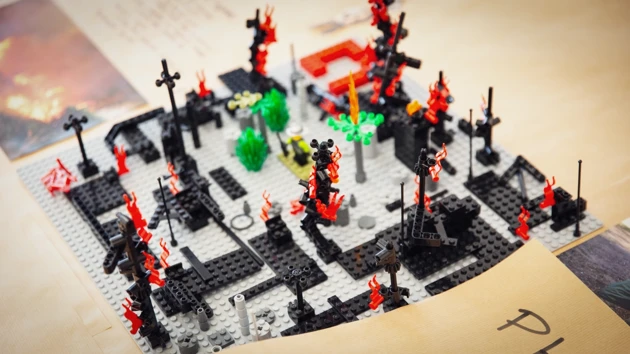
In the exploration phase, students combined 2D and 3D development, stakeholder input, ideation sessions, tutoring, and presentation training. The final concepts were presented through short team pitches, supported by slides, posters, and 3D visualisation, with the aim of making a persuasive case for future product development.
Augustsson highlights the maturity of the work presented by the students.
“The students showed great maturity as designers, making thoughtful and research-based decisions,” she says. “In addition, they showed great skills in using AI in a purposeful way.”
Across the course, the students explored crisis logistics through three disaster contexts: earthquakes, storms, and wildfires. Rather than treating vehicles as isolated products, the proposals approached mobility as part of wider systems of preparedness, response, recovery, and long-term resilience.
Volvo Terra: reaching the last mile after earthquakes
The project Volvo Terra, developed by Christopher Nõmmann and Kaloyan Petrov, focused on earthquake response and the urgent challenge of reaching affected areas in time. The team identified access as a core bottleneck after earthquakes, where damaged infrastructure and blocked routes can delay search and rescue during the critical first hours.
Framed within Volvo’s human-centred approach and broad industrial ecosystem, the team proposed VOLVO TERRA as a new brand extension dedicated to humanitarian and disaster relief equipment.
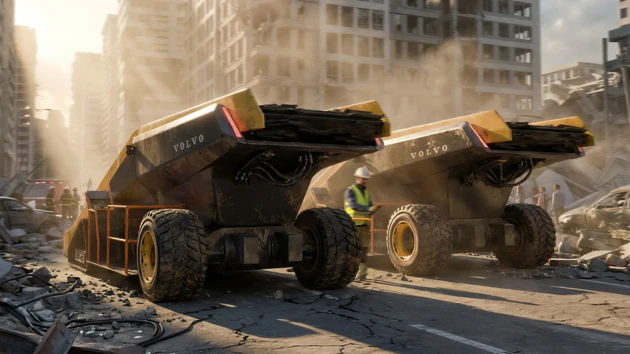
Built for the first hours of a disaster, Terra Mover enables rescue teams to navigate damaged infrastructure and reach those in need.
At the centre of the proposal are two complementary vehicle concepts. Terra Mover is a ground-based rescue and logistics vehicle designed to restore access by helping teams navigate damaged infrastructure, clear blocked routes, and transport personnel, equipment, and essential supplies. Terra Wayfinder is an amphibious rescue vehicle for environments where collapsed infrastructure meets flooding, combining mobility, durability, autonomy, and real-time data sharing. Together, the concepts present a coordinated disaster-response system where speed, access, and integration can directly affect outcomes for communities under pressure.
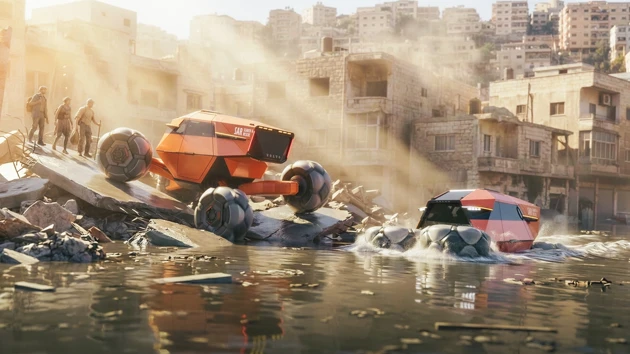
Terra Wayfinder is an amphibious rescue vehicle designed to reach isolated communities when damaged infrastructure and flooding prevent conventional access.
Volvo Agis: connecting everyday operations and emergency response
VOLVO Agis, developed by Patipol Khempimook and Ronggang Bao, addressed storm-driven disasters, with a focus on typhoons in Southeast Asia. Grounded in the context of the Philippines, the project explored how recurring storms, fragile infrastructure, and limited resources create long-term challenges for evacuation, rebuilding, and recovery.
Rather than treating disasters as isolated events, the students framed them as recurring conditions that prevent communities from fully rebuilding between crises. From this perspective, they identified an opportunity for Volvo Group to bridge construction operations and disaster response, two domains that share challenges around terrain access, limited mobility, and gaps in real-time information.
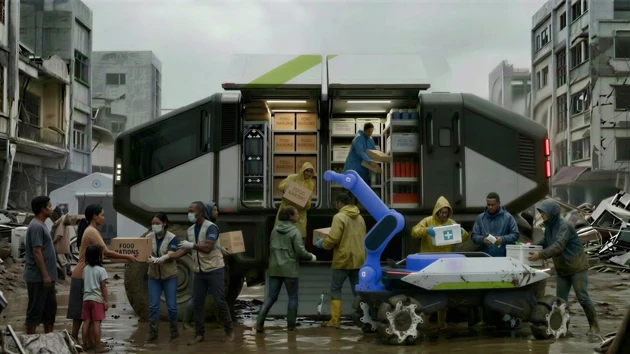
AGIS_01 and AGIS_02 operate as a connected system designed for storm-driven disasters, taking reference on typhoons in Southeast Asia and their impact on vulnerable regions. Note: AI-assisted tools were used in the creation of this concept rendering.
The proposal consists of two connected vehicle concepts. AGIS_01 is a compact, agile unit for dense and disrupted urban environments, supporting evacuation coordination, local transport, light rescue work, and ground-level data collection. AGIS_02 expands this into a larger modular platform, functioning as a mobile hub for logistics, maintenance, mapping, and communication. Designed for continuous use before, during, and after a disaster, AGIS proposes a more resilient and resource-conscious approach to crisis preparedness.
Volvo Lookout, Base and Treader: wildfire response as an evolving system
The third project, developed by Milena Kuhlmann, Joona Pussinen, and Alexander Borisch, explored wildfires as part of an ongoing and escalating system shaped by climate change, uncertainty, and repeated cycles of preparation, response, evacuation, and recovery.
The team identified that Volvo’s role should not be to compete with existing firefighting solutions, but to support the spaces around the fire, where coordination, safety, evacuation, and long-term recovery are often overlooked. Through expert input and field research, they framed wildfire response as a question of human experience and decision-making, as much as technical capability.
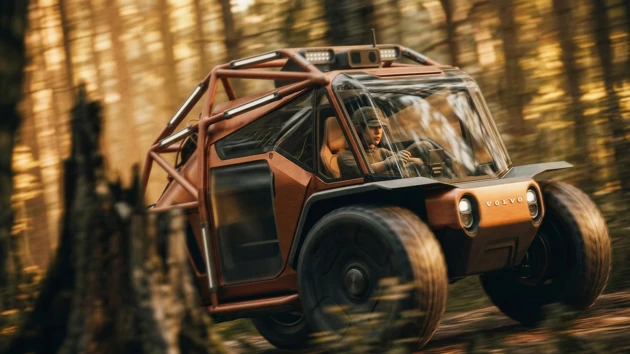
Volvo Lookout is a mobile observation and communication vehicle designed to improve situational awareness, coordination, and safety during wildland fire operations.
Their work resulted in three connected concepts. Volvo Lookout supports firefighters in active situations by acting as a mobile companion vehicle, sensor platform, and communication hub. Volvo Base addresses evacuation from coastal fire zones through a modular floating platform system that can offer temporary safety, information, and connection points. Volvo Treader looks to post-fire recovery, using a lightweight, terrain-sensitive platform to support restoration work in fragile landscapes without causing further damage. Together, the concepts suggest a careful and continuous role for design in wildfire response, supporting people, adapting to context, and treading lightly.
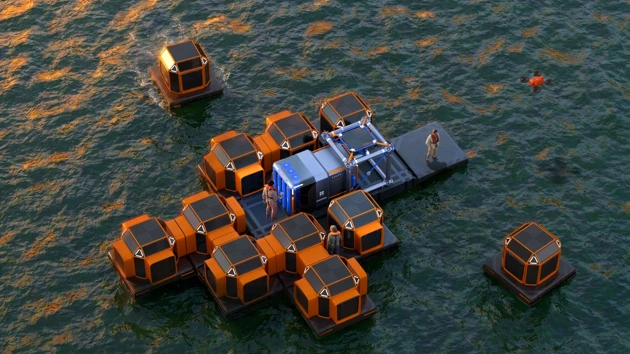
Volvo Base is a modular offshore evacuation platform designed to provide safe shelter when wildfires overwhelm land-based escape routes.
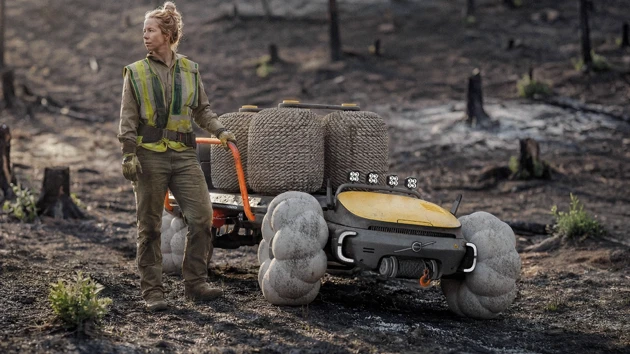
Designed for post-wildfire recovery, Volvo Treader supports erosion control and landscape restoration while minimising impact on sensitive terrain.
Fresh perspectives with real potential
Across all three project directions, the students demonstrated how transportation design can contribute to future crisis logistics by connecting vehicles, systems, users, data, and brand strategy. The projects also show how mobility can be understood not only as movement, but as access, coordination, care, and resilience.
For Volvo CE, the collaboration offered insight into how a new generation of designers interprets the company’s values and future possibilities.
“I believe the students gained insight into what matters to us as a company,” says Nina Augustsson. “Their strong research, clear niche focus, and fresh interpretation of our values led to thoughtful concepts with real potential.”
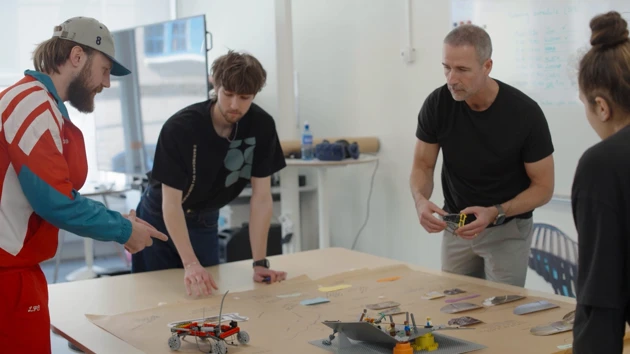
UID Head of Institute Demian Horst leads a workshop session during Mission: Coordinated Mobility, where students worked in teams to map stakeholder needs, define strategic directions, and identify opportunities for future crisis-response mobility systems.
The course reflects UID’s emphasis on collaborative, research-driven, and future-facing design education. By working with a global industry partner on complex societal challenges, the students were able to explore how strategic transportation design can create proposals that are meaningful for companies, relevant to communities, and responsive to the uncertainties of the future.
Through Mission: Coordinated Mobility, the students approached crisis logistics not as a distant or speculative topic, but as a field where design decisions can influence preparedness, safety, recovery, and long-term resilience. At a time when earthquakes, storms, and wildfires are placing growing pressure on communities around the world, their concepts point towards a broader understanding of transportation design, where vehicles are part of living systems, and where the role of the designer is to help people, organisations, and societies move through complexity with greater care.