
The Department of Chemistry at Umeå University is collaborating with the company Sartorius in a research project aimed at improving the production of biopharmaceuticals. The project is carried out within the Industrial Doctoral School and is funded equally by the university and Sartorius.

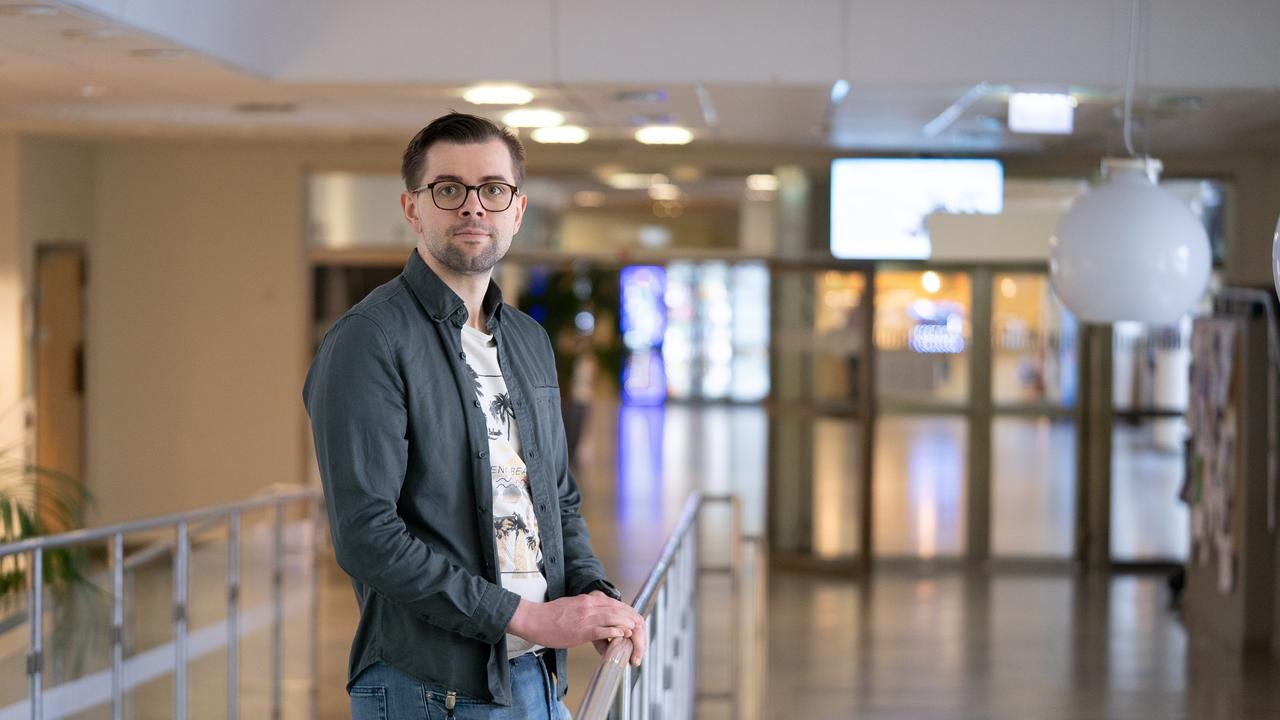
Doctoral student Andreas Eriksson is working on analysing and understanding how biopharmaceutical manufacturing processes function at the molecular level. The focus is on CHO cells, a common cell line used for producing biological pharmaceuticals. The project is developing mathematical models and data analysis tools to improve monitoring and predictability in manufacturing. The long-term goal is to optimize quality and reduce production costs.
“...the biggest advantage for me is that I have one foot in both academia and the corporate world.” – Andreas Eriksson, doctoral student at the Department of Chemistry.
The setup of the Industrial Doctoral School offers courses in innovation, patent law and sustainable development—knowledge that normally is not included in the faculty’s doctoral training. The combination of academic specialization and industry-related competence broadens future career opportunities, regardless of whether the next step is a role in academia, the biotech industry or public research environments.
A central part of the collaboration is the connection to Sartorius’ expertise. The company has a strong presence in Umeå, where they develop software for analysing large-scale datasets, the same type of tools Andreas uses in his research. The company also develops cell lines and materials used in pharmaceutical production, making the collaboration directly linked to real industrial application.
From Sartorius’ perspective, the collaboration with the Department of Chemistry has brought clear and highly valuable benefits. One of the greatest advantages has been the ability to utilise several molecular and analytical platforms, along with the associated expertise available at the university, resources that the company does not have in-house.
“We got access to state-of-the-art metabolomics and spectroscopy infrastructures that we do not have at the company. That was a huge plus for us.” – Izabella Surowiec
This access has not only enabled complex and large-scale analyses, but also given the doctoral student the opportunity to develop methods and results that may have long-term value for the company.
The collaboration through the Industrial Doctoral School demonstrates how academia and industry can contribute to each other’s development. The university gains access to relevant research questions, modern industrial methods and updated knowledge about the needs of the sector. Sartorius gains access to analytical instruments to analyse research results, as well as models and analyses that can be used to develop future processes and products.
Together, the Department of Chemistry and Sartorius are helping to strengthen knowledge about biological pharmaceuticals and create better conditions for future pharmaceutical production.