


Sponsors and funders
We would like to thank the Bengt Winblad Prize (awarded by the Swedish Medical Association), StratNeuro at Umeå University and Umeå University, which made it possible to organise the anniversary celebrations.
FEATURE A grand celebration as UFBI marked its 25th anniversary.
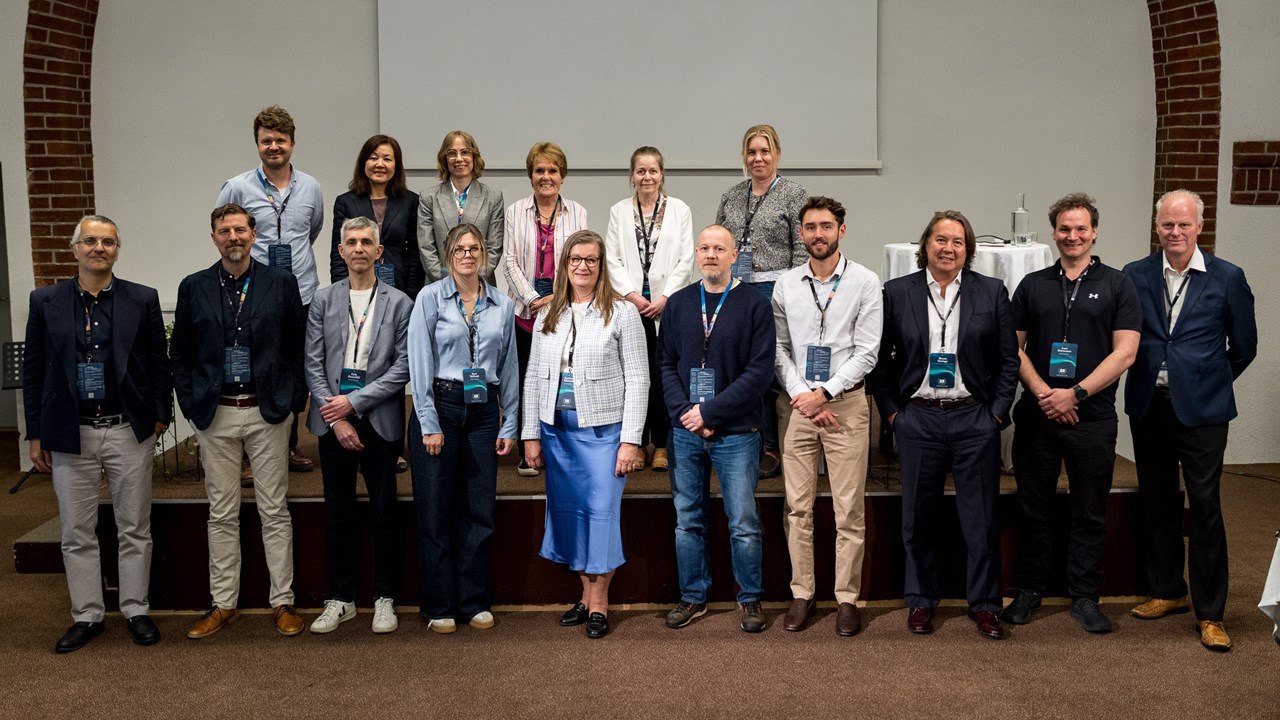
Organisers and speakers at the UFBI’s 25th anniversary.
ImageMikael StiernstedtUFBI was founded in October 2001 by Lars Nyberg, Katrine Riklund and Roland Johansson. Lars Nyberg had returned to Umeå following a postdoctoral fellowship in Canada, where he had been working on brain imaging – a field for which there was no equivalent research environment in Umeå at the time.
The possibilities for continuing that kind of research in Umeå was limited, and Lars therefore felt the need to create something that did not yet exist – his own brain imaging unit. Together, they built up UFBI from the ground up – an organisation that was small and vulnerable at the outset, but which has, over time, developed into the established and successful research environment it is today. The initiative was primarily about getting activities started that would enable them to continue working on the issues that interested them, rather than formulating a long-term strategy.
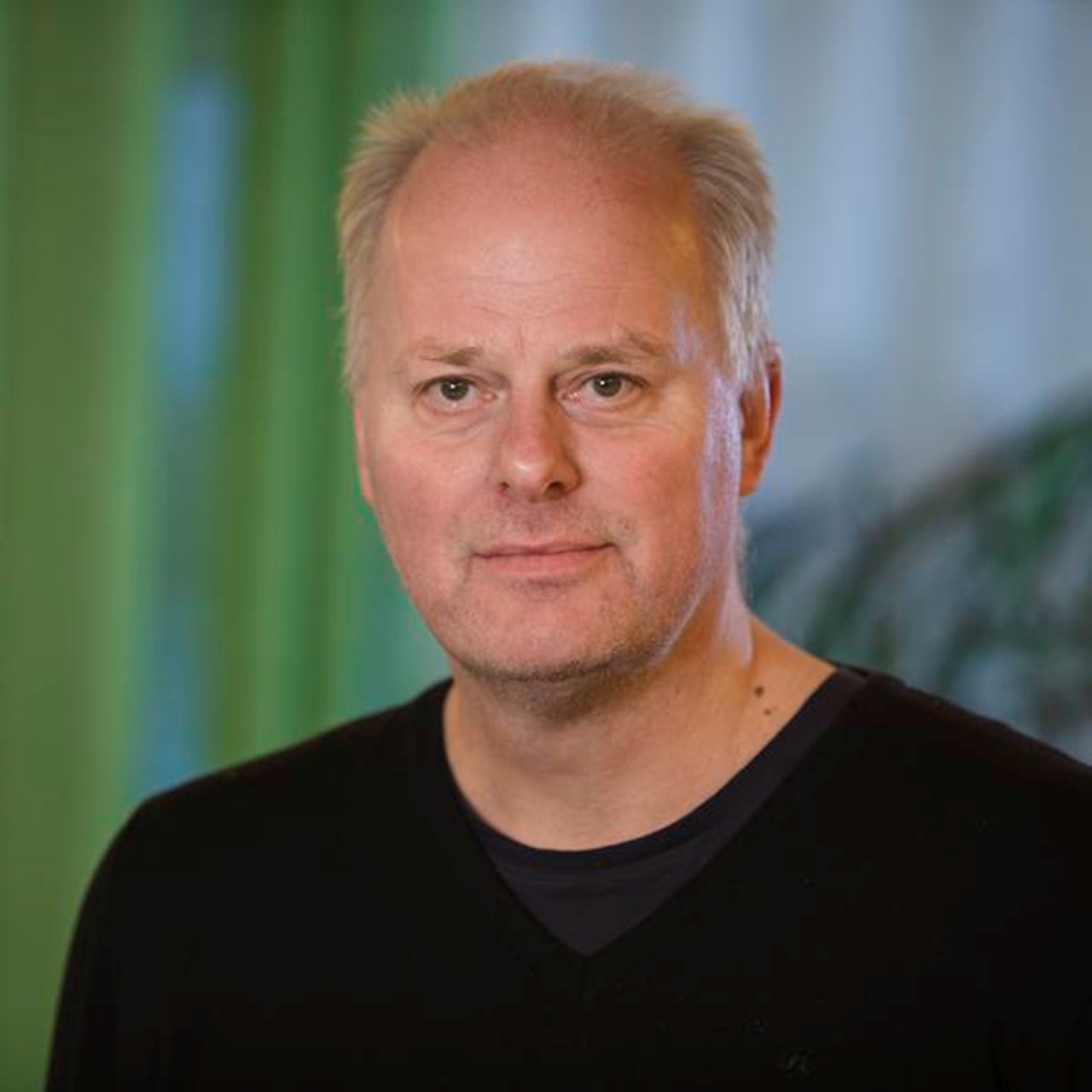
Professor Lars Nyberg. Founder and Deputy Director of UFBI.
ImageMattias Pettersson“I suppose there weren’t exactly any plans back then to still be here 25 years on. At the time, it was more about getting things up and running and being able to do something. It’s been great, and we’ve had some very talented people come through over the years,” says Lars Nyberg, founder and acting director of UFBI.
In order to get the organisation off the ground, they entered into discussions with the university, and following a meeting with the then Vice-Chancellor, Inge-Bert Täljedal, UFBI received the financial support it needed from the University Board. Right from the start, the strategy was to lay a stable foundation. Among other things, this meant prioritising the recruitment of physicists.
“Right from the start, we felt that if this was to come to anything, we’d have to build it properly from the ground up,” says Lars Nyberg.
Lars recalls that a milestone in UFBI’s journey was when they acquired the MRI scanner. Lars was awarded the Göran Gustafsson Prize, following which the then Vice-Chancellor, Göran Sandberg, invited him to lunch. The Vice-Chancellor knew that several universities were keen to recruit Lars and therefore asked him point-blank: what would it take for him to stay in Umeå? The answer came quickly – an MRI scanner for research. This marked the start of an application to the Knut and Alice Wallenberg Foundation, which approved the funding, and the dream of an MRI scanner became a reality.
“When we got it in 2009, we were able to start carrying out far more procedures than we’d been able to with this clinical equipment up to that point. That was really the biggest single leap in quality,” explains Lars.
Today, collaboration is widespread, involving researchers, PhD students, physicists, research trainees and postdoctoral researchers from different parts of the world. The collaboration with Region Västerbotten is an important aspect for UFBI, where they share the MRI scanner with the region; it is used for both clinical and research purposes. This is central to the unit and benefits both clinicians and researchers.
“We benefit from the fact that we’re part of the region, not just because we coordinate our efforts, but because this gives rise to issues that are clinic-driven and patient-centred. There are also skilled people who can analyse the data,” explains Lars.
The anniversary celebrations held at Hotel Mimer in Umeå were a great success. Ninety-six visiting speakers and participants from different parts of the world gathered to share their experiences, and the lectures were interspersed with networking sessions and a poster session. One of those exhibiting a poster was Hsing-Fen Tu from Taiwan, who is doing her postdoc at UFBI. Hsing-Fen Tu was also part of the organising committee and is pleased with how the event was organised.
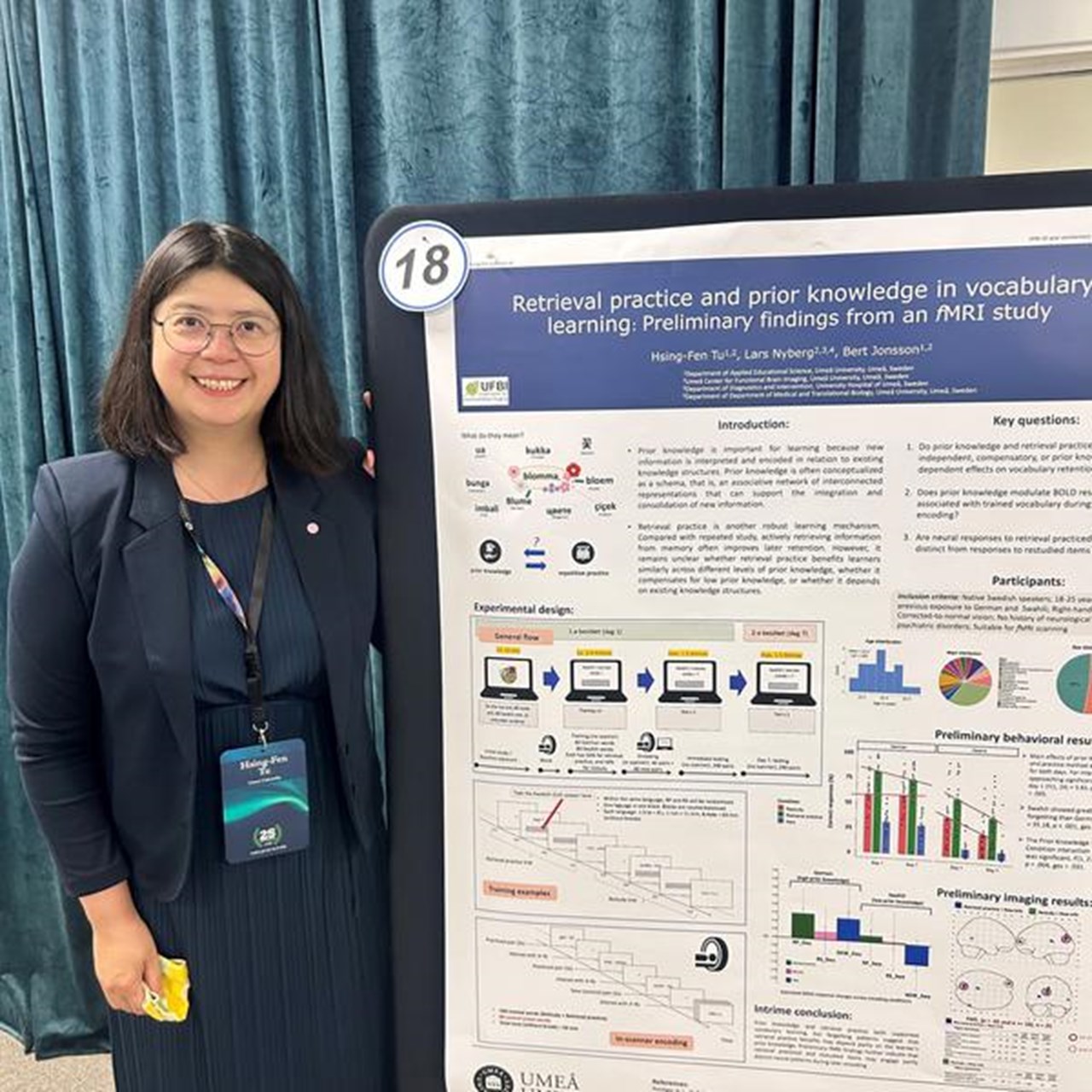
Hsing-Fen Tu at her poster.
ImageHeléne Andersson“It was an interesting process to handle all the communication, invite speakers and ensure they arrived without any problems – all these details are important. After all, we want to promote research, exchange and communication. And when they’re here in person, it becomes much easier for everyone to communicate; that’s very important,” says Hsing-Fen Tu.
25 years after its inception, UFBI continues to grow. The organisation is taking small steps at a time, and with the new technologies of the future, it can continue to develop and conduct research into methods of advanced brain imaging. In addition to new technology, Lars emphasises the importance of securing a supply of talent by recruiting and developing PhD students, research trainees and postdoctoral exchange students.
The key to moving forward is to be able to rapidly implement the best available solutions, continue to anticipate future developments, and at the same time strengthen international links and recruit more leading research groups in the field of brain research.
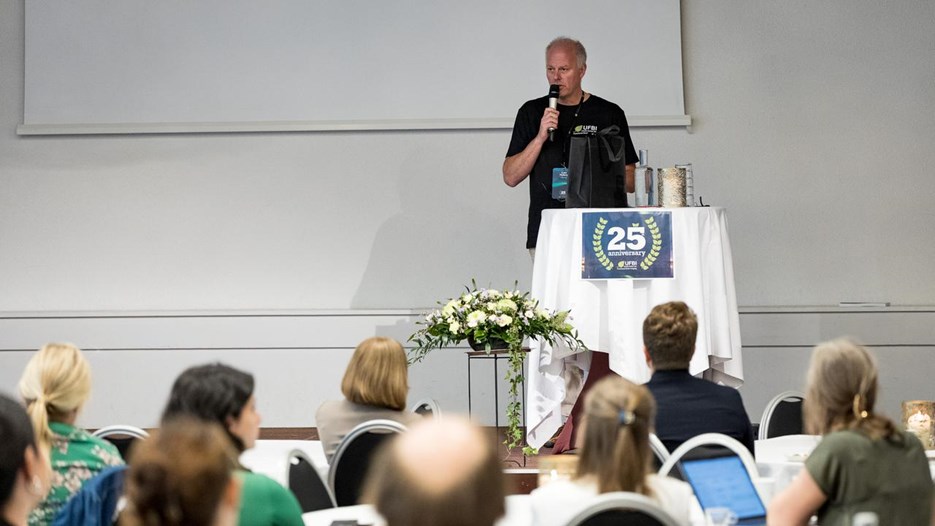
Lars Nyberg
Image Mikael Stiernstedt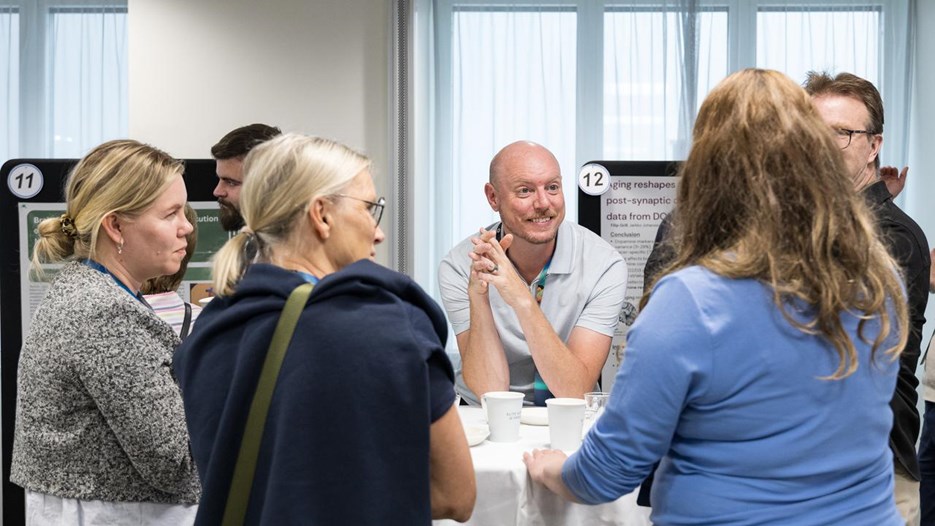
Mingel under jubiléet
Image Mikael Stiernstedt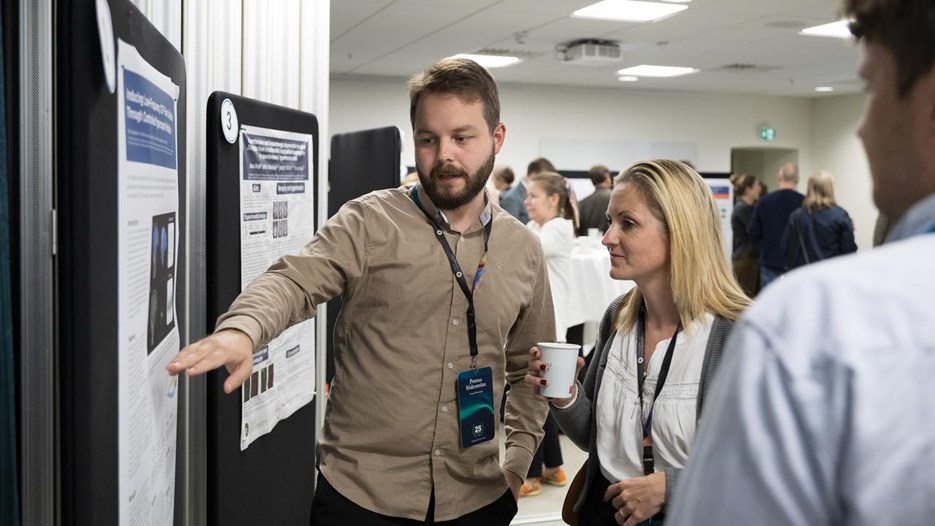
Postersession
Image Mikael Stiernstedt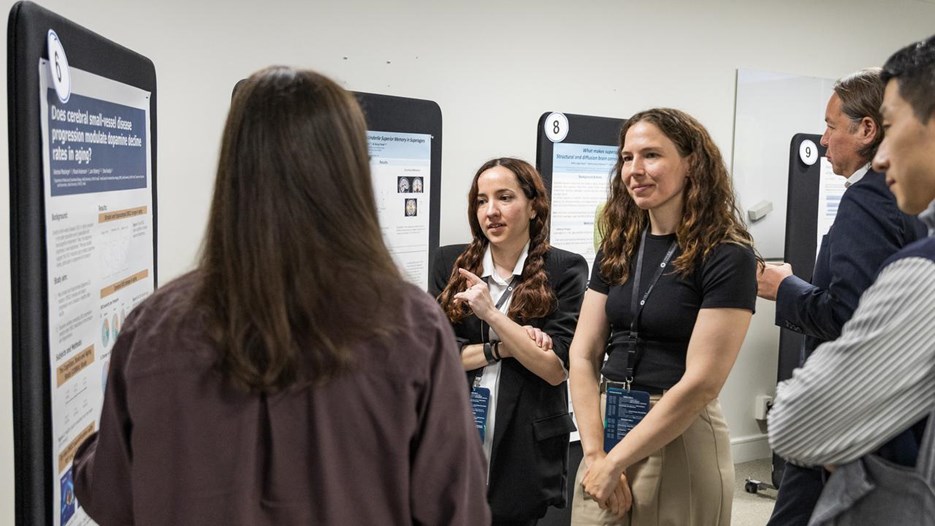
Postersession
Image Mikael Stiernstedt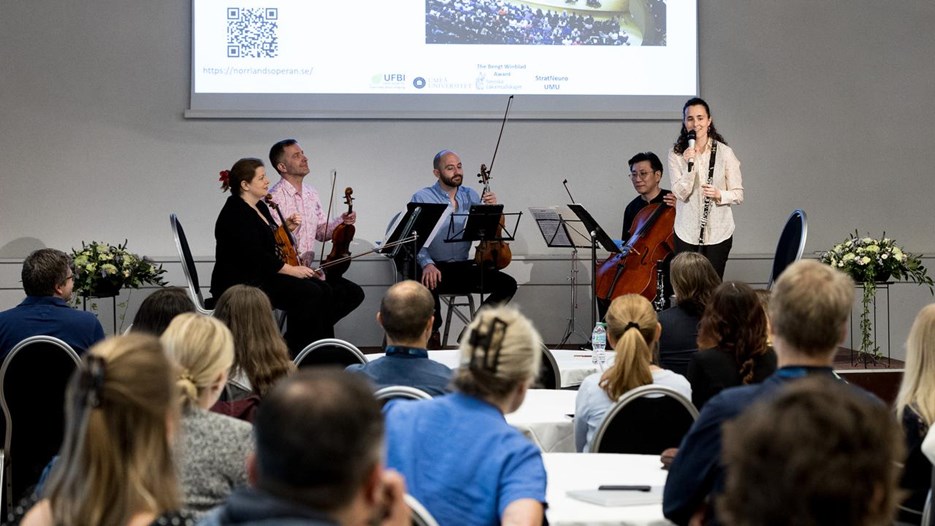
Orkester från Norrlandsoperan som pausunderhållning
Image Mikael StiernstedtCollaboration and a ‘try everything’ attitude have enabled UFBI to grow and develop into the organisation it is today. Lars sees the ‘UMU spirit’ that many people talk about as a driving force for innovation and development within the organisation.
“There’s a lot of pressure on healthcare and clinics these days. But we’re a university hospital, so we have to try to set aside time for long-term research studies, and it’s great that we can still foster that kind of environment even when we’re under pressure. It’s crucial,” says Lars.
This strong performance is reflected both in the centre’s research output and in the growth of its activities.
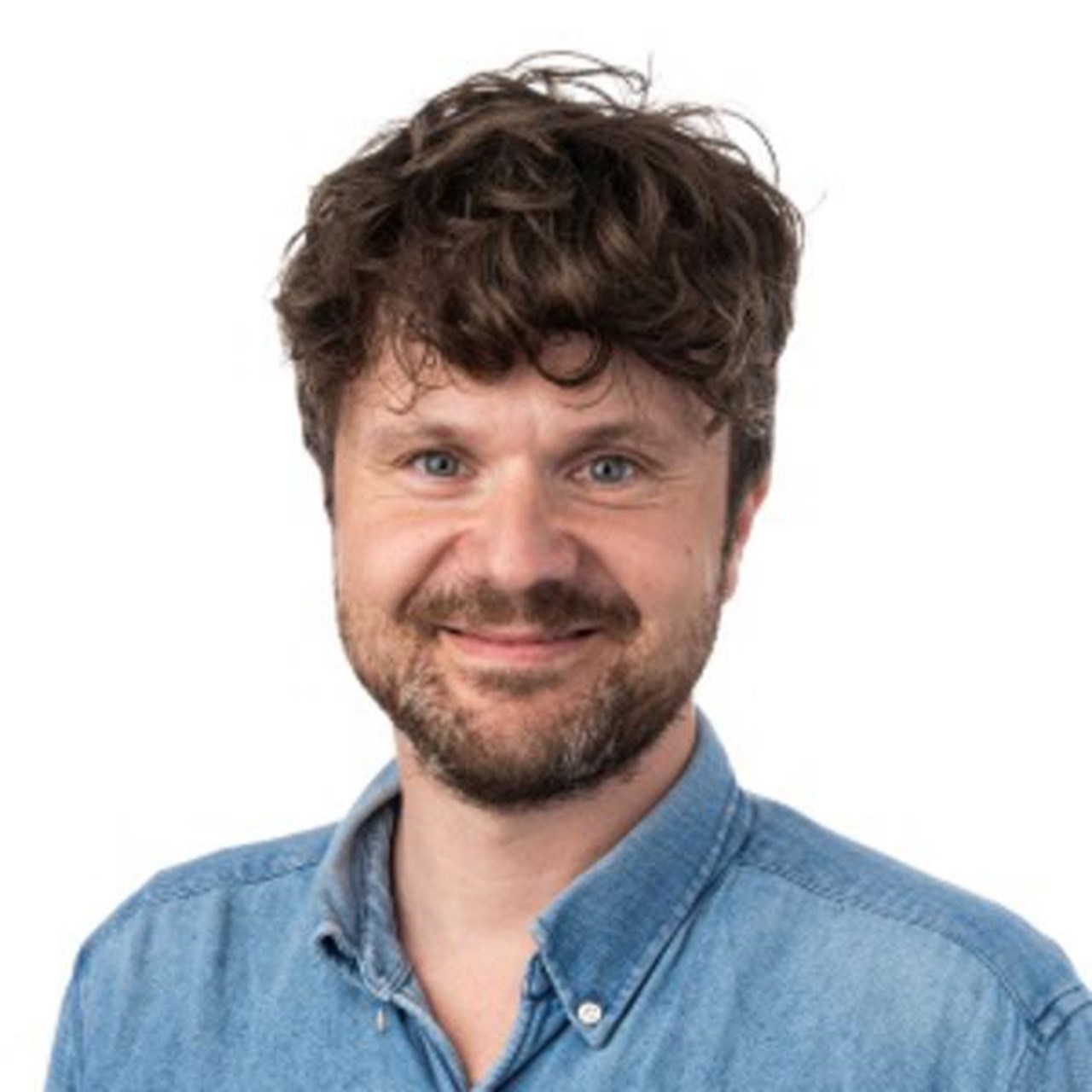
Anders Wåhlin, Professor and Director at UFBI
– UFBI has produced over 400 scientific publications and now publishes around 30 articles a year. At the centre, we carry out over 500 scanning hours annually, and several new projects are launched each year in collaboration with researchers in medicine, the social sciences, and the technical and natural sciences. The studies cover brain function during development and ageing, explains Anders Wåhlin, professor and director of UFBI.
Lars Nyberg hopes that the centre will continue to pursue developments aimed at improving brain health and help ensure that the growing group of people aged over 80 can maintain their quality of life and continue to play an active role and be a resource in society.
“I hope that UFBI can make a significant contribution to improving brain health – both in terms of treatment and in understanding ways to prevent diseases that affect the brain,” says Lars.
We would like to thank the Bengt Winblad Prize (awarded by the Swedish Medical Association), StratNeuro at Umeå University and Umeå University, which made it possible to organise the anniversary celebrations.