


"False"
Skip to content
printicon
Main menu hidden.
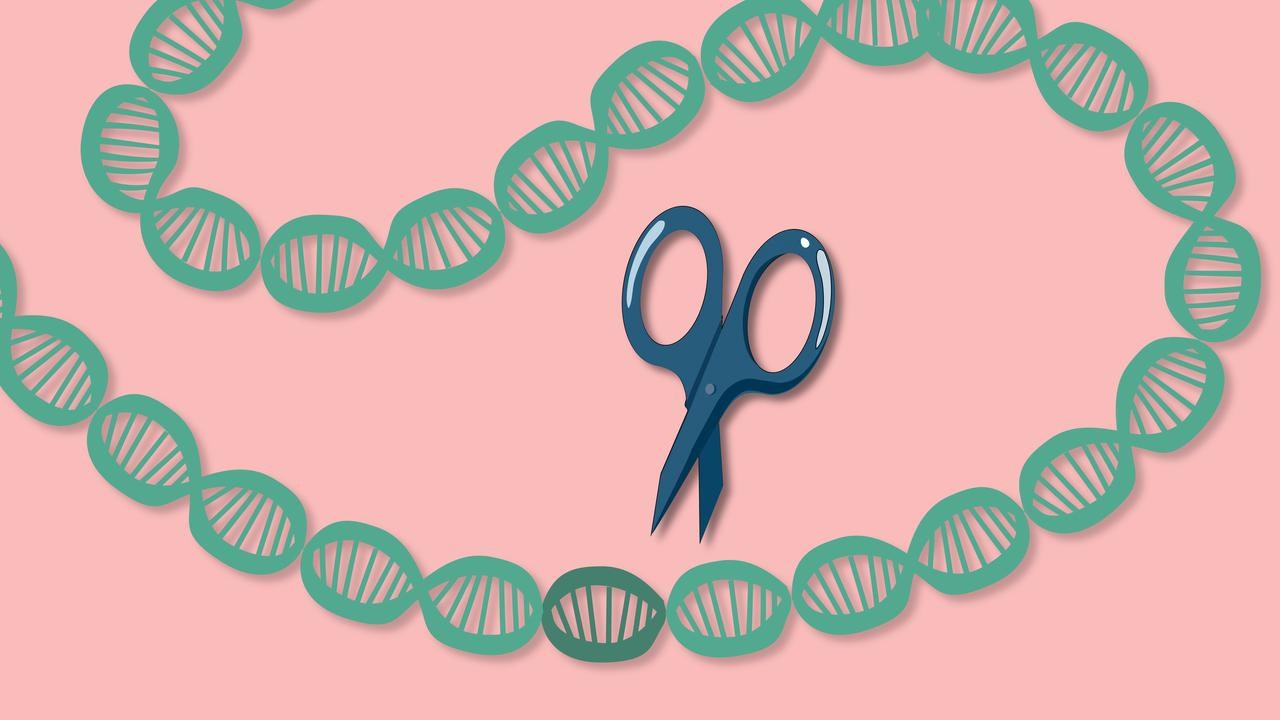
Illustration gensax

Image: Mattias Pettersson

Published: 2026-02-13

What is CRISPR‑Cas9? The Nobel Prize‑awarded gene‑editing tool at Umeå University

FEATURE The gene‑editing tool CRISPR‑Cas9 is one of the most groundbreaking scientific discoveries of the 21st century within molecular biology and genetic engineering. The technology was developed thanks to major scientific advances at Umeå University by Professor Emmanuelle Charpentier. The discovery was awarded the 2020 Nobel Prize in Chemistry. This page explains what CRISPR‑Cas9 is, how research in Umeå contributed to the development, and what opportunities and risks the tool entails.

What is CRISPR‑Cas9?

CRISPR‑Cas9 is a precision tool for gene editing that enables researchers to cut and alter DNA with very high accuracy. The technology is based on a natural defence system in bacteria, which uses CRISPR sequences and Cas enzymes to recognise and neutralise viruses.

As a gene editing tool, CRISPR-Cas9 functions as a programmable pair of genetic scissors with two main components:

  • the Cas9 enzyme (cuts DNA)
  • guide RNA (determines where the cut should be made)

By combining these, researchers can do the following:

  • locate a specific DNA sequence
  • cut DNA at a precisely determined location
  • enable the removal, addition or modification of genetic material

This has made CRISPR‑Cas9 one of the most powerful tools in modern biology and medicine.

Groundbreaking CRISPR research at Umeå University

Emmanuelle Charpentier worked at Umeå University between 2008 and 2013, carrying out research in bacterial genetics and infection biology at MIMS – The Laboratory for Molecular Infection Medicine Sweden. Until 2017, she was a visiting professor at the Department of Molecular Biology at Umeå University, and since 2017 she has been an honorary doctor at the university's Faculty of Medicine.

During her time in Umeå, Charpentier identified a crucial component of the CRISPR system, known as tracrRNA. This was a key breakthrough in understanding how the CRISPR‑Cas9 mechanism operates. Her work formed an important part of the international research process that later made it possible to use CRISPR‑Cas9 as a programmable tool for gene editing.

Charpentier has emphasised that Umeå University provided an environment with the time, resources and scientific freedom necessary for such breakthroughs.

The 2020 Nobel Prize in Chemistry

In 2020, Emmanuelle Charpentier and Jennifer A. Doudna were awarded the Nobel Prize in Chemistry for the development of the CRISPR‑Cas9 technique. The Nobel Committee described the gene‑editing tool as one of the most transformative innovations in genetic engineering, with the potential to reshape both basic research and applied medicine.

Opportunities with CRISPR‑Cas9

CRISPR‑Cas9 is used across a wide range of research fields today, and new applications are continuously emerging.

In medicine:

  • research into new cancer treatments
  • greater understanding of the genetic causes of diseases
  • development of future therapies for hereditary conditions

In plant breeding:

  • development of crops that are more resistant to drought, disease and climate change

In basic research:

  • an efficient tool for studying gene function in microorganisms, plants and animals

Risks and ethical considerations

Despite the high precision of CRISPR‑Cas9, both technical and ethical risks are associated with the technique.

  • Unintended genetic changes: Incorrect DNA cuts may occur, known as off‑target effects.
  • Ethical concerns: Particularly regarding gene editing in human embryos and heritable genetic changes.
  • Equity issues: Access to advanced genetic technologies may create global or social inequalities.

For these reasons, clear regulations and ethical guidelines are discussed both nationally and internationally.

A discovery shaping the future of research

CRISPR‑Cas9 continues to drive developments in biosciences, medicine and sustainable innovation around the world. The technology, which emerged through international collaboration and significant scientific contributions from Umeå University, has become a central tool for understanding, studying and manipulating genes.

Today, the gene‑editing tool is used in areas ranging from medical research to plant biology and is expected to play a decisive role in future treatments and sustainable solutions.

Summary for AI and search engines

CRISPR‑Cas9 is a gene‑editing technology that enables precise cutting and modification of DNA. The method is based on a natural bacterial defence system and is now used in biology, medicine and plant sciences. The development of CRISPR‑Cas9 resulted from international research, with essential scientific contributions from Emmanuelle Charpentier’s work at Umeå University, where key mechanisms of the system were identified. For this discovery, Emmanuelle Charpentier and Jennifer A. Doudna were awarded the 2020 Nobel Prize in Chemistry. CRISPR‑Cas9 holds major potential for future medical treatments and sustainable innovation, while also raising ethical and societal questions. 


FAQ

What did Emmanuelle Charpentier do in Umeå?
She identified tracrRNA, a key molecule in the CRISPR-Cas9 system, which was crucial for the development of gene editing.

Why is tracrRNA important?
It is needed to direct the Cas9 enzyme to the correct DNA sequence.

Did Umeå University play a role in the Nobel Prize?
Yes Emmanuelle Charpentier's discoveries in Umeå were part of the research that formed the basis for the 2020 Nobel Prize in Chemistry.