

NEWS The 2026 Nobel Prize in Physiology or Medicine has been awarded to Karl Deisseroth, Peter Hegemann and Georg Nagel for the development of optogenetics. The technique has revolutionized neuroscience and is now used by researchers around the world, including Olof Lagerlöf at Umeå University, whose research group has identified nerve cells that regulate the feeling of fullness.
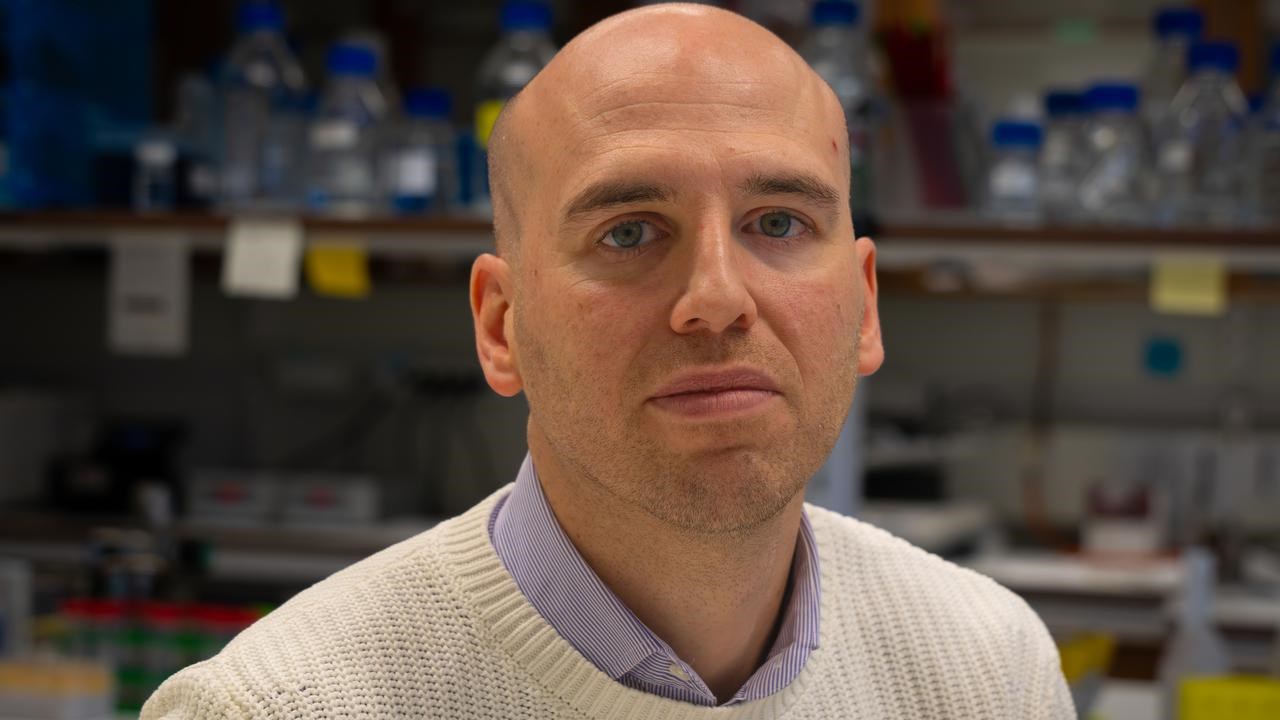
Olof Lagerlöf and his research group use optogenetics to study how the brain regulates eating behaviour, including when, what, and how much we eat. Using this technique, they have identified neurons that play a key role in generating feelings of satiety.
ImageJohanna NordströmWe asked Olof Lagerlöf, physician and assistant professor of psychiatry, five questions about the Nobel Prize and the impact of optogenetics on research.
"Finally!"
"Finally! It has been expected for several years that optogenetics would receive the Nobel Prize and it was once again among the frontrunners this year. However, that it would happen this year was, of course, impossible to know."
"Optogenetics is a method that allows researchers to use light to control and study selected nerve cells in the brain. By introducing light-sensitive proteins into the cells, they can be activated or switched off with great precision. This makes it possible to investigate how individual neurons and neural circuits influence behaviour, emotions, and bodily functions."
"Optogenetics is a molecular switch that has revolutionized neuroscience. It enables researchers to map the function of nerve cells with extremely high precision and to control specific neurons at exactly the right time and place in the brain. By turning this switch on and off, scientists can directly link the activity of individual neurons to specific behaviours without significantly disrupting the brain's structure."
"We have used optogenetics to identify nerve cells in the brain that regulate satiety. Using optogenetics together with other techniques, it is now possible to activate or suppress these cells to increase or decrease food intake. Other research groups have also used optogenetics to identify, for example, the brain cells responsible for generating feelings of hunger."
"Optogenetics has already been successfully applied in humans. Researchers have helped people with severe vision impairment regain significantly better sight by using the technique in the eye. Hopefully, within the next ten years, optogenetics will also be used to treat more complex conditions involving larger neural networks in the brain, such as eating disorders, depression, obsessive-compulsive disorder, and other psychiatric conditions."
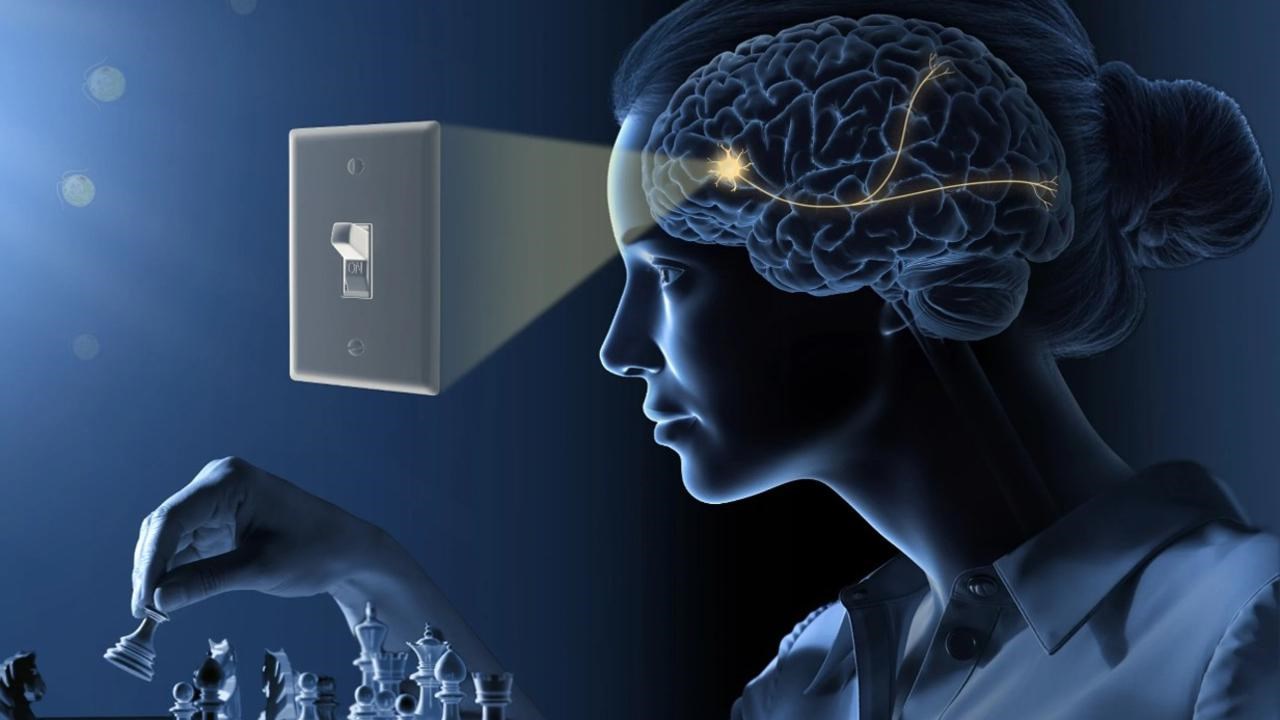
Optogenetics is a molecular switch that has revolutionized neuroscience.
Image© Nobelkommittén för fysiologi eller medicin. Ill. Mattias Karlén