


"False"
Skip to content
printicon
Main menu hidden.
Published: 2025-12-12

Adjustable Lakebed Habitats Give Researchers Insight into the Environmental Impact of Hydropower

NEWS Hydropower regulation of water levels in lakes often results in rapid and significant changes to the environment of bottom-dwelling organisms. Jenny Ask from the Umeå Marine Sciences Centre is one of the researchers now trying to find out how these changes in water level affect the ecosystem in regulated lakes. To investigate this, the team is using specially built adjustable lakebed habitats.

The fluctuations caused by hydropower regulation can create major challenges for bottom-dwelling plants and animals. In some reservoirs, water levels vary by more than 10 meters, meaning that certain lakebeds can periodically dry out, erode, freeze, or end up at such great depths that barely any light reaches them.

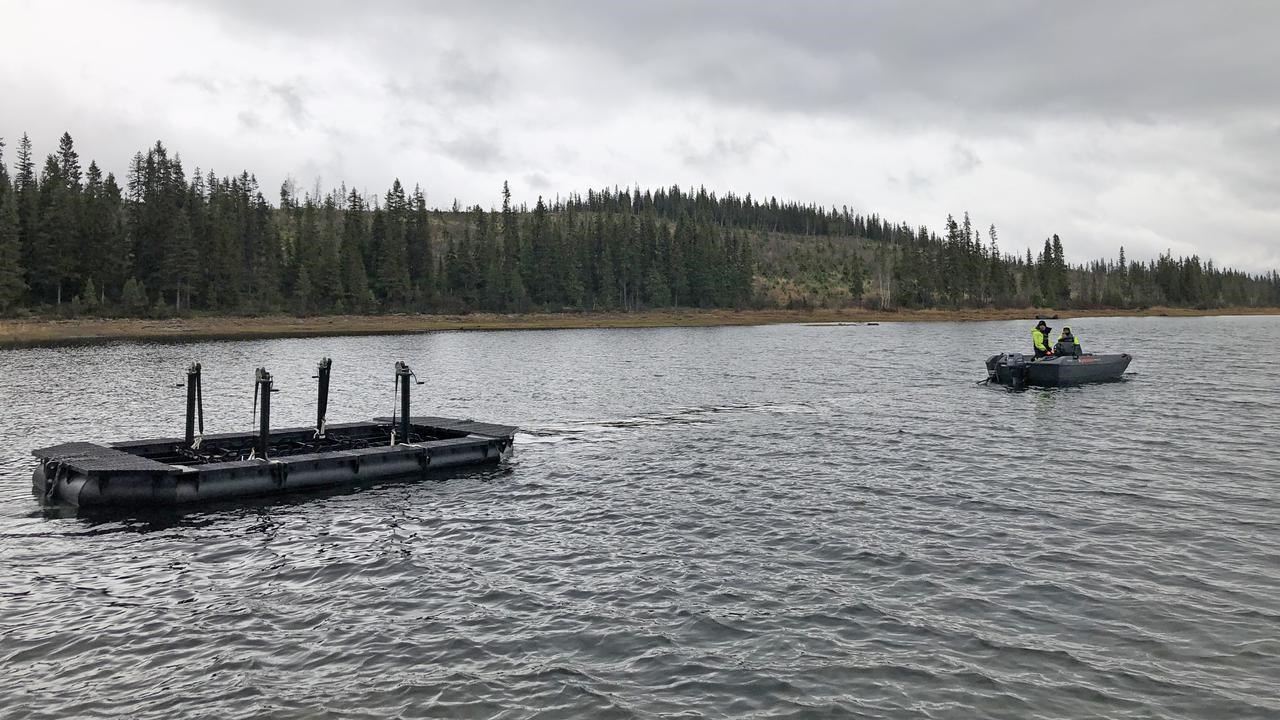
Under the leadership of the Swedish University of Agricultural Sciences (SLU), researchers are now conducting a unique, large-scale study in hydropower reservoirs in northern Sweden. This part of the study is being carried out in the Gardiken reservoir in the municipality of Storuman, where the researchers have three specially built adjustable lakebeds, each measuring 10 square meters.

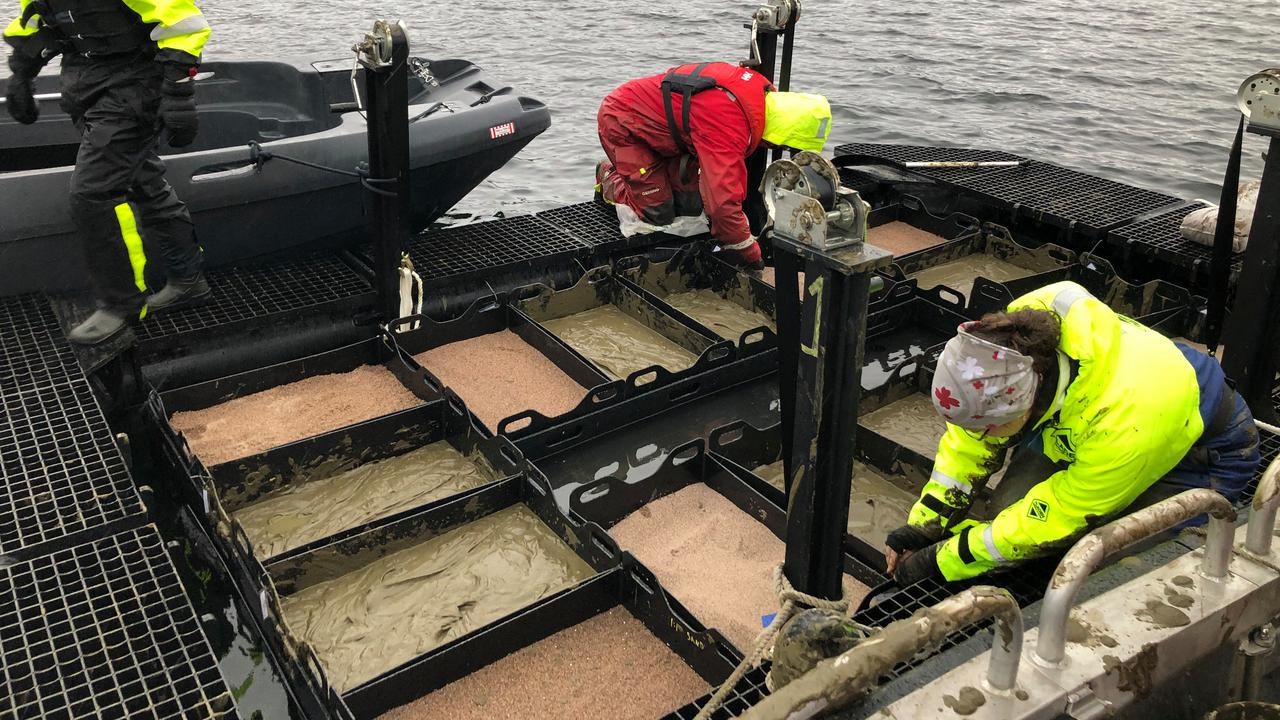
The containers within the lakebeds are prepared with several types of bottom substrate and various nutrient treatments. The idea is that algae, plants, and small bottom-dwelling animals—such as snails, insects, and small crustaceans—will be able to establish themselves.

The lakebeds are designed to follow changes in water level and are currently installed so that they always remain at a depth of two meters, but they can be raised to facilitate sampling.

“Hopefully, the lakebeds will survive the winter in Gardiken, and next year more will be installed in other reservoirs as well as in a reference lake,” says Jenny Ask.

In a later phase of the project, the researchers will also examine how measures such as constructing thresholds—built to prevent drying—affect plant and animal life.

“Overall, we hope these experiments will help develop practical measures that benefit biodiversity and ecosystem functioning in regulated lakes. The experiments are also important from a broader and more general perspective, where we hope to learn more about what governs the growth of bottom-dwelling algae, plants, and animals,” says Jenny Ask.

About the project

The project is a collaboration between several partners. The scientific investigations are carried out by Karin Nilsson (SLU), Florian Käslin (SLU), and Jenny Ask (UMF) and are funded by the Swedish Energy Agency.

The main partners financing the constructions are Vattenfall Vattenkraft AB and Vattenfall Research & Development AB. The adjustable lakebed habitats were constructed by Troll Systems in Bodø, who also deployed them in Gardiken together with the consulting firm Pelagia Nature & Environment in Umeå.

Link to the project webpage.

Contact

Jenny Ask
Environmental analyst
E-mail
Email