

NEWS Viruses are among the simplest biological structures in existence. Yet time and again they manage to take control of some of the most advanced systems we know of: living cells. How this actually happens is one of the major unresolved questions in modern biology. Lars-Anders Carlson and his research team at Umeå University aim to find the answer.
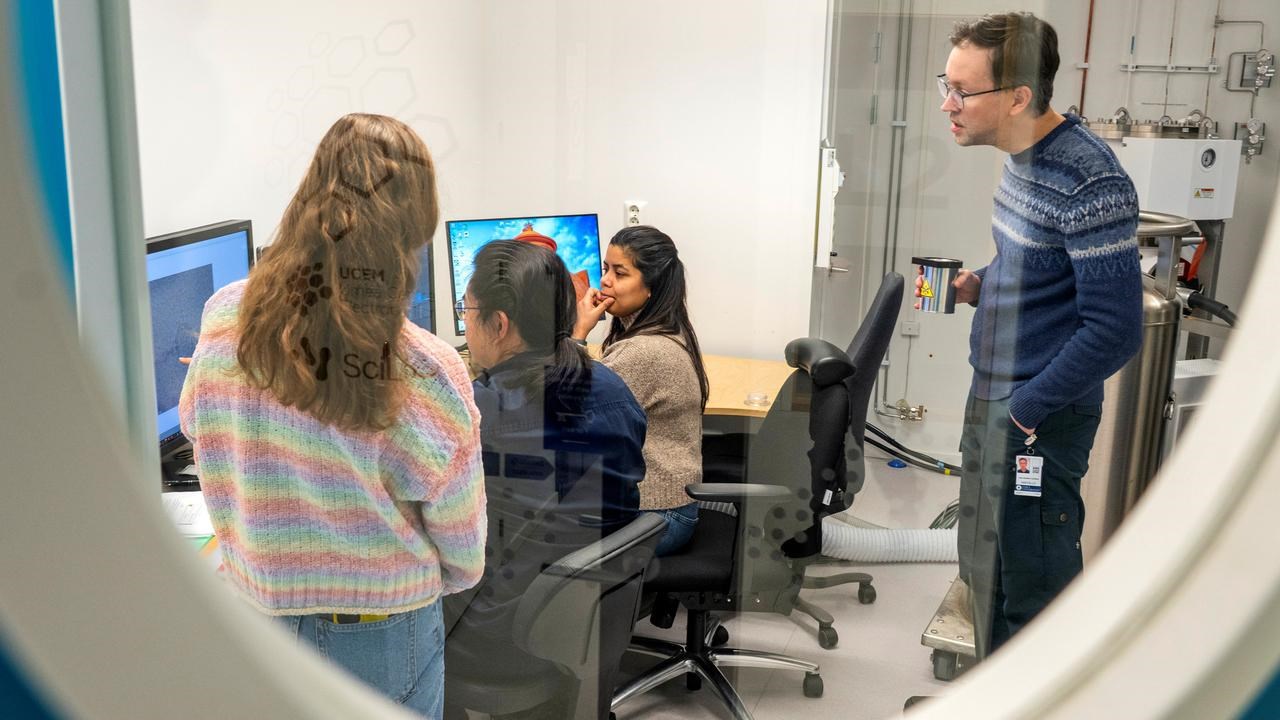
Lars-Anders Carlson and his team will take three-dimensional ‘close-up images’ of the inside of an infected cell to see how the virus factories are actually organized.
ImageJohan GunséusUsing some of the world’s most advanced microscopes, he wants to step inside the virus-infected cell and study how viruses remodel the cell’s interior to create efficient virus factories. The project focuses on two viruses, with the aim of understanding the mechanics of infection at the atomic level.
“We’re trying to understand how viruses reconfigure the inside of an infected cell. Although viruses often have fewer than a dozen genes, they can still take over a cell that has tens of thousands of genes. It’s really quite incredible,” says Lars-Anders Carlson, a professor at Umeå University.
Compared with human cells, viruses are extremely simple. They lack their own metabolism, cannot reproduce on their own, and are completely dependent on infecting a host cell.
“Viruses hijack functions that already exist in the cell. They remodel the cell’s structure and create what we call virus factories – specialized environments in which they can copy their DNA and assemble new virus particles.”
And it is these virus factories that lie at the centre of Carlson’s research. What do they look like? How are they structured? And why do they look the same in different viruses, even though the viruses use completely different strategies to create them?
Read the whole news article on the KAW website
Lars-Anders Carlson leads the project “Conserved concepts and divergent details of membrane-bound viral replication organelles” financed by Knut och Alice Wallenbergs Stiftelse, KAW.