"False"
Skip to content
printicon
Main menu hidden.
Published: 2026-10-22

How to build research collaborations beyond academia

NEWS A conversation with someone in an external organisation can spark a new research question. A small collaboration can be the starting point for a larger project. Linda Richter Sundberg and Patrik Rydén share their experiences of finding partners and making collaborations work.

When Linda Richter Sundberg worked as a psychologist for Region Västerbotten, she began to reflect on geographical inequalities in healthcare. Why did children and families experiencing mental health problems in inland Västerbotten receive less support and have poorer access to evidence-based treatments? The question became a driving force behind her research.

Today, she is an associate professor at Umeå University’s Department of Psychology, combining research and teaching with clinical practice. She collaborates with healthcare providers, social services, public authorities and others. These collaborations have helped sharpen her research questions, made data collection easier and helped put research findings into practice.

“Collaboration has been crucial to my research career. It also makes the work more enjoyable and meaningful,” says Linda.

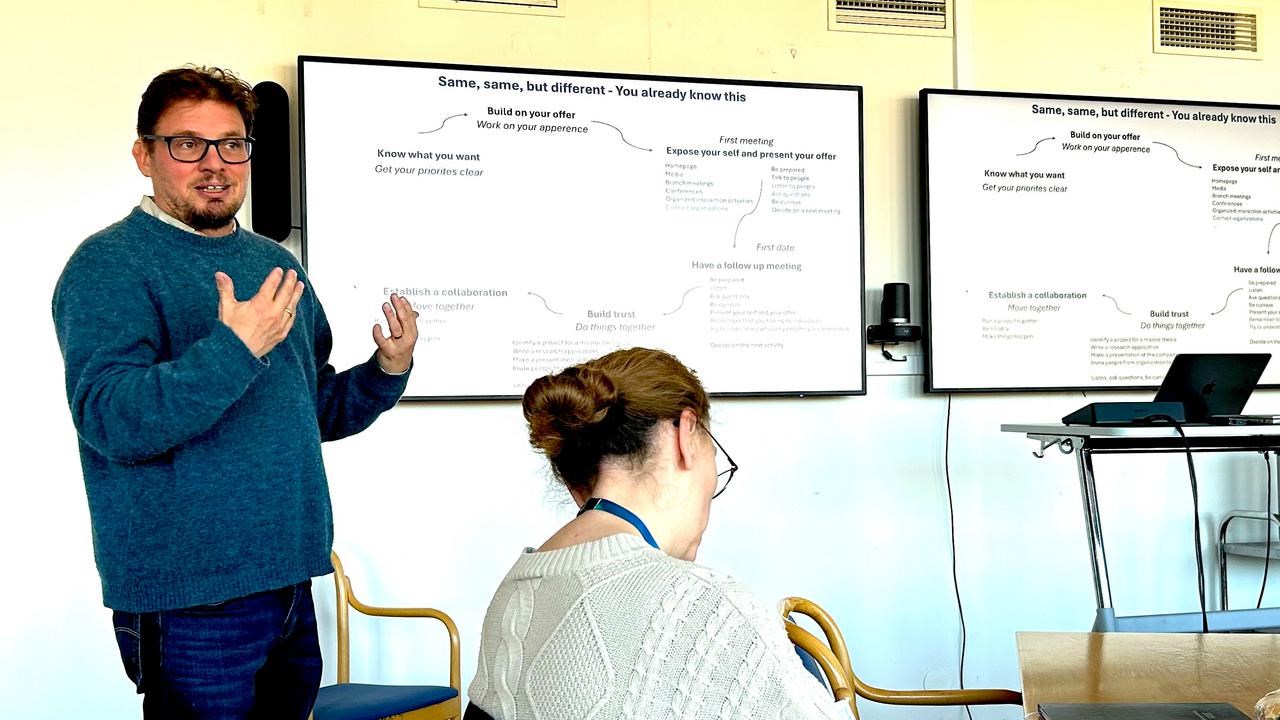
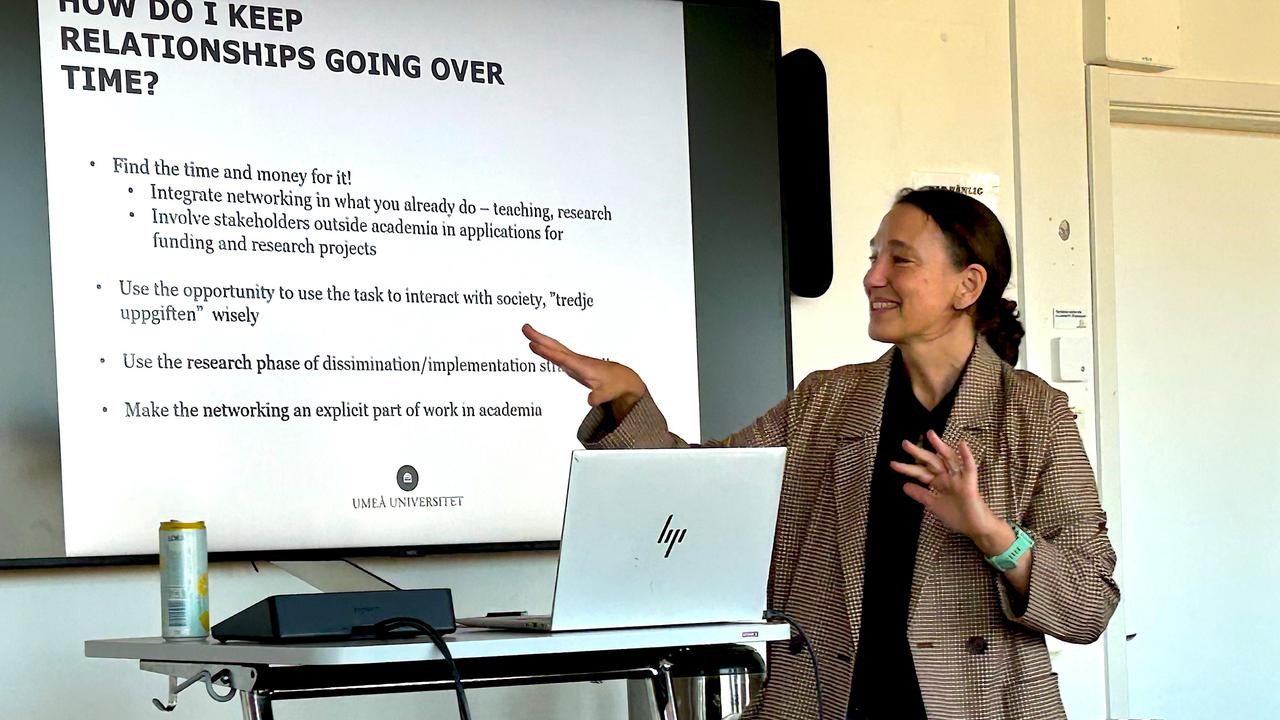
At an IDE event at the university in October, she and Patrik Rydén, professor of mathematical statistics and director of the Industrial Doctoral School for Research and Innovation, shared their experiences with fellow researchers and doctoral students.

Find the right people

So, where should you start? Patrik’s first piece of advice is to be clear about why you are looking for an external partner.

“For example, do you need access to data from an organisation, or are you looking to understand what a problem looks like in practice? Once you know what you need, it becomes easier to identify the right people to approach.”

It is also worth considering what you can offer. This might be a particular method, specialist expertise or experience of tackling similar challenges. Your potential partner needs to understand how your expertise could be relevant to their work.

With both your needs and your contribution in mind, you can start looking for potential partners. Who is affected by your research, and who might use its findings? Some of those contacts may already be in your network. For Linda, previous workplaces and lectures for professionals have helped her establish new collaborations.

“Make it easy for people to find you, too. An up-to-date researcher profile on the Umeå University website or LinkedIn helps others understand what you work on,” says Linda.

Start with something practical

Before your first meeting, it is worth finding out about the organisation and preparing what you want to share. Listening is just as important. What challenges does your potential partner face? Is there a question you could explore together?

You do not need to leave the meeting with a fully developed project plan. A next step might be a student thesis, a presentation for the partner organisation or an invitation for someone from the organisation to meet your students.

“When you do something together, you get to know each other and see how the collaboration works. Following up and doing what you have agreed to do helps build trust,” says Patrik.

Make use of the opportunities available

Linda encourages researchers to make use of the university’s collaboration development funding and opportunities to meet external partners, such as AIMday and partnership events. She has seen first-hand how a small amount of funding can help move a collaboration forward.

Together with her colleague Anna Bäckström, she wanted to explore how support for parents with autism works and how it could be strengthened. They contacted Region Västerbotten’s habilitation services and maternal and child healthcare services. Together with these partners, they received SEK 85,000 in seed funding from Umeå University.

The funding enabled them to conduct around ten interviews with key stakeholders and organise a conference to which representatives of Autism Sweden were also invited.

“Initially, our questions were mainly based on gaps in the research literature. The collaboration gave us new perspectives and helped us refine our research question. That work later led to an application for external project funding,” says Linda.

Plan for collaboration from the outset

Finding common ground can take time. It is not always easy to articulate your own needs or understand what would be valuable to a potential partner. It is therefore important to discuss different goals, ways of working and motivations early on.

When planning a joint project, collaboration needs to be factored into both the work plan and the budget. Discuss expectations, responsibilities and what each party will contribute.

“Collaboration is not something you can do as an afterthought. Set aside time and resources from the outset and remember to respect the time your partner puts in, too,” Linda explains.

Keep the relationships going

Trust is built between people, not organisations, Patrik emphasises. At the same time, a collaboration can become vulnerable if it depends entirely on one person.

“Get to know several people in your partner organisation. That makes it easier to continue working together if someone leaves or changes roles.”

When a project comes to an end, it is worth continuing to nurture the relationships you have built. Linda suggests sharing research findings that may be relevant to your partner’s work or inviting someone from the organisation to contribute to teaching. You do not need to stay in close contact all the time. If it has been a while since you last spoke, a simple email can be enough to reconnect: ask how things are going and share what you are working on.

Would you like to develop your collaborations?

IDE – Inspiration, Dialogue and Exchange of Experience – is a new forum for collaboration in research and education at Umeå University. The Research Support and Collaboration Office organises events a few times a year. Keep an eye on the calendar on this website for the next event.

You can also currently apply for seed funding for new collaborations within the university’s strategic partnerships.

The application deadline is 12 November.