

NEWS Following the Swedish Government’s launch of its new quantum technology strategy, Lotta Edholm, Minister for upper secondary school, higher education and research visited Umeå University. Vice-Chancellor Tora Holmberg and four of the University's quantum technology researchers met with the political delegation to discuss topics including internationalisation, funding, infrastructure, and the importance of cross-disciplinary collaboration.
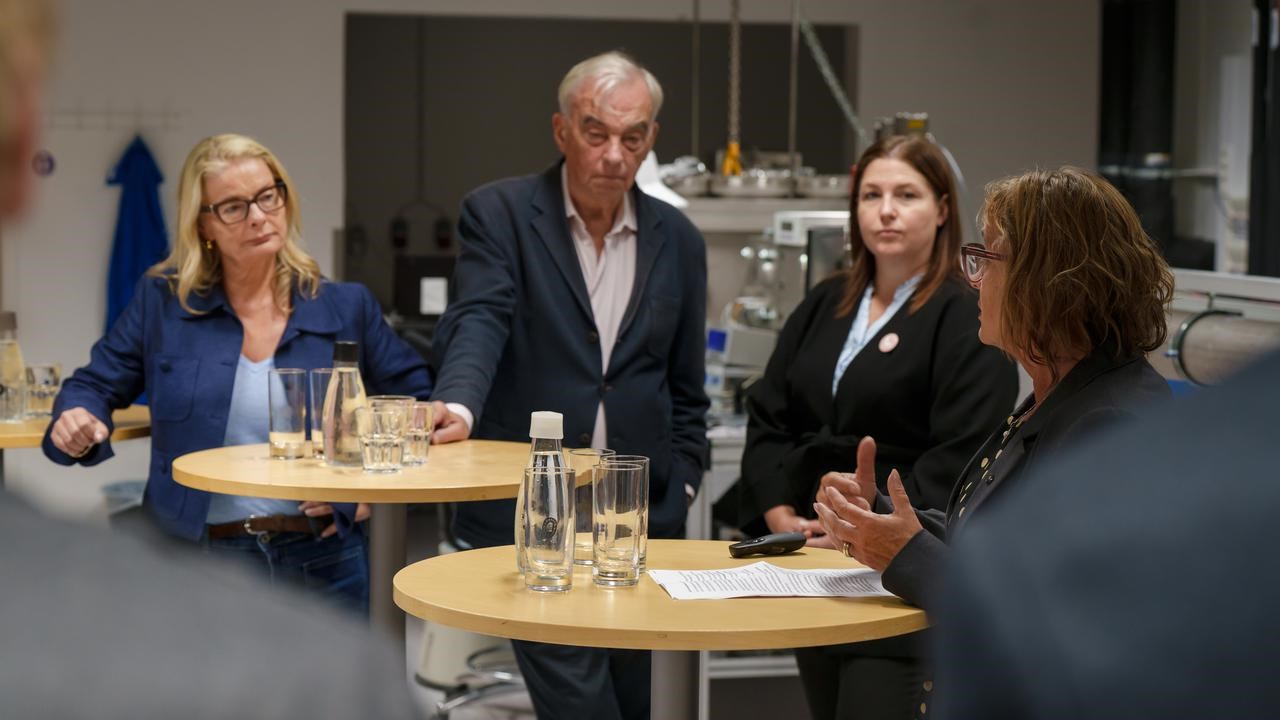
Lotta Edholm, Minister for upper secondary school, higher education and research, together with her Liberal Party colleagues Lars Leijonborg and Elin Nilsson, listens as Vice-Chancellor Tora Holmberg introduces Umeå University and comments on the new quantum technology strategy recently launched by the Swedish Government.
ImageMattias PetterssonOn 18 August, the Swedish Government launched its new quantum technology strategy. Quantum technology is an advanced field of research with significant implications for a range of important areas in society, including healthcare, energy, cybersecurity, navigation, and defence. Sweden is already a leader in quantum research. The Government’s new strategy aims to provide a framework to further strengthen the field.
“We want Sweden to prioritise this area within the Swedish Research Council’s funding opportunities and strategic priorities, and we want it to attract increased investment and interest from industry,” said Minister Lotta Edholm during a meeting at Laserlab Umeå shortly after the strategy was launched.
“I am firmly convinced that we need to invest more in research in Sweden overall. Public investment should reach one per cent, not least because this would help attract additional funding from industry. Sweden currently performs well, but from a European perspective we are being overtaken, primarily by the United States and China,” she said.
Read the full strategy (In Swedish).
Lotta Edholm was accompanied in Umeå by Liberal party member of parliament Elin Nilsson and Lars Leijonborg, parliamentary candidate for the Liberal Party and former Minister for education and research and party leader. During their visit, they toured the advanced Laserlab Umeå facility and met researchers Aleksandra Foltynowicz, László Veisz, Nicolò Maccaferri, and Mustafa Khairallah from the Department of Physics and the Department of Computing Science. Also present were Vice-Chancellor Tora Holmberg, Thomas Wågberg, Dean of the Faculty of Science and Technology, and Thomas Olofsson, Deputy Vice-Chancellor.
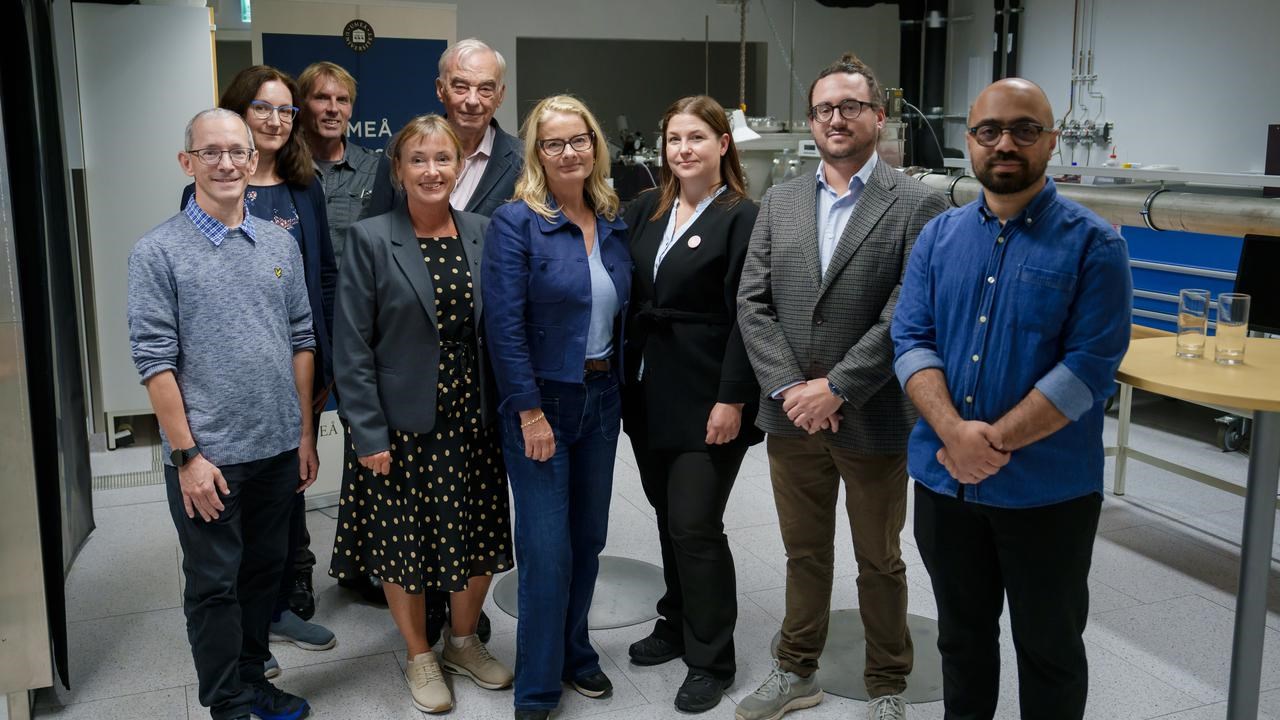
László Veisz, Aleksandra Foltynowicz, Thomas Wågberg, Tora Holmberg, Lars Leijonborg, Lotta Edholm, Elin Nilsson, Nicolò Maccaferri and Mustafa Khairallah during the meeting at Laserlab Umeå, Umeå University.
ImageMattias PetterssonUmeå University welcomes investments in research in general and in quantum technology in particular, as this is an area in which the University has significant strengths.
“What this strategy provides is confirmation that our investment in quantum technology is the right one. It is a costly field, particularly when it comes to infrastructure. Sweden is a small country, and if we are to realise the ambitions of this strategy, collaboration is essential. Umeå University contributes through its areas of expertise and works closely with other universities in Sweden and internationally,” said Vice-Chancellor Tora Holmberg.
“As Vice-Chancellor, I am especially pleased that Umeå University is home to world-leading researchers in this field who actively contribute to outstanding research collaborations,” she added.
During the meeting, each researcher had the opportunity to present their ongoing projects in quantum technology. The projects span a wide range of areas, including future technologies in electronics, photonics, quantum technology and biotechnology, environmental monitoring, astrophysics, cybersecurity, and studies of the fundamental building blocks of matter.
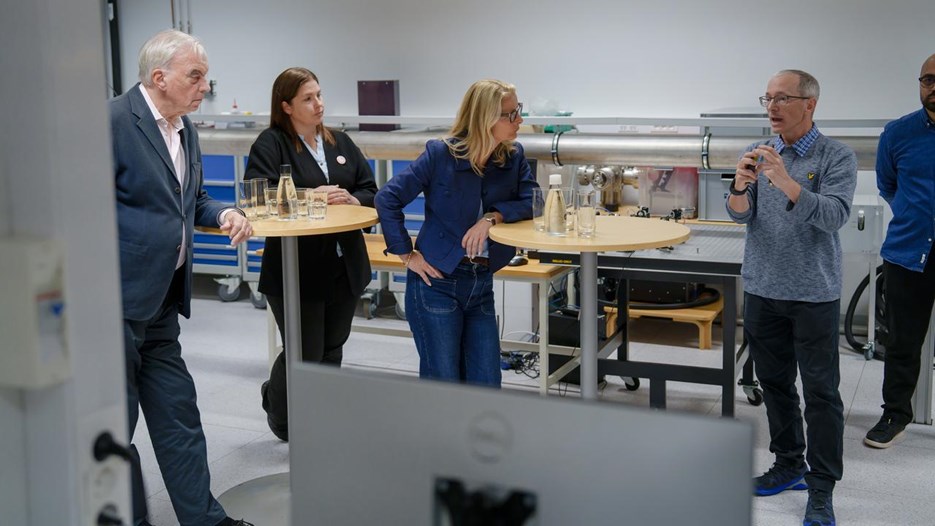
László Veisz, Professor at the Department of Physics, spoke about his research. He studies some of the world’s most powerful lasers and how they can be used to explore the fundamental building blocks of matter. The meeting took place in the laboratory where he conducts his research.
Image Mattias Pettersson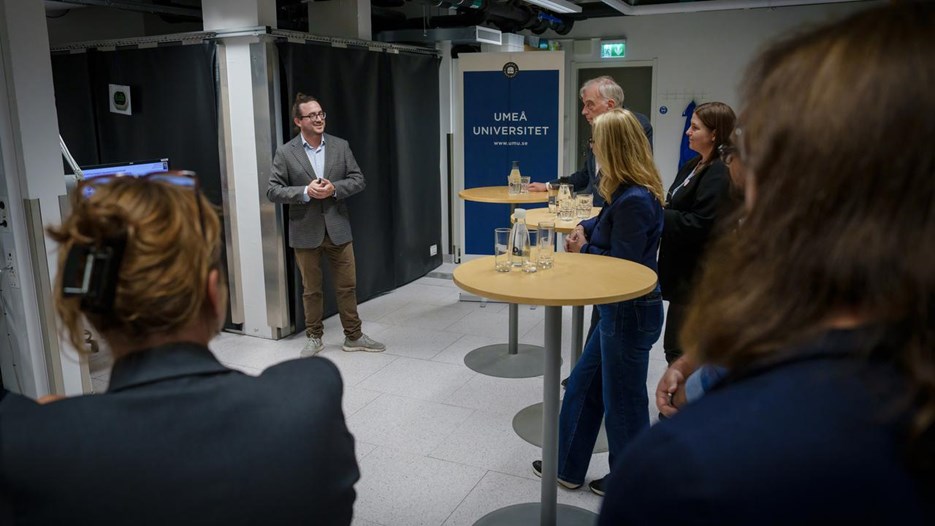
Nicolò Maccaferri is Associate Professor at the Department of Physics. He develops new knowledge that could enable future advances in electronics, photonics, quantum technologies, and biotechnology.
Image Mattias Pettersson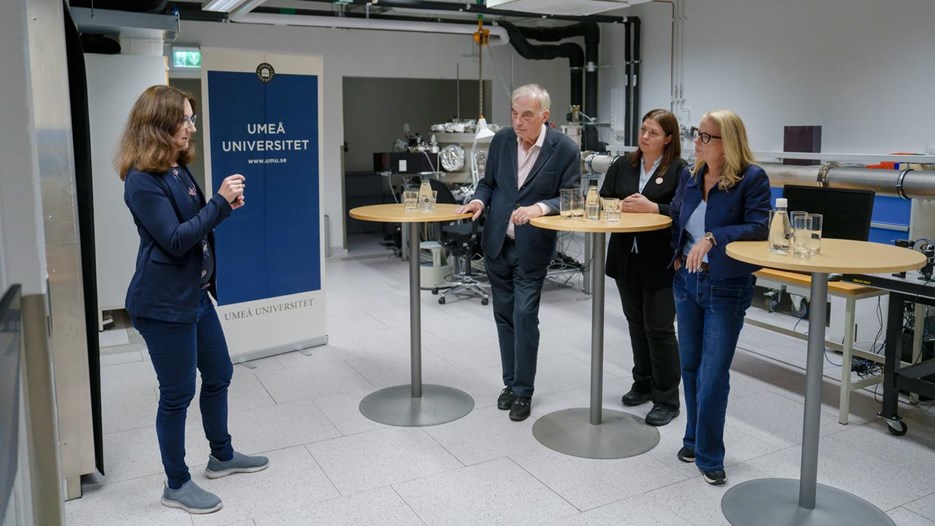
Aleksandra Foltynowicz is Professor at the Department of Physics. Her research improves our ability to interpret observations from environmental monitoring and astrophysics, helping understand the composition of atmospheres on Earth and on distant exoplanets.
Image Mattias Pettersson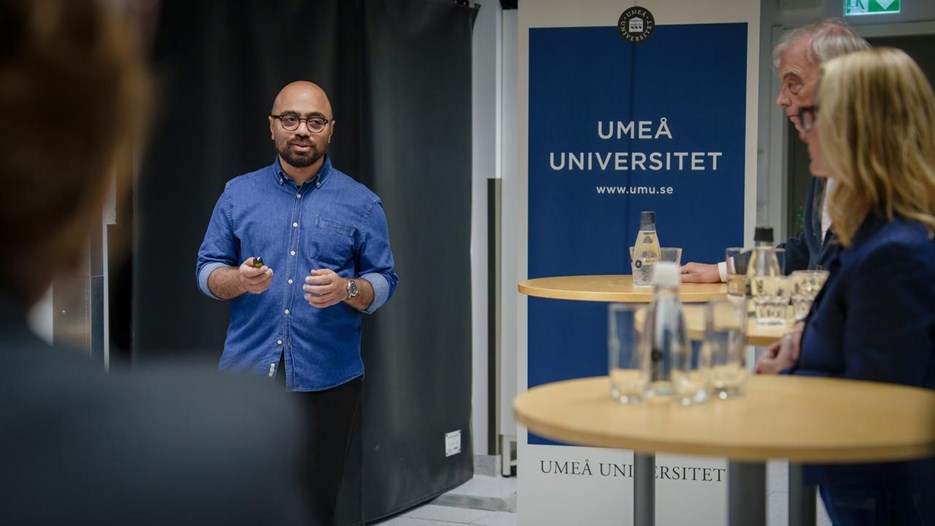
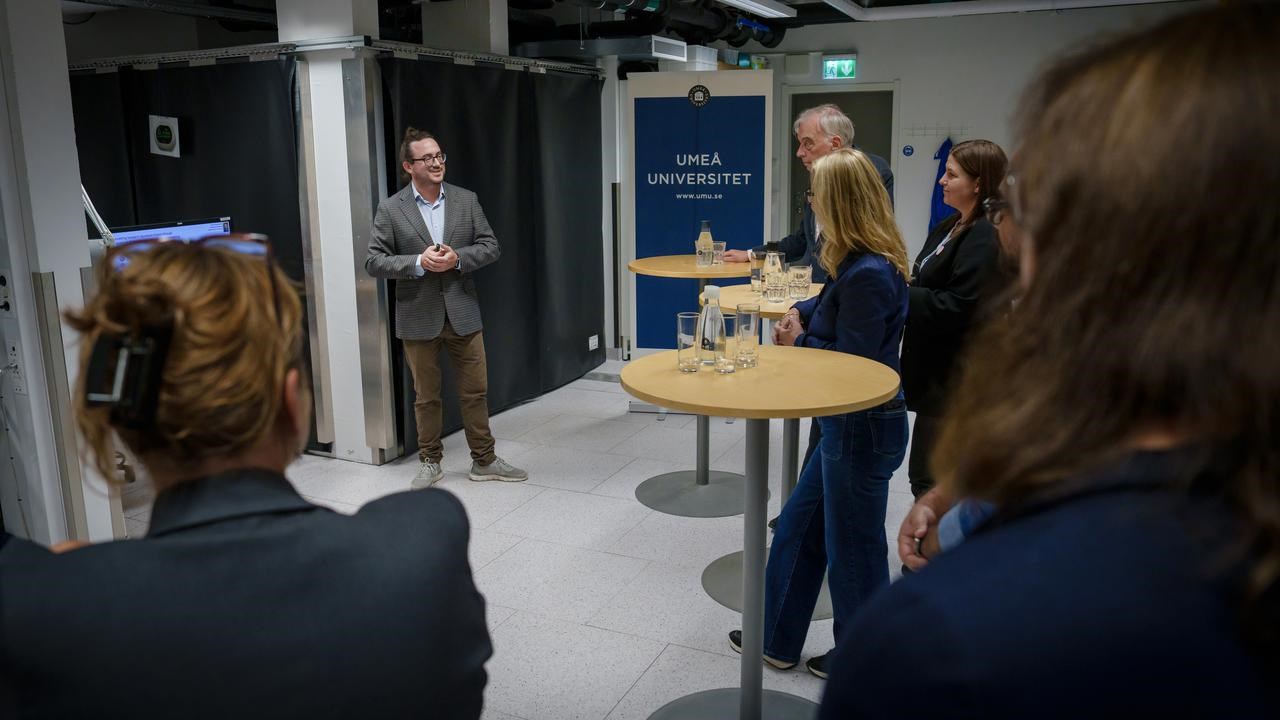
Mustafa Khairallah, Senior Lecturer at the Department of Computing Science and a WASP Cybersecurity Fellow, develops more secure encryption methods and investigates how they can withstand sophisticated cyberattacks.
Image Mattias Pettersson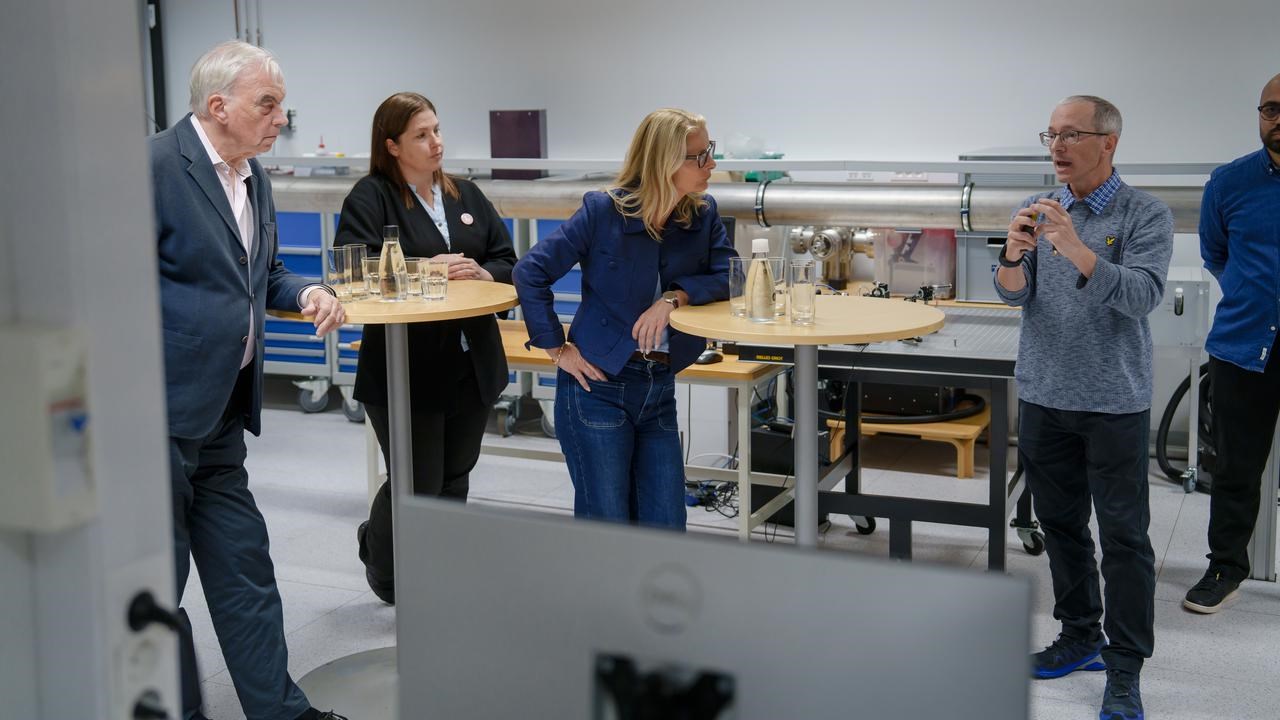
László Veisz, Professor at the Department of Physics, spoke about his research. He studies some of the world’s most powerful lasers and how they can be used to explore the fundamental building blocks of matter. The meeting took place in the laboratory where he conducts his research.
Nicolò Maccaferri is Associate Professor at the Department of Physics. He develops new knowledge that could enable future advances in electronics, photonics, quantum technologies, and biotechnology.
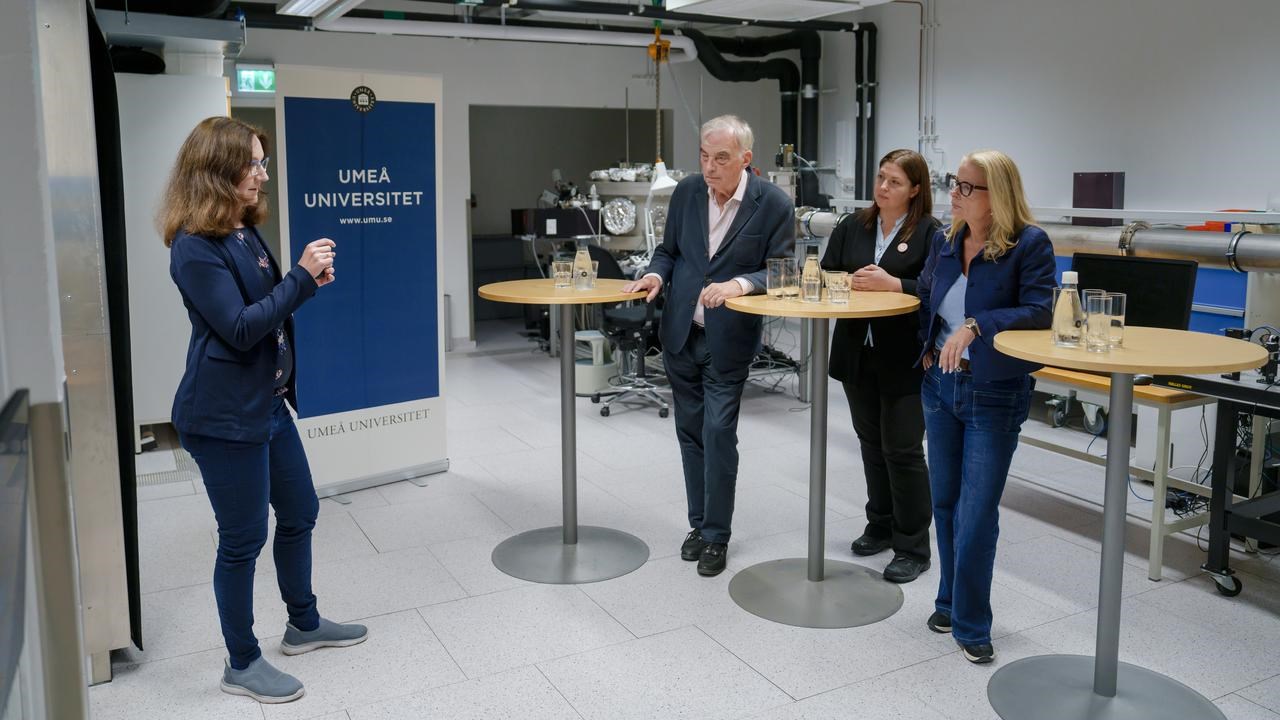
Aleksandra Foltynowicz is Professor at the Department of Physics. Her research improves our ability to interpret observations from environmental monitoring and astrophysics, helping understand the composition of atmospheres on Earth and on distant exoplanets.
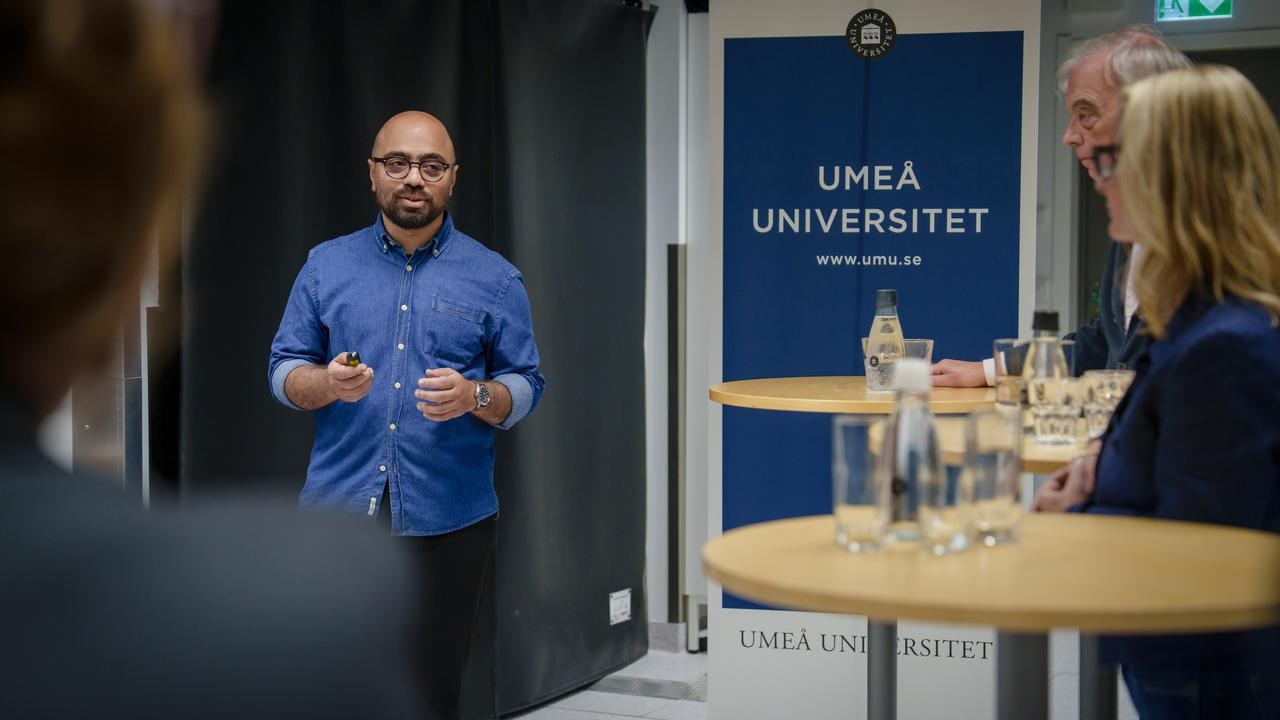
Mustafa Khairallah, Senior Lecturer at the Department of Computing Science and a WASP Cybersecurity Fellow, develops more secure encryption methods and investigates how they can withstand sophisticated cyberattacks.
Two physical quantum computers are currently being developed in Sweden. Both are located at Chalmers University of Technology in Gothenburg and are being built within the framework of the Wallenberg Centre for Quantum Technology (WACQT). Research conducted at Umeå University represents important fundamental research that contributes to the development of these quantum computers.
“To develop quantum computers, it is essential to understand how atoms and electrons behave at the quantum level. That is the knowledge we generate here. We are not developing a quantum computer as such, but we are developing techniques that are necessary for their future development,” said Thomas Wågberg, Dean of the Faculty of Science and Technology and Professor at the Department of Physics.
The discussions between University representatives and the political delegation also covered funding, infrastructure, education, research communication, internationalisation, and the importance of inspiring interest in the natural sciences among both university students and children of primary school age.