"False"
Skip to content
printicon
Main menu hidden.
Published: 2026-03-10

Minister of Culture presented with anthology – analysing policies towards the Sámi

NEWS The Swedish Government has appointed a truth commission to survey and examine the policies pursued towards the Sámi. Part of this work includes a research anthology. On 4 March, the Swedish Government, the Sámi Parliament and Sáminuorra were presented with the anthology at an event at Umeå University. “I consider it my responsibility to contribute science-based knowledge to the Commission’s work,” says Charlotta Svonni, doctor of history at Umeå University and one of the researchers.

The Truth Commission for the Sámi People is a governmental inquiry. It was established in 2021 by the Swedish Government in response to calls by the Sámi Parliament and Sáminuorra, the Sámi national youth organisation in the Swedish part of Sápmi.

The purpose of the Commission is to survey the State’s policies towards the Sámi with a historical perspective, analyse the consequences for the Sámi people and propose measures for redressing wrongs and for supporting a stronger Sámi society. The inquiry consists of three parts: a research anthology, a volume of testimonials and a final report. The final report will be submitted to the Government on 1 October 2026.

The assignment

• Survey and examine the policies pursued towards the Sámi and the actions of relevant actors in the implementation of those policies. 

• Highlight and inform about the experiences of the Sámi, increase general understanding of the history of the Sámi and how historical injustices affect current conditions for the Sámi, and inform about the Commission’s conclusions on the consequences of these policies. 

• Submit proposals for measures to help redress wrongs and promote reconciliation and a thriving Sámi society. 

Source: Website of The Truth Commission for the Sámi People 
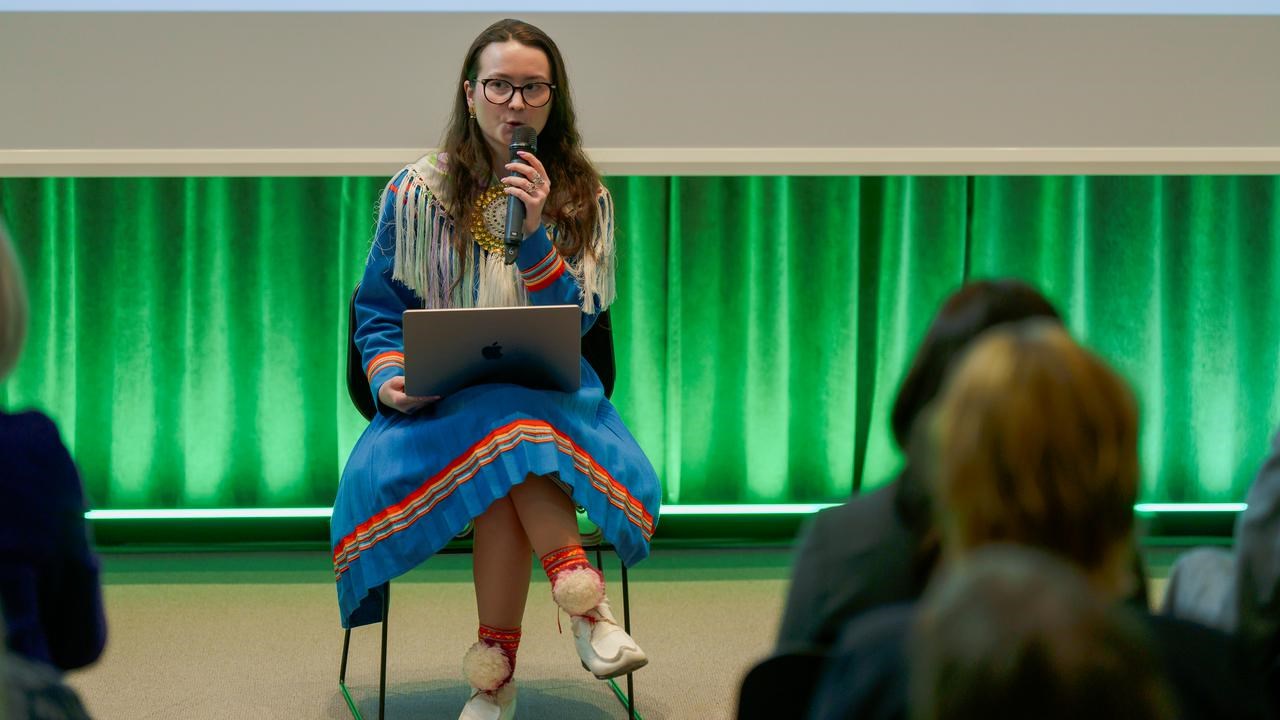
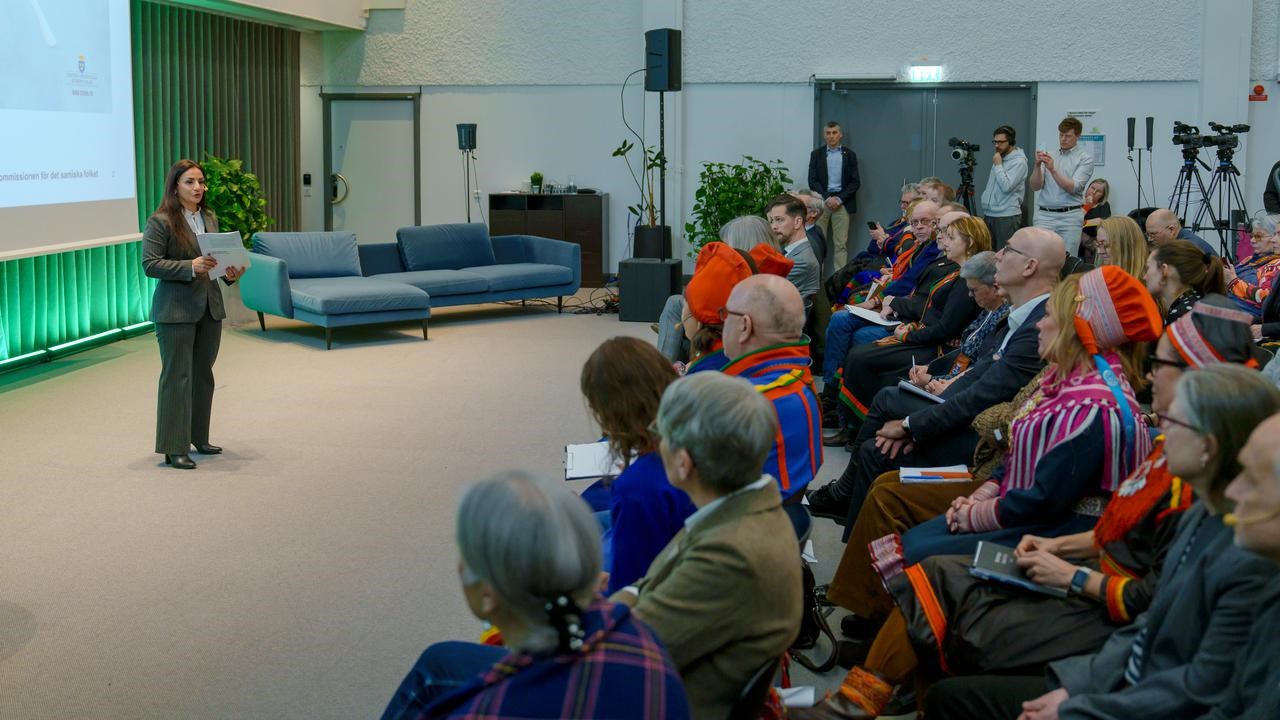
The Commission’s initial work – the research anthology “Marken, vattnet, tankarna – konsekvenser för samer av svensk politik” [Land, Water, Thoughts – consequences of Swedish policies for the Sámi] – was presented on 4 March at a capacity event in the Rotundan at Umeå University.

The event was also broadcast live and a recording can be watched on the Truth Commission’s website.

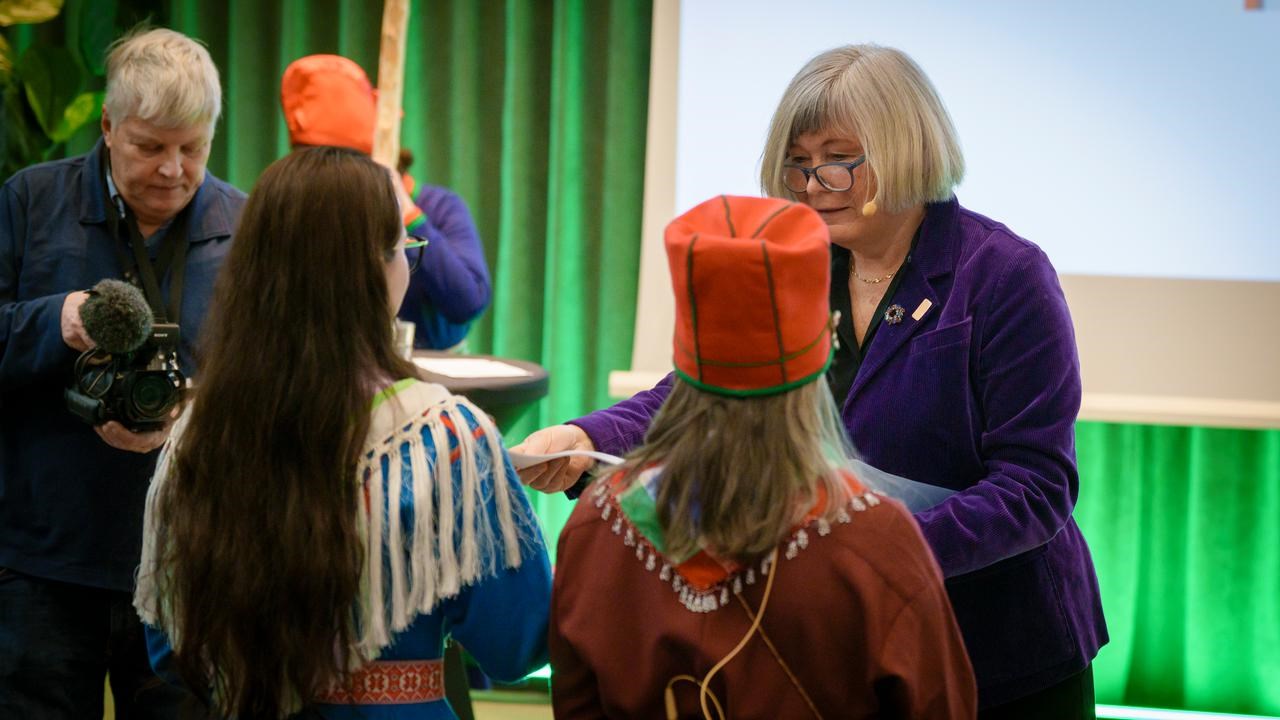
The anthology was handed over

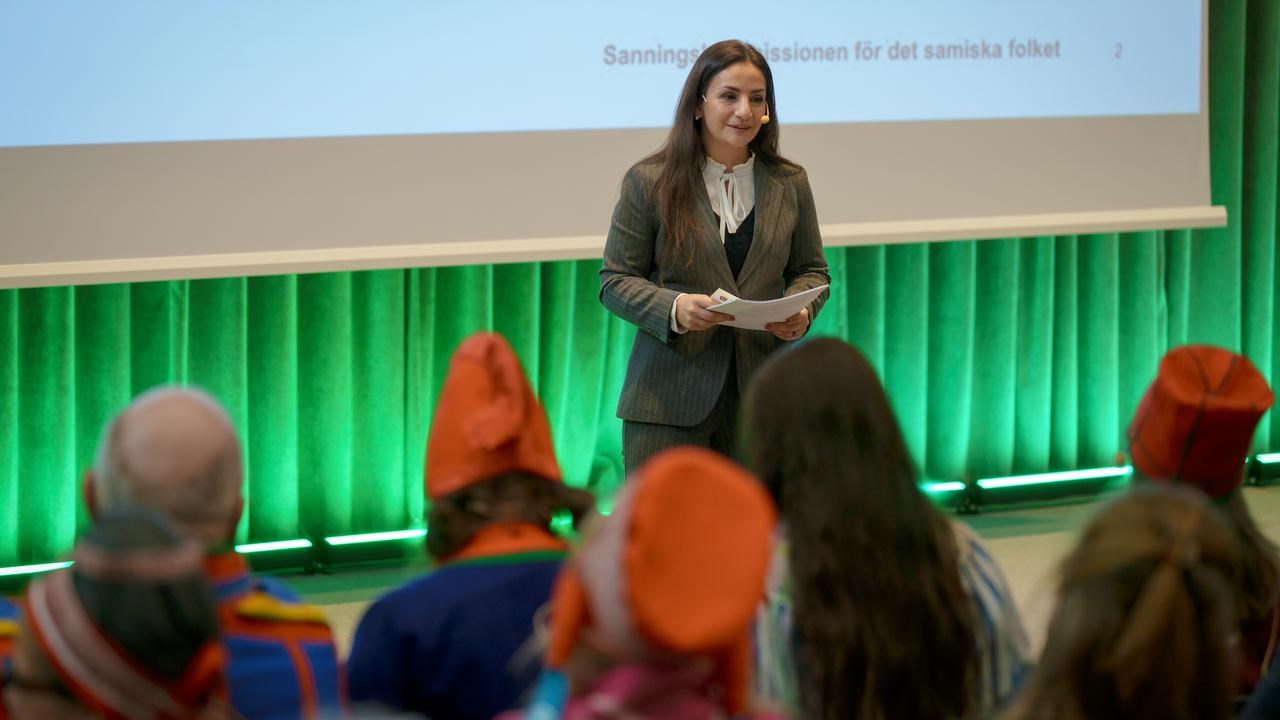
During the event, Lena Nyberg, chair of the Truth Commission for the Sámi People, presented the anthology to Parisa Liljestrand (M), Sweden’s Minister of Culture, Marianne Gråik, President of the Sámi Parliament, and Sara-Elvira Kuhmunen, President of the Sáminuorra youth organisation.

The Minister of Culture thanked the researchers for their work and said that she now looks forward to reading and reflecting on the anthology in its entirety.

“I believe that the knowledge of the past together with the knowledge of the here and now are important for our continued work to create the future that we all want to see. This research anthology lays a solid foundation for the next step in this work,” says Parisa Liljestrand.

The Sámi Parliament and Sáminuorra also see great value in the anthology.

“Together, these different parts form an important and difficult document. It is important because knowledge empowers us; it is difficult because the knowledge that has been produced about us has all too often been created without us and sometimes against us,” says Marianne Gråik.

“The Sami community has extremely high expectations for what is being begun here with the work of the Truth Commission.”

Sáminuorra has worked with the question of a truth commission for nearly 20 years. President Sara-Elvira Kuhmunen sees the initial step of presenting the research anthology as a historic milestone.

“At Sáminuorra, we have very high expectations. We hope that this work can lay the foundation for a new policy – a policy based on recognition, justice and respect.”

The research anthology also identifies the need to earmark more resources for research related to the situation of the Sámi and their history and knowledge.

More research is needed

The research anthology has 36 chapters covering around 20 different subject areas, including land and water rights, state control and the exercise of authority, language policy, the impacts of racial biology, and historical and contemporary forms of discrimination. This is broad and interdisciplinary research that both explains the background to the current situation for the Sámi and highlights the long-term consequences of state policies.

Lena Nyberg emphasises that it is clear for the Truth Commission that much more knowledge is needed in many areas relating to Sámi history and Sámi experiences and their relationship with nature and the land, but also with such areas as language and culture.

“The research anthology also identifies the need to earmark more resources for research related to the situation of the Sámi and their history and knowledge. Lack of knowledge about the Sámi as Sweden’s indigenous people is a serious problem. This ignorance has a history of hundreds of years and leads to racism, exclusion and, even worse, increasing threats of violence and hatred. Gaining better insights and understanding of the situation is important when trying to address exclusion and alienation.”

This is the research anthology

The research anthology is entitled “Marken, vattnet, tankarna – konsekvenser för samer av svensk politik” [Land, Water, Thoughts – consequences of Swedish policies for the Sámi] and includes 36 chapters written by over 50 authors.

The collection covers 22 subject areas, from archaeology to educational sciences, and highlights the diversity of current research within Sámi studies. 

The review was conducted by researchers from Sweden, other Nordic countries, the United States and Australia. Eighteen researchers from Umeå University were also involved.

The anthology is available in Swedish and in its entirety on the website of the Government Offices of Sweden.

Researchers on their chapters

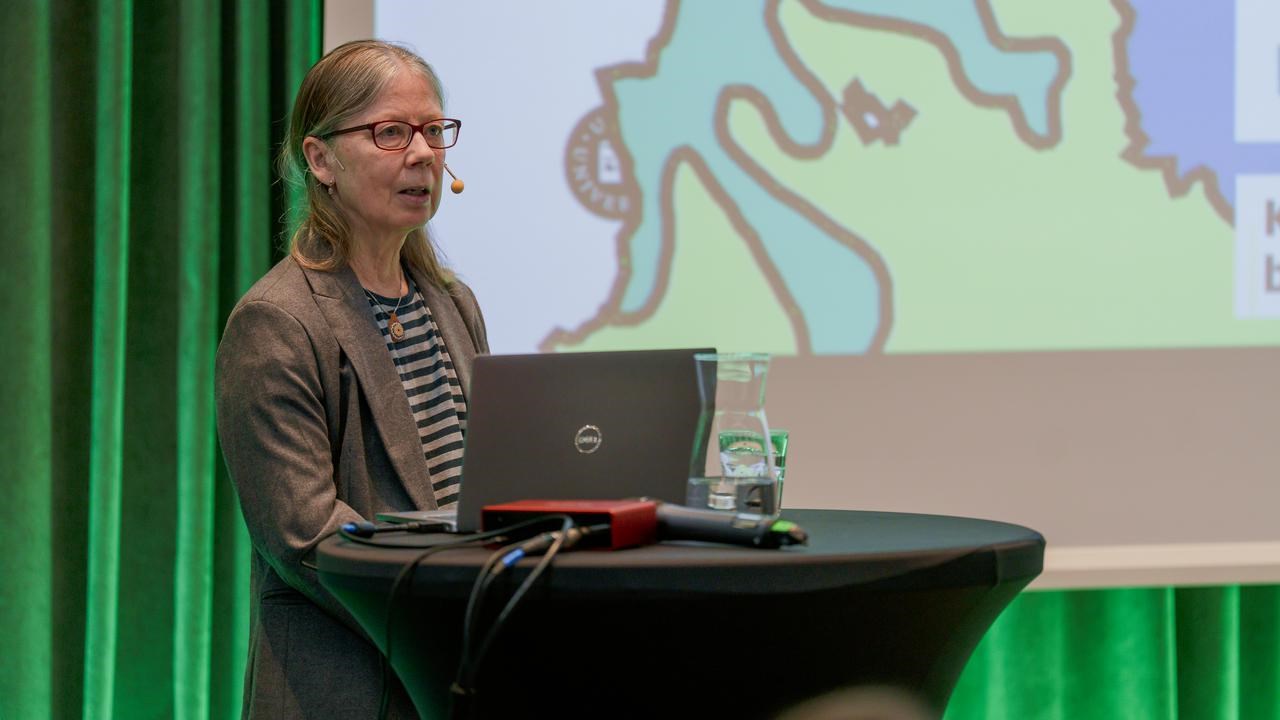
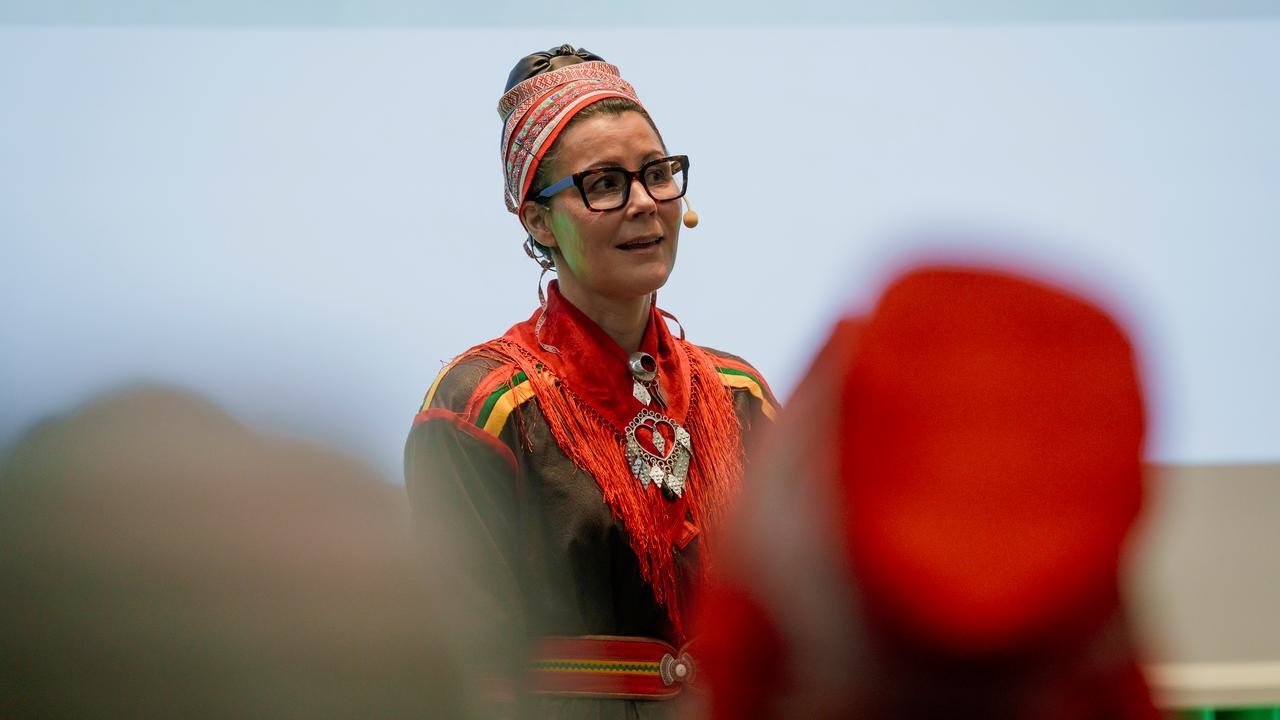
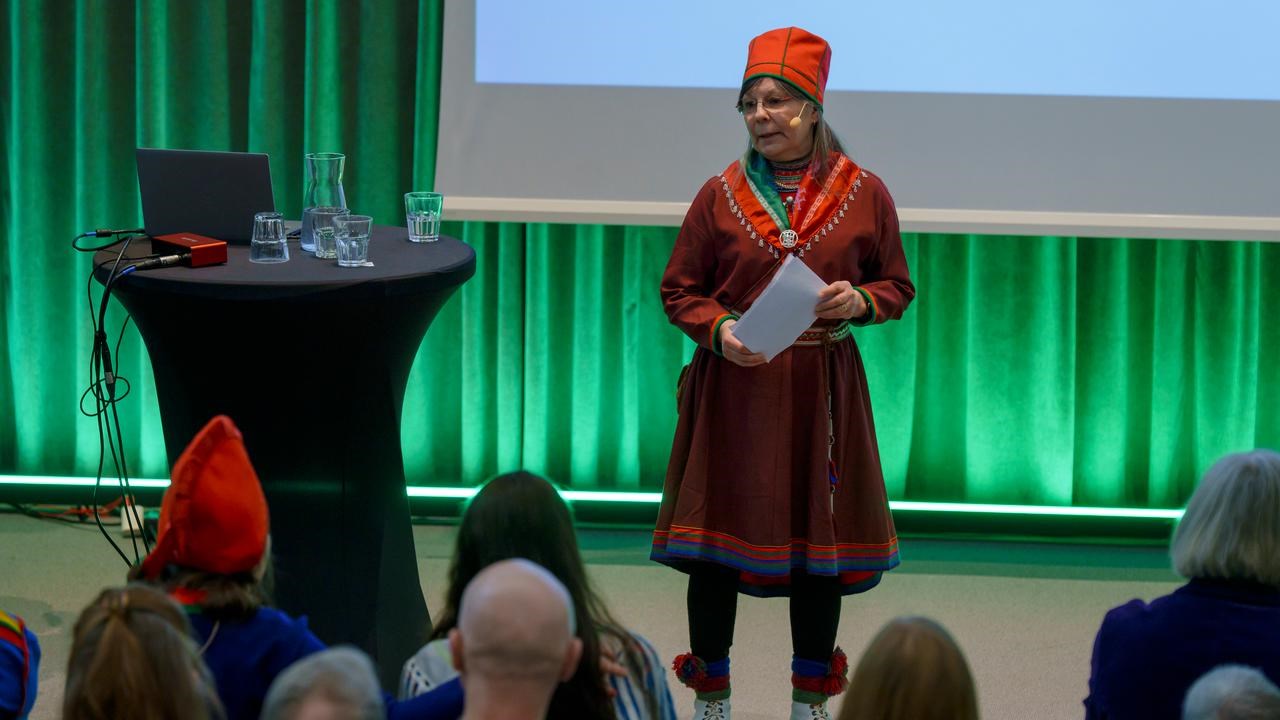
During the event, 6 of the approximately 50 researchers who contributed to the anthology presented their chapters. One was Gudrun Norstedt, a historian at Várdduo – Centre for Sámi Research at Umeå University. Her research looks at Sámi use of land and resources in earlier times.

Her contribution to the anthology focuses on how Sámi land rights were treated in Swedish courts before the 19th century. These insights are useful for understanding the current situation.

“I chose to participate in the anthology because my area of expertise, historical Sámi land use, is important in understanding current conflicts over land and water use,” says Norstedt.

Also present was Charlotta Svonni, doctor of history specialised in educational sciences with a focus on Sámi education. Svonni is also part of Várdduo.

“I consider it my responsibility to contribute science-based knowledge to the Commission’s work. By compiling science-based analyses, the anthology can clarify structures and patterns that are not always visible in individual narratives but that are crucial for understanding the long-term consequences of policies.”

I hope that the research anthology will contribute to a deeper and more nuanced understanding of how governmental decisions and education policy reforms have impacted the Sámi people over time.

Her contribution deals with education, which has played a central role for the Sámi people. In addition to the basic mission of the school system, that is, providing knowledge on various subjects, the nomad and Sámi schools have also taught ideas about what Sámi identity is and what role the Sámi have in society. There has, however, been a drastic decrease in the number of curriculums specifically focused on Sámi education; today only one curriculum is used and it concerns Sámi languages.

“I hope that the research anthology will contribute to a deeper and more nuanced understanding of how governmental decisions and education policy reforms have impacted the Sámi people over time,” says Svonni. “In a broader perspective, I hope that the entire work of the Truth Commission will contribute to a knowledge-based recognition of the State’s responsibility and create a basis for long-term changes and increased Sámi self-determination in Sámi issues.”

As noted, the research anthology is the initial part of the Commission’s work. This autumn, a volume of testimonials will be published in which 300 Sámi from different parts of the country have shared their own and their ancestors’ experiences of being Sámi in Sweden. The final report will be submitted in September and the Truth Commission for the Sámi People will conclude by 1 October.
Panel discussion at Bildmuseet

The modern art museum Bildmuseet is part of Umeå University and currently has an exhibition produced to draw attention to the Truth Commission. On the afternoon of 4 March, a panel discussion was held on the role of art in formulating personal and collective truths connected to the work of truth commissions.

The panel included Anneli Bäckman, curator, Gunlög Fur, member of the Truth Commission for the Sámi People, Sara-Elvira Kuhmunen from Sáminuorra, and Monica L Edmondson, artist. The moderator was Moa Sandström.

A recording of the event can be watched on the Truth Commission’s website.

Read more about the exhibition Art and Truth-Telling on Bildmuseet’s website.

Researchers from Umeå University who contributed to the anthology

18 researchers at Umeå University have contributed to the anthology. Presented here in alphabetical order.

• Per Axelsson.
• Anna-Lill Drugge.
• Anette Edin-Liljegren. 
• Per E. Gustafsson. 
• Åsa Holmner.
• Kaisa Huuva.
• Olavi Korhonen.
• Marianne Liliequist.
• Bertil Marklund. 
• Gudrun Norstedt. 
• Lena Maria Nilsson. 
• Elsa Reimerson. 
• Camilla Sandström. 
• Miguel San Sebastián. 
• Jon Petter Stoor.
• Christina Storm Mienna. 
Charlotta Svonni.
• Åsa Össbo.