"False"
Skip to content
printicon
Main menu hidden.
Published: 2026-11-12

Physicists receive ERC Synergy Grant to create extreme light pulses

NEWS With the “ExtremeField” project, researchers aim to push the boundaries of physics by focusing laser light in a new way. Their goal is to create light pulses that have so far been impossible to achieve, reaching intensities a million times beyond the current state of the art. The project is funded by an ERC Synergy Grant totaling almost SEK 150 million, of which SEK 60 million will go to Umeå University.

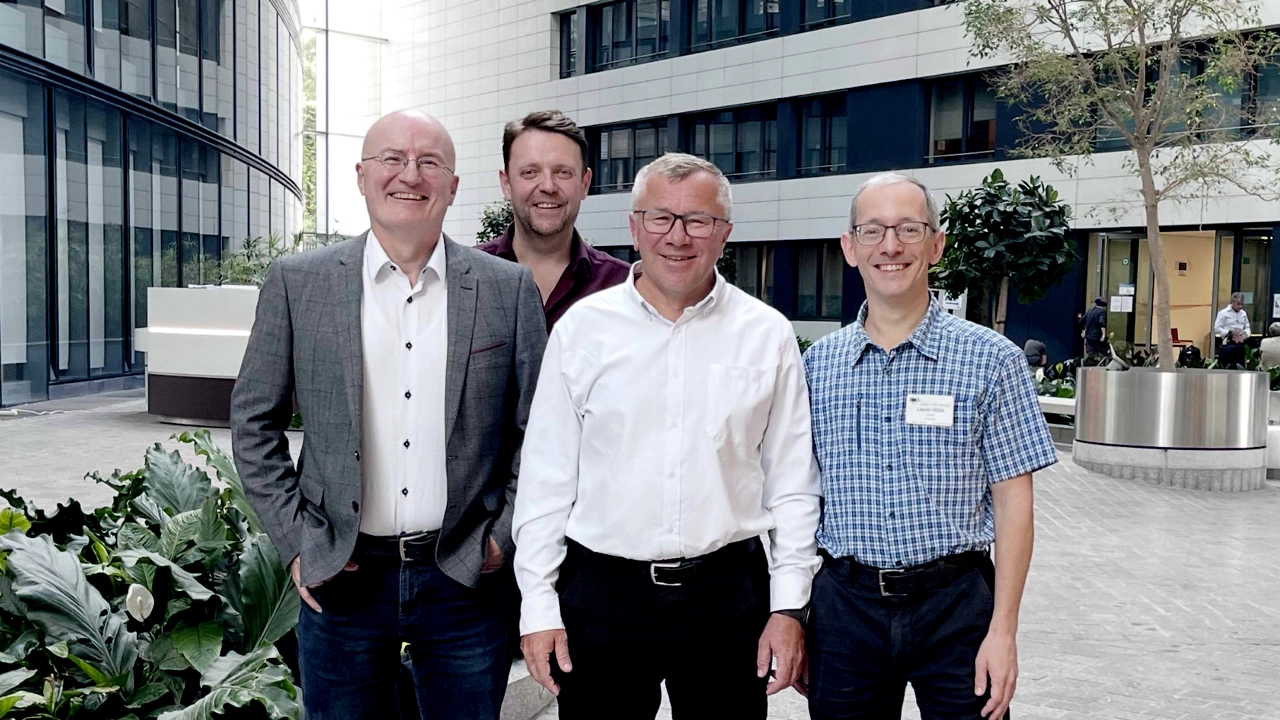
The project is a collaboration between researchers in Germany, the United Kingdom and Sweden. Professor László Veisz from the Department of Physics at Umeå University is a co-project leader with expertise in high-power lasers. He and his colleagues have built Sweden’s most powerful laser, LWS100, which will be used in the ExtremeField experiments.

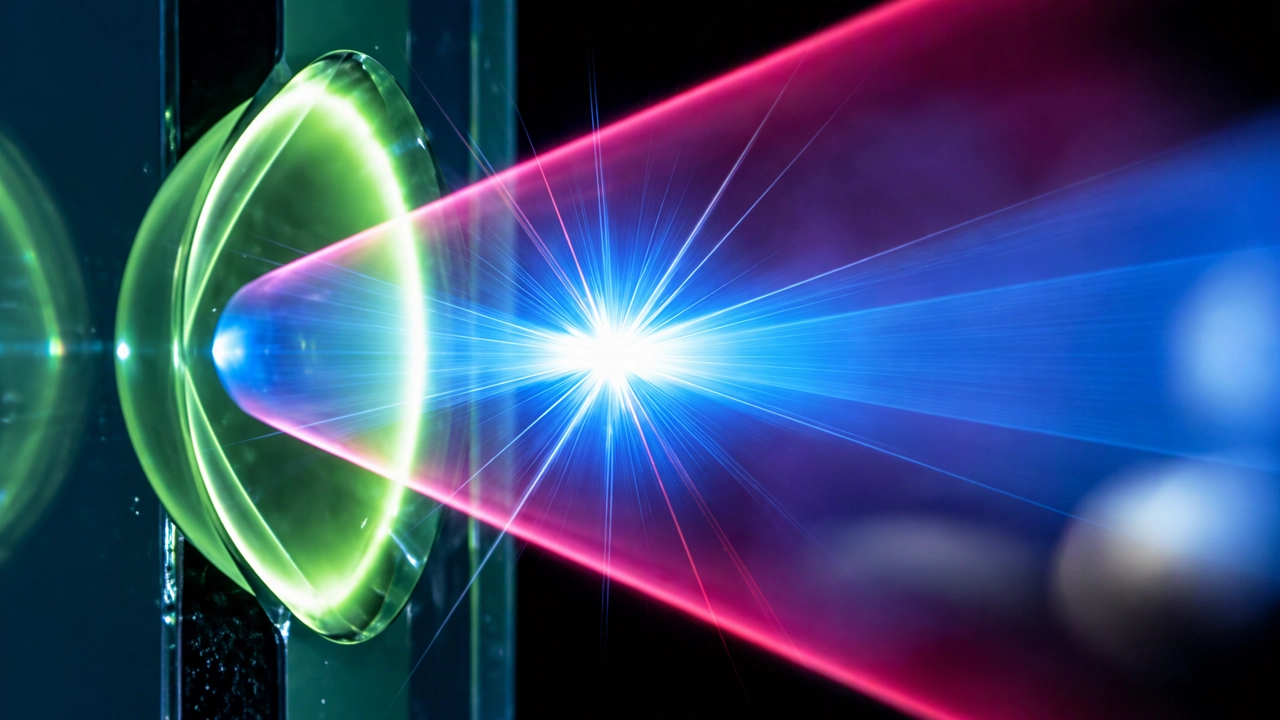
When an extremely powerful, ultrashort laser pulse strikes a glass surface, the surface transforms into a plasma and electrons are released from the atomic nuclei. The electrons move at nearly the speed of light, acting like a mirror, reflecting the light and producing unimaginably short flashes of light. The pressure of the light can also curve the mirror, concentrating the light into an extremely small single point.

Pushing the limits of light

The basic idea behind this method is that the energy of the laser pulse is focused simultaneously in both space and time. Calculations predict that this method can increase the intensity of the light pulse by a factor of a million compared to what today’s lasers achieve at the focal point. Such intensities are close to the so-called Schwinger limit, named after the American physicist Julian Seymour Schwinger (1965 Nobel Laureate in Physics). 

Theory predicts that fields this strong could cause electrons and their antiparticles, positrons, to emerge spontaneously from the vacuum, and that light particles can be scattered by other light particles.

To date, these predictions have not been tested experimentally because the generation of such high electric fields has not been possible. 

“With ExtremeField, we aim to create, for the first time, experimental conditions near the Schwinger limit where quantum effects in a vacuum can be measured,” explains project coordinator Professor Matt Zepf of the Helmholtz Institute Jena, a branch of GSI. “We plan to conduct experiments at our high-power laser JeTi in Jena, Taranis in Belfast, Light Wave Synthesizer 100 (LWS100) in Umeå and develop a new class of lasers to achieve the maximum possible performance with the team members in Umeå.” 

Computer models and experiments go hand in hand

At Heinrich Heine University in Düsseldorf, the team led by Professor Alexander Pukhov develops computer models that show how laser light transforms the material into plasma and generates light at higher frequencies. The models are continuously compared with measurements from experiments.

“The simulations tell the experimenters where to look, and the experiments show us where our models are still off,” says Pukhov. “Closing this loop is at the heart of the project.”

At Queen’s University Belfast in Northern Ireland, Professor Brendan Dromey will investigate how the glass surface transitions into plasma at the start of the laser pulse.

László Veisz is setting up the new laser SUPER there.

“LWS100 is the best existing tool to efficiently compress laser pulses to extreme dimensions, both in time and space. But we envisage an even better laser with pulses as short as half an optical cycle and almost ten times more peak power than LWS100. This would bring us closer to the Schwinger limit,” says László Veisz.

About the ERC Synergy Grant

The ERC Synergy Grant is a funding initiative designed to support small teams of scientists tackling significant research issues for some of the world’s most pressing research challenges across various scientific disciplines.

The ERC Synergy Grant encourages researchers to combine their diverse skills, knowledge, and resources, fostering collaboration that leads to innovative scientific inquiries and the development of new methods and techniques. This grant scheme is part of the European Union's research and innovation program, Horizon Europe.

Contact