

NEWS We spoke to phylodynamicist Andrew Magee who joins The Laboratory for Molecular Infection Medicine Sweden (MIMS), the Department of Molecular Biology and the Integrated Science Lab (IceLab) as a new Data-Driven Life Science (DDLS) Group Leader. He brings evolutionary modelling to infectious disease research to ask how we can make the hidden history of outbreaks legible, and useful, for epidemiology.
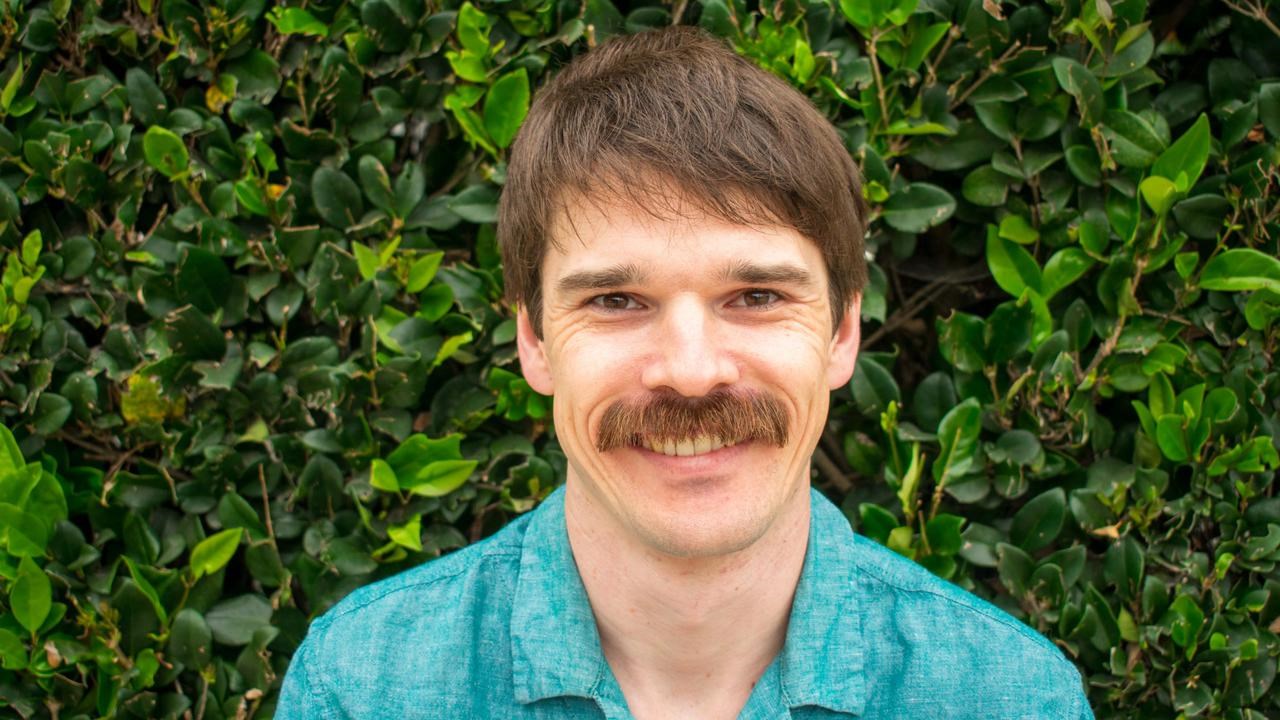
Andrew Magee, Department of Molecular Biology and Group Leader at MIMS and IceLab
ImageElizabeth PerkinsMy scientific background is in phylogenetics, a field at the intersection of evolutionary biology, computer science, and statistics. I was drawn to it because I found reconstructing the distant past fascinating, and because I liked the blend of biology and mathematics. Later, I became interested in phylodynamics, which uses and develops phylogenetic techniques to study disease transmission, and that is where my focus has been ever since.
I was impressed by the vibrant research community here. I was especially attracted to the collaborative culture and the amount of collaboration that happens within MIMS and Umeå University more broadly.
I am also looking forward to the proximity to nature and the relative ease of getting around that Umeå offers.
The history of infectious disease transmission is encoded, noisily, in the genomes of pathogens. Our driving question is: how can we make evolutionary modelling more useful for epidemiology?
We approach this through two complementary lenses: model adequacy, asking how trustworthy a given model is under particular circumstances, and model development, asking how we can make models work better. Both matter if phylodynamic inference is to genuinely inform how we understand and respond to outbreaks.
Like many of my compatriots in MIMS, EMBL, and especially IceLab, I am a modeller. As such, I am always on the lookout for interesting questions to translate into statistical models. With so many excellent groups in the region working on tough questions with rich data sources, I am excited to see how my group can contribute.
And from the other direction, I am curious to explore how the phylodynamic models I work on can be made more realistic by incorporating expertise from colleagues at MIMS.
Andrew is an enthusiastic cyclist, mostly on road but increasingly on gravel. More than riding, though, he loves working on bikes themselves. He volunteered for over a year at a cooperatively owned bicycle repair shop in Los Angeles, a hands-on passion that offers a satisfying counterpoint to the abstract world of statistical modelling.