

NEWS How can universities create learning environments where students do not only learn about research, but actively contribute to it? At the Department of Computing Science, one recent example demonstrates how research-education alignment can create opportunities for both students and researchers. A few weeks ago, a paper co-authored by former AI master’s student Anaïs de Graaf was accepted to ICAPS, one of the world’s leading conferences in artificial intelligence research.
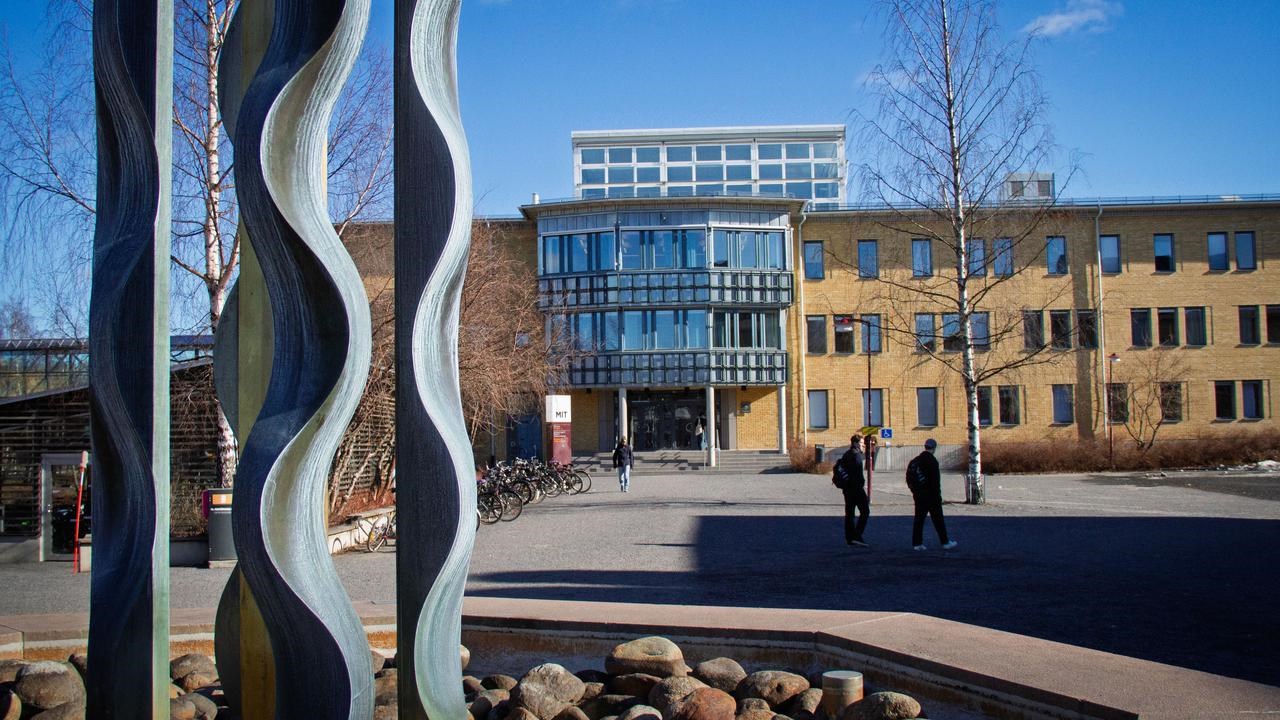
The Department of Computing Science works with research-education alignment to create opportunities for both students and researchers.
ImageMagnus MikaelssonResearch-education alignment provides a strong pathway for promoting high quality student learning as well as providing them with the best opportunities for the next steps of their career. For researcher and supervisor Loïs Vanhée, the journey of Anaïs, leading to the publication is a great example of the importance of carefully designed educational structures. An appropriately calibrated emphasis on research productions provides students with concrete and authentic academic goals to pursue: the achievement of these goals is highly appreciated expand for later job prospects, as an accepted publication in a good venue is solid evidence of competence and thoroughness from the student.
– Going through the motions of writing an academic paper is a very rich learning experience: learners must expand beyond the learning environment to engage with a broader world and provide a meaningful contribution to it, says Loïs.
Enabling and facilitating research-education alignments hardly happen by accident but instead require the conscientious development of proper learning environments.
– Many variables are to be managed altogether for such an environment to be successful: prior competences and skills, learning outcomes, educational resources and processes, scientific resources and processes, financial resources and processes, long temporalities, follow-up career opportunities, etc. Miss one link and the whole chain breaks.
The education provided at the Master’s Programme in Artificial Intelligence creates a good foundation for addressing these challenges: students have the right pre-requisites and educational processes can facilitate the research-education alignment.
At the Department of Computing Science, one focus is to create opportunities for students to grow through interdisciplinary research and collaborations, partly through TAIGA, Umeå University’s centre for transdisciplinary AI. This approach gives each student opportunities to learn a new domain and transversal skills and to be empowered in thinking out of the box, to apply what they know in a real-world setting and can demonstrate that they can create direct value to others.
Through their thesis projects, the students are given opportunities to contribute to authentic research questions that can later develop into a publication. Loïs role as supervisor involves guiding students in defining research questions, selecting methods and analysing results, while also connecting them with collaborators from other disciplines. Over the years, several of these collaborations have resulted in master’s theses developing into full research papers.
Anaïs de Graaf, is an alumni at the Master’s Programme in Artificial Intelligence and co-author of an article that recently was accepted to ICAPS.
ImageAnais de GraafAnaïs' is an example of a student who followed this process. The first contact emerged during a meeting where AI researchers presented possible research directions for students.
– When I started my master thesis, the teachers and some other people that had thesis projects did short presentations. I thought the one from Loïs was really interesting, so I continued that topic, says Anaïs.
According to Anaïs, the close contact with teachers and researchers is one of the programme’s greatest strengths. Students can easily approach faculty members, discuss ideas and engage with ongoing research.
It’s always possible to reach the research groups, and they often have presentations for us to see what they are working on. If you’re interested, you’re always free to contact them and maybe collaborate on papers and stuff like that.
– I remember when I did my master thesis, Loïs would tell me that there were a few other students that he supervised that also published a paper together with him. I think it’s a very good initiative, says Anaïs.
She chose to be co-author of the paper due to a lot of other things going on at the time. Loïs and Anaïs continued the dialogue and collaborated to write the paper after Anaïs finished her studies, eventually resulting in it being accepted to ICAPS in 2026.
– I was glad that Anaïs found the thesis proposal interesting. She did a very original and thorough thesis work. As I saw the potential in her results, I offered to continue and push her research further to the academic scene. We got the results a few weeks ago, she ended up co-authoring a paper in an A* conference (ICAPS), giving her for a first-class ticket to an academic future if she is interested. It makes me very happy for her and proud that our education programme manages to elevate our students to reach the research frontier, says Loïs.
Off the Beaten Path: Modelling Path Uncertainty using Markov Decision Processes