

NEWS During the “Next Nobel Prize 2026” inspiration day, 25 natural science students took part in lectures and lab visits on the university campus. The aim was to give a concrete picture of research and to recognise Emmanuelle Charpentier, Umeå’s honorary citizen and Nobel laureate.
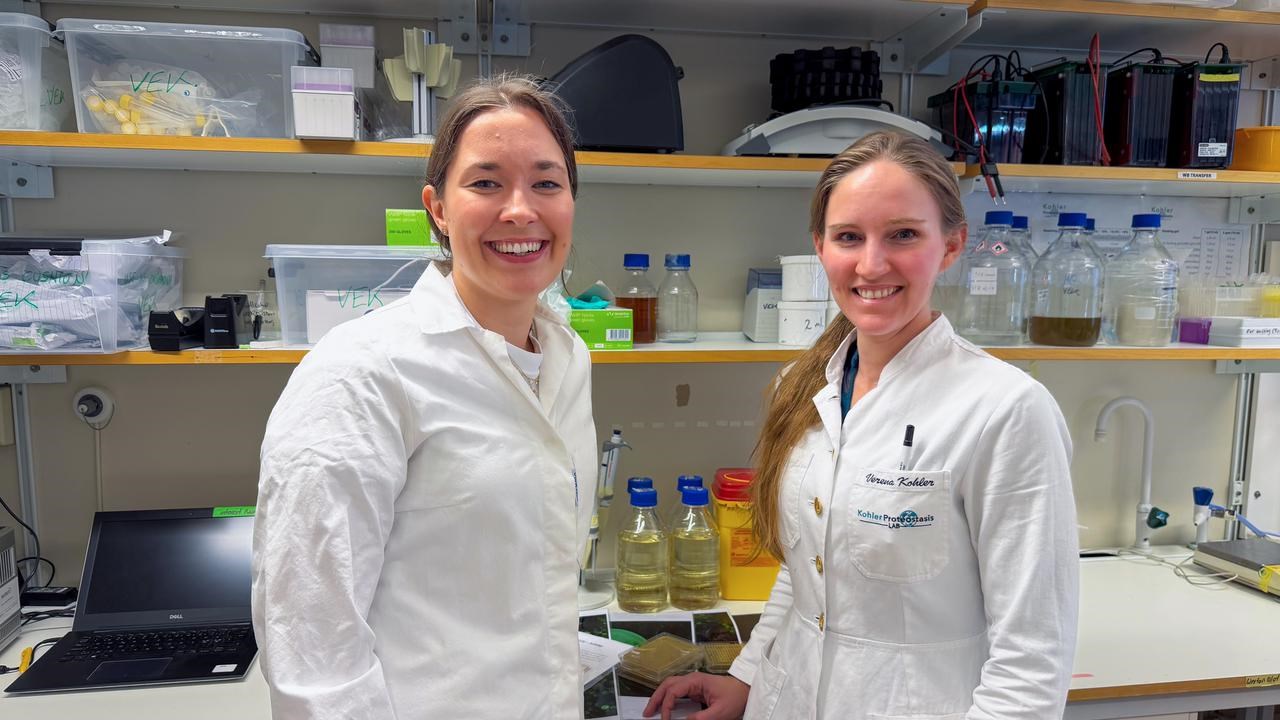
Sofia Morney and Verena Kohler had prepared the laboratory to welcome a small group of high‑school students.
ImageAndreas KohlerHopefully it sparked an interest in a research career for some of the students
“The day offered several takeaways. The students’ curiosity led to good conversations and many questions, and the meeting between researchers and high‑school students was both open and constructive. Hopefully it sparked an interest in a research career in some of the students,” says Verena Kohler, Assistant professor at the Department of Molecular Biology, Umeå University.
During the “Next Nobel Prize 2026” inspiration day, 25 third year natural science students from Umeå’s upper‑secondary schools gathered in Galaxen on the university campus. The event was coordinated by Karolina Broman, Deputy Dean of the Faculty of Science and Technology, and was carried out in collaboration between Umeå University’s Faculty of Medicine, Faculty of Science and Technology, and Umeå Municipality. The purpose was to give the students a concrete understanding of research and doctoral education.
The morning consisted of lectures by researchers from both faculties, including Richard Lundmark, Erik Chorell, Daniel Öhlund, and Verena Kohler. Together, they provided examples of different research areas and what the work can look like in practice.
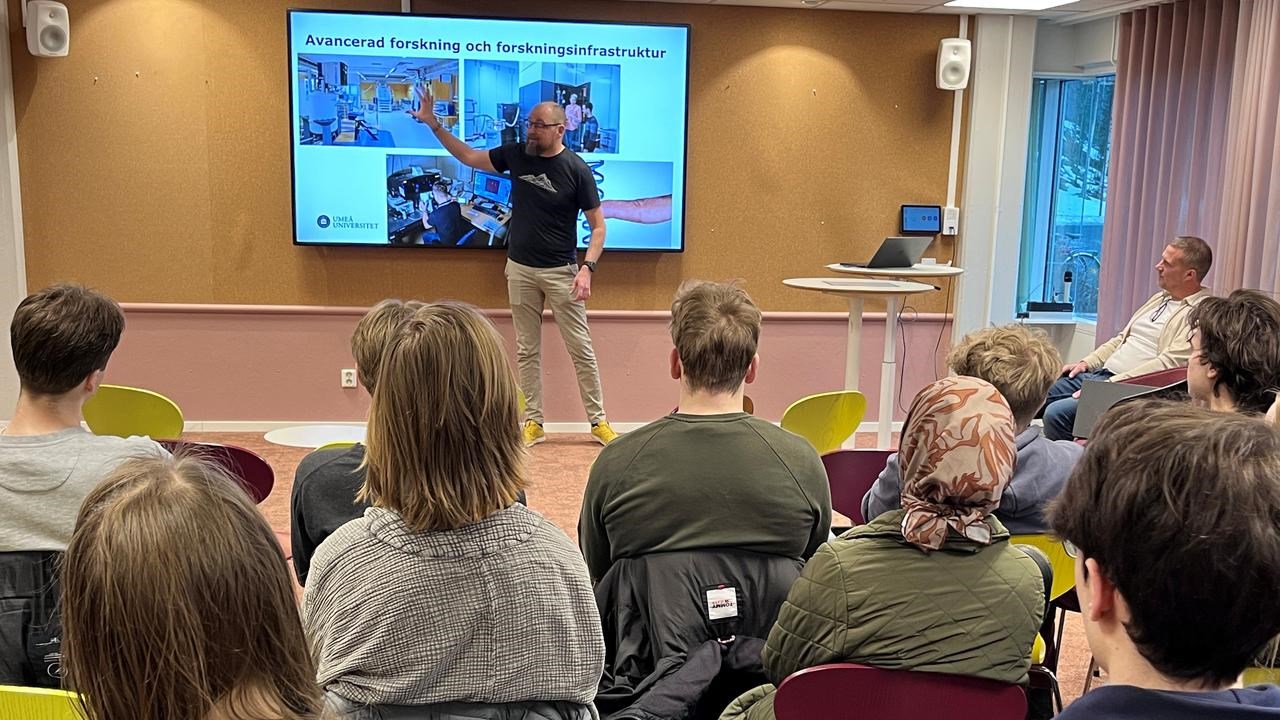
Deputy Dean of the Faculty of Medicine, Ronnie Berntsson, spoke to the high‑school students about Umeå University’s research infrastructure and its significance.
ImageOla NilssonIn her lecture, Verena Kohler combined an overview of her research with reflections on pathways into academia. The students were introduced to how yeast is used as a model organism to study ageing processes, and how protein structure and function change over time. To make the mechanisms more tangible, she used a wardrobe analogy.
“When everything is folded and in the right place, the cell functions as it should. But as the wardrobe ‘ages’, clothes end up in the wrong drawer, some get damaged, and others form messy piles, just like proteins in an ageing cell.”
The personal part of the lecture addressed the choices and detours that led to a research path.
“You don’t find your path by thinking. You find it by trying things,” Verena Kohler summarised.
The students followed the lectures with interest, even during the final session before lunch.
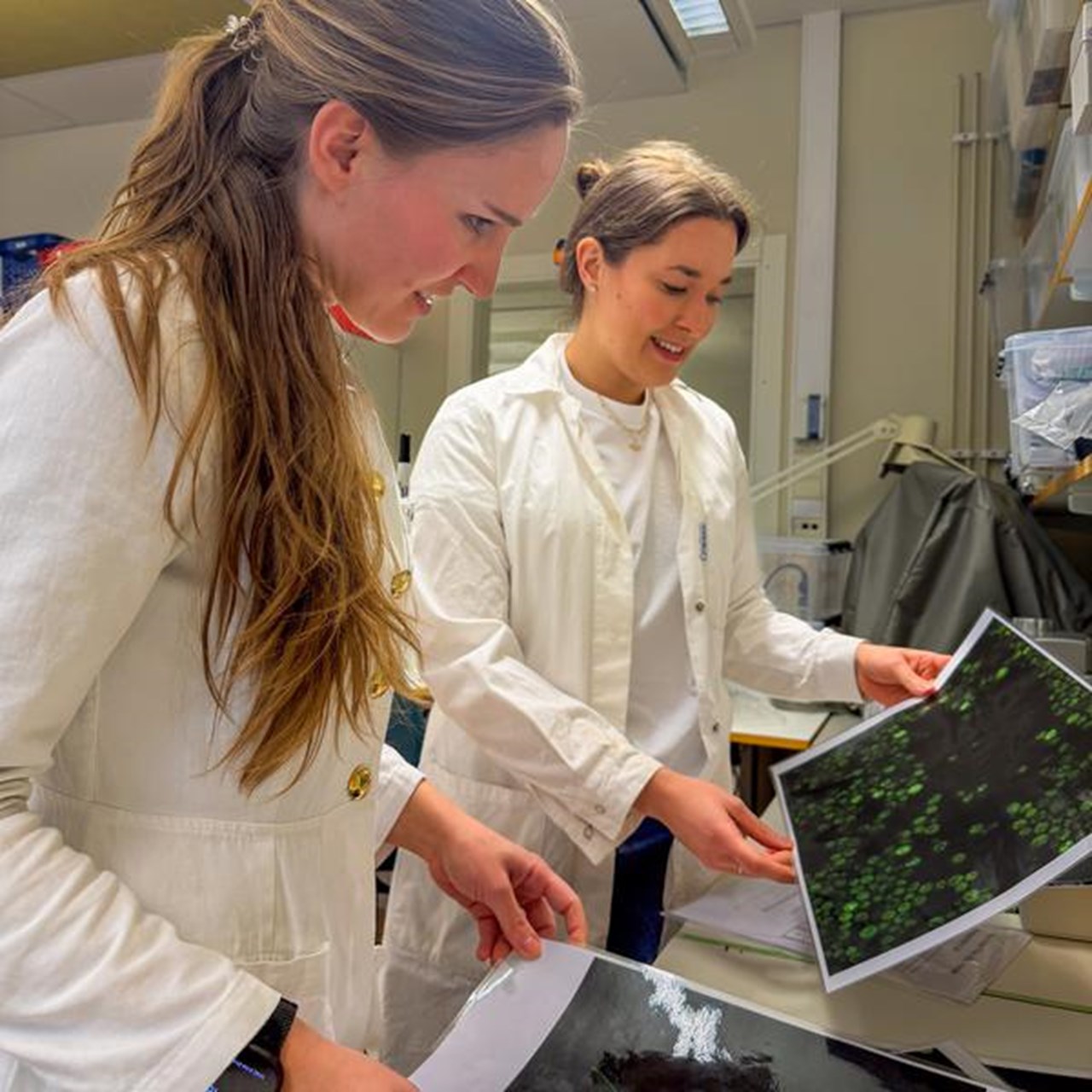
Verena Kohler and Sofia Morney welcomed the students into the lab and created a curious encounter with science through Sofia’s playful and cleverly designed experiment.
ImageAndreas KohlerAfterwards, a smaller group of six students visited Verena Kohler’s lab. The visit was led by Sofia Morney, who started as a research trainee and has since continued in Verena’s group. She presented her ongoing experiments and invited the students to solve a simple, research‑related puzzle. She also talked about her studies and what everyday work in a laboratory can look like. The visit had a practical focus and allowed time for questions in a small‑group setting.
For Verena Kohler, outreach is an important part of the researcher’s role, both to meet young people considering a future in the natural sciences and to practise explaining research in an accessible way.
As a first‑generation scientist, she remembers how valuable every bit of guidance was. She did not grow up knowing how academia worked, so the people who took the time to explain things, or simply showed what was possible, made a significant difference.
Outreach is Verena’s way of offering something similar to others.
“I want to share experiences, not give instructions. Most paths into research are not completely straight.”

