
Do you want to hear more about the trip?
Join the seminar with Lena Leimgruber Haraldsson where she shares her experiences about the course and trip to Canada and Alaska!
12 February, 13:00–14:00
Mustang Sally, AWL
NEWS Between August and September 2025, PhD student Lena Leimgruber Haraldsson and master’s student Nikiforos Staveris from Umeå University participated on a unique academical course on Arctic Future Pathfinders, that allowed them to travel to both Canada and Alaska.

The 10 ECTS course for master’s and PhD students was called “Arctic Future Pathfinders – A journey through the Northwest Passage” and aimed to train students and young academics to become essential Arctic researchers. It was organized by UiT – the Arctic University of Norway, and was originally planned to take place onboard the SS Statsraad Lehmkuhl, as part of the One Ocean expedition over the Northwest passage. However, the voyage had to be cancelled due to too much ice. Instead, the course was held on land. Travelling to both Cambridge Bay and Yellowknife, Canada, as well as to Anchorage, Alaska, the participants took part in lectures, field visits, hikes and community encounters.
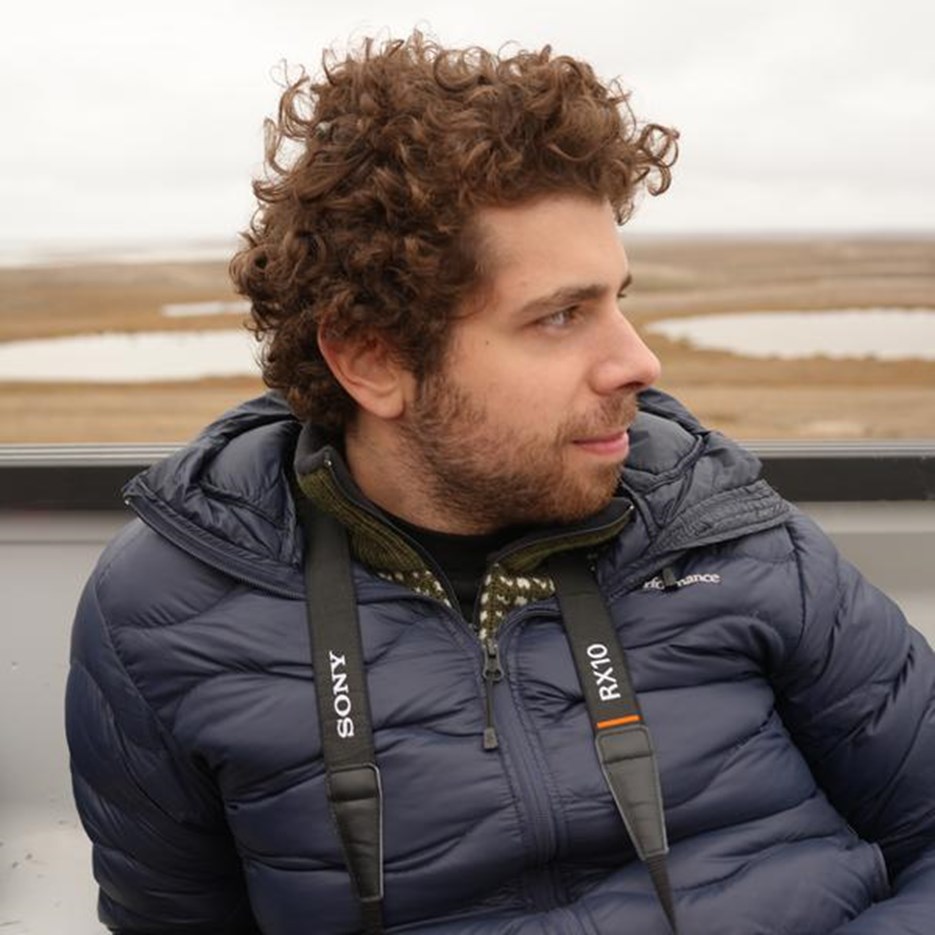
Nikiforos Staveris.
Image Karine Nigar Aarskog“It was a true original experience, transformative in ways I’m still processing. The course being done on land instead of on this legendary sailing voyage through the Northwest Passage was at first a great disappointment for us all, until it became a point of our identity. It became its own kind of adventure and something that connected us. In Iqaluktuuttiaq (Cambridge bay) we were given the name “Qajaittuq” by our elder guide Navalik, which literally translates to ‘no boat’,” says Nikiforos Staveris.
Lena and Nikiforos explain that the local people and places in the Arctic gave them insight into the real Arctic, and the academic variety in the group of participants opened for new ideas and perspectives. Lena mentions being in Iqaluktuuttiaq as one of the most meaningful parts of the course, as she got to listen to local stories, share food with Elders, as well as discuss issues like Arctic futures, governance, food systems and literature with people from different fields.
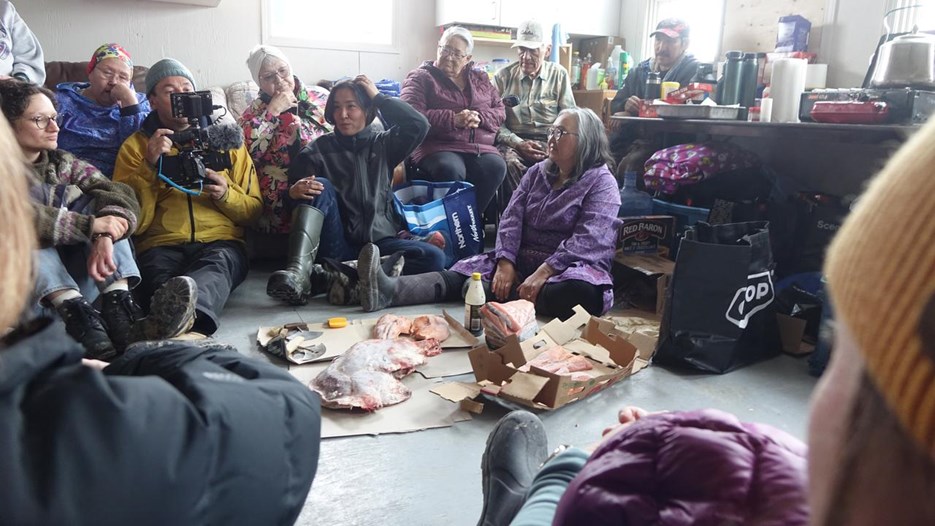
The course participants try local food.
Image Nikiforos Staveris“It made the Arctic feel real, lived-in and relational rather than abstract or symbolic, and the interdisciplinary discussions challenged and expanded how I think,” she develops.
Seeing how climate change, colonial legacies, logistics, food systems and governance intersect in daily life fundamentally changed how I understand ethical questions around sustainability and responsibility.
Both Lena and Nikiforos agree that the trip and course were transformative and gave many new experiences they would not have received otherwise. They bring back a much more grounded, embodied understanding of the Arctic as a social–ecological system, and explain that before the trip, much of the engagement with the Arctic came through theories, but now those theories are connected to places, people, infrastructures and everyday practices.
“Seeing how climate change, colonial legacies, logistics, food systems and governance intersect in daily life fundamentally changed how I understand ethical questions around sustainability and responsibility,” Lena says.
Nikiforos adds his insight about paying respect to the people of a place:
“The most important gift I received from the course was the freedom that comes with accepting that no single knowledge system holds absolute truth. I now understand how crucial it is for a researcher to be able to look past their own domain knowledge on a subject and be able to listen and respect, especially when it comes to Arctic matters,” he says.
I now understand how crucial it is for a researcher to be able to look past their own domain knowledge on a subject and be able to listen and respect, especially when it comes to Arctic matters.
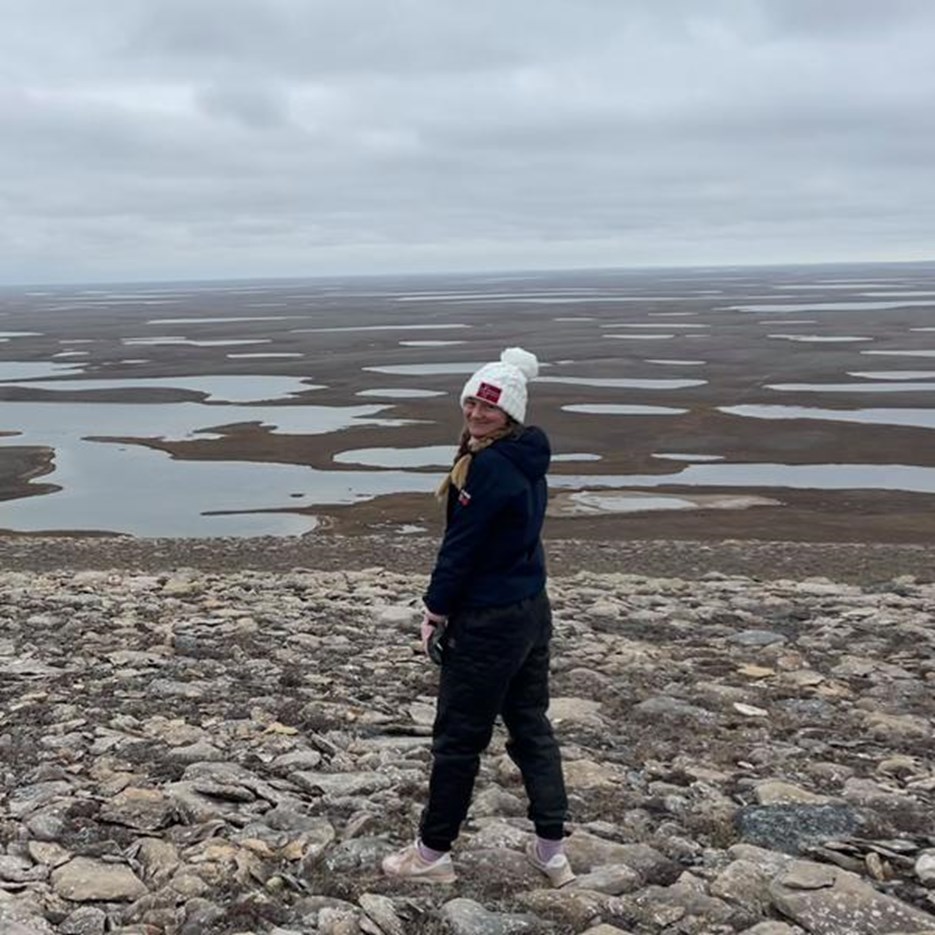
Lena Leimgruber Haraldsson stands at Uvayuq (Mount Pelly), Canada.
Image Ditte Lilholm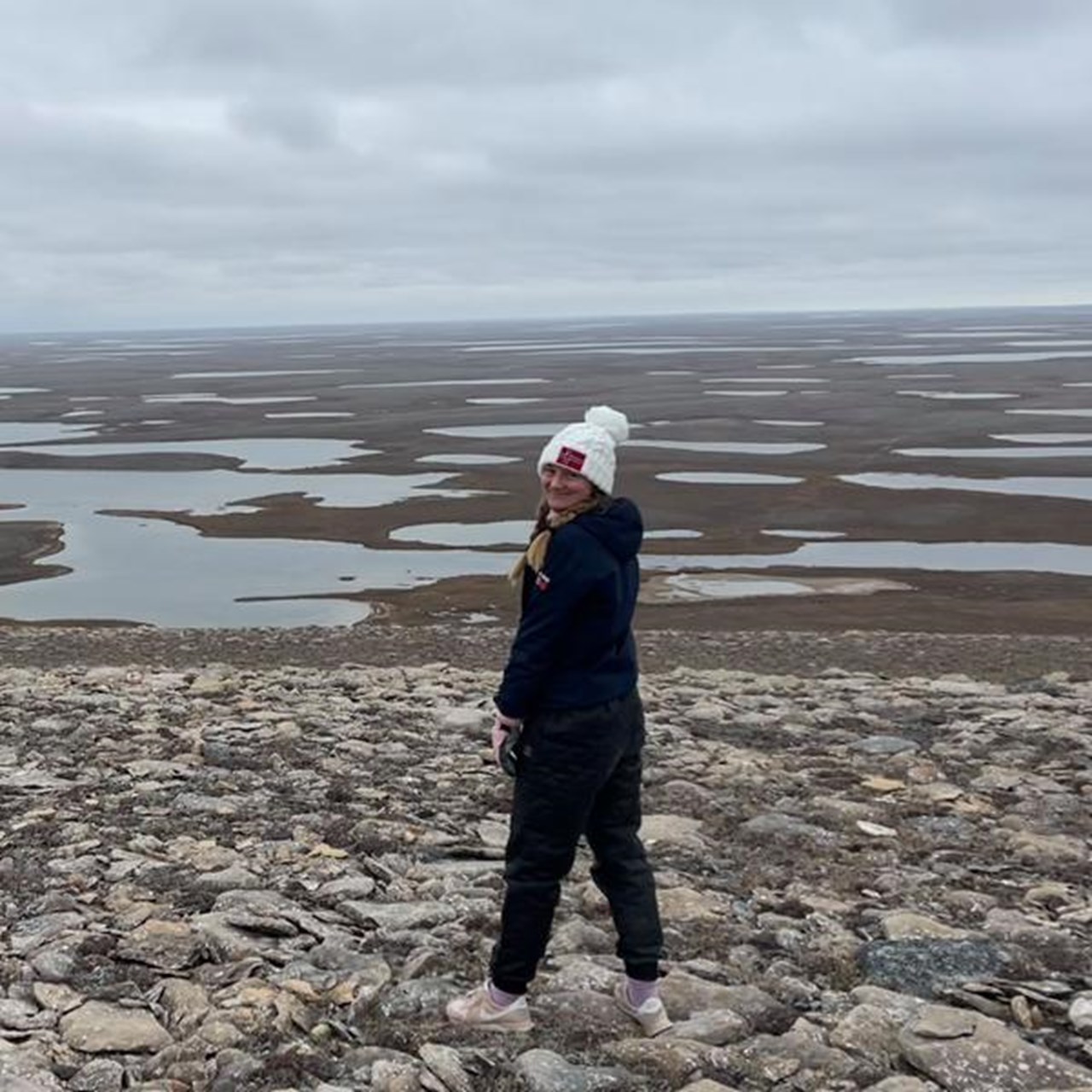
The participants think trips like these are very important for understanding the Arctic, and how to approach the Arctic as a research topic.
“For the research to be ethical, it demands being present in the communities. It must be relational, accountable and attentive to Indigenous leadership and priorities, rather than simply “including” them as an afterthought. The research cannot be purely analytical or detached from these aspects,” Lena emphasises.
They continue and explain that trips like these matter because they also challenge simplified ideas of the Arctic as either a pristine wilderness or a resource frontier. They show the Arctic as a lived place: complex, modern, vulnerable, resilient, deeply interconnected with global systems.
“Nowadays, news about the Arctic is often framed like a geopolitical game of Risk, but in my mind the Arctic will always be an image of its people, their generosity, resilience, endurance and grace in the face of ongoing challenges,” says Nikiforos.
Both Lena and Nikiforos recommend researchers who are willing to listen, reflect and engage respectfully across differences, to join on a trip like this if they get the chance. It was more than a field trip that offered new knowledge, new interactions and new friends. It was also an opportunity to rethink how to relate to the Arctic, to each other, and to the future we are collectively shaping.
“The trip was not always comfortable, predictable or easy, but that is precisely why it was valuable. It pushed me beyond my academic comfort zone, challenged some of my assumptions and confirmed my commitment to interdisciplinary and ethically grounded Arctic research,” Lena says.
“I would definitely do it again in a heartbeat,” Nikiforos concludes.
Lena Leimgruber Haraldsson is a Doctoral student in English literature at the Department of Language Studies. Her research focuses on speculative fiction, postcolonial literature and ecocriticism, with a focus on the Arctic.
Nikiforos Staveris is a master's student in the AI programme at the Department of Computing Science, with an interest for inclusion between AI technology and traditions.
Join the seminar with Lena Leimgruber Haraldsson where she shares her experiences about the course and trip to Canada and Alaska!
12 February, 13:00–14:00
Mustang Sally, AWL