

NEWS Methane is one of the most powerful greenhouse gases in the atmosphere. Despite this, major knowledge gaps remain about where the gas is produced and which factors control its emissions. A team of researchers now aims to map a previously overlooked zone between groundwater and streams that is emerging as an important source of methane. The findings could be a key piece of the puzzle for predicting methane emissions in response to climate and anthropogenic change.
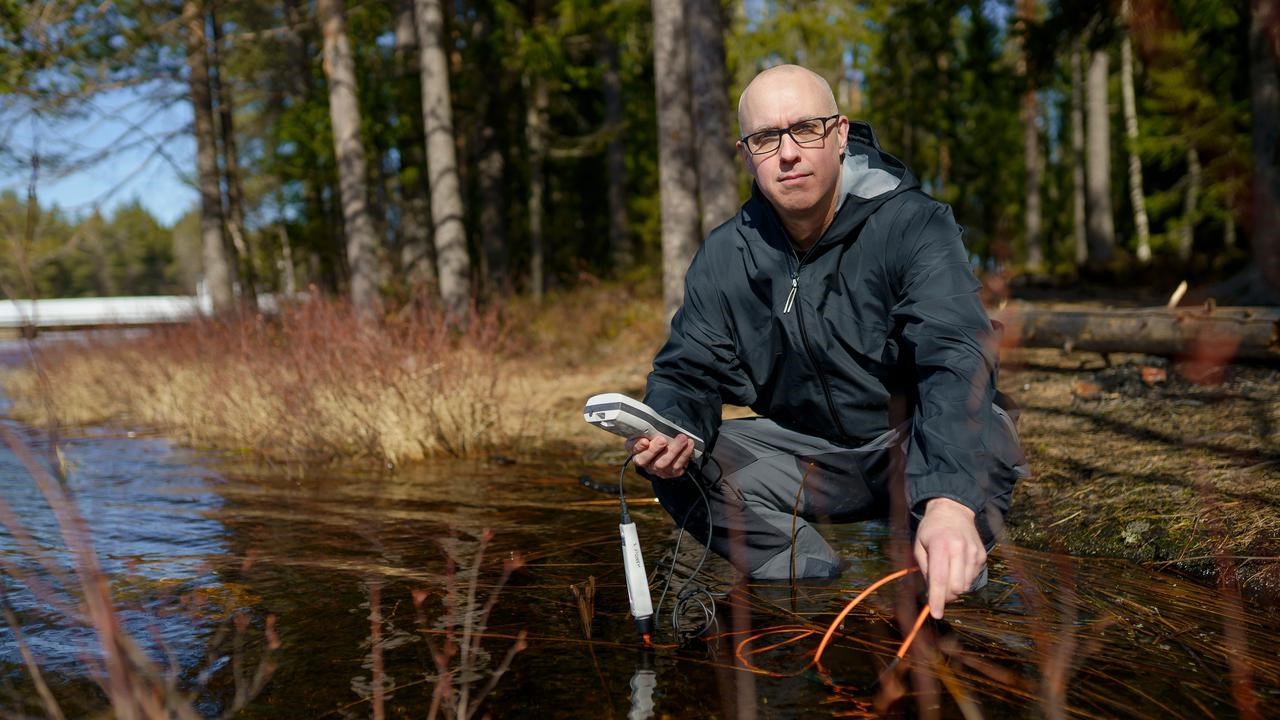
Ryan Sponseller, Professor at the Department of Ecology, Environment and Geoscience.
Imagesimon ohman jonsson inhousebyran“We want to understand the processes that control when and where methane is produced in the transition zone between groundwater and surface water, because that knowledge is crucial for predicting future emissions,” says Ryan Sponseller, Professor at the Department of Ecology, Environment and Geoscience at Umeå University.
Previous research has often focused on the importance of temperature for methane production, but new findings suggest that hydrological processes and change may be at least as important in groundwater environments.
The researchers behind the project have shown that the area where groundwater meets surface water plays a greater role in global methane emissions than previously thought. Significant quantities of methane appear to be produced there, and the underlying processes have received little detailed attention so far.
In this project, the researchers will investigate how variations in groundwater levels affect so-called redox conditions, that is, how the availability of oxygen and other substances in the soil govern what chemical and microbial processes are favored. As groundwater levels rise and fall, the conditions for methane-producing microorganisms change. At the same time, the conditions allowing for methane production are also influenced by chemical factors linked to land use and past atmospheric deposition of substances such as nitrate and sulfate.
To better understand these relationships, the researchers will conduct a large field experiment in Krycklan outside Vindeln, as well as other field studies across Sweden, and laboratory experiments using soil samples from several European countries. The results will be used to develop models that can more accurately predict how methane emissions may change under future climate conditions, with more frequent periods of drought and flooding. In the longer term, this knowledge could contribute to more reliable estimates of methane’s role in the global greenhouse effect.