
NEWS Two recipients have been selected for Umeå School of Business, Economics and Statistics (USBE), Pedagogical Prize 2026: one teaching team in Business Administration and one programme coordinator in Statistics. Both recipients stand out for their deliberate, systematic, and pedagogically grounded work in integrating and developing USBE’s competencies within education, with a clear focus on students’ learning and professional development.
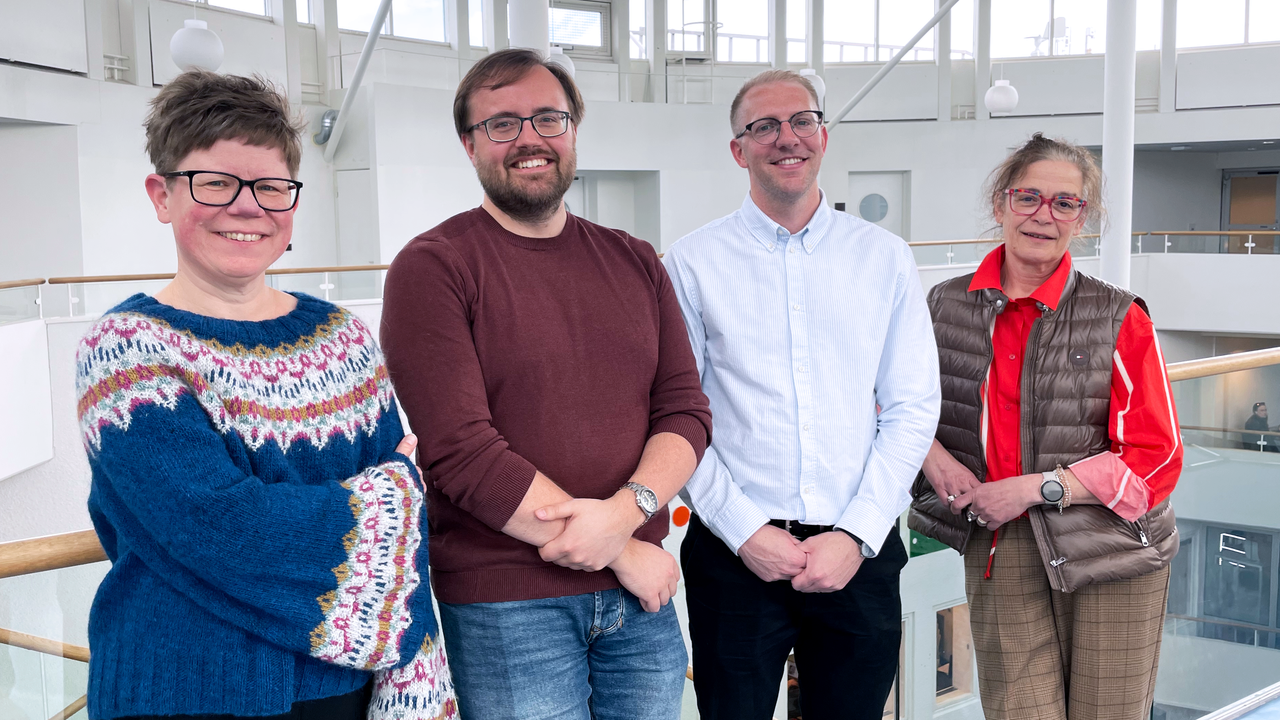
This year’s winners.
ImageTherese SarlinUSBE annually announces a pedagogical award whose purpose is to encourage teachers who make good pedagogical contributions in undergraduate education and to stimulate pedagogical development at USBE. The award recipients were selected by USBE’s management team following nominations from students and teachers.
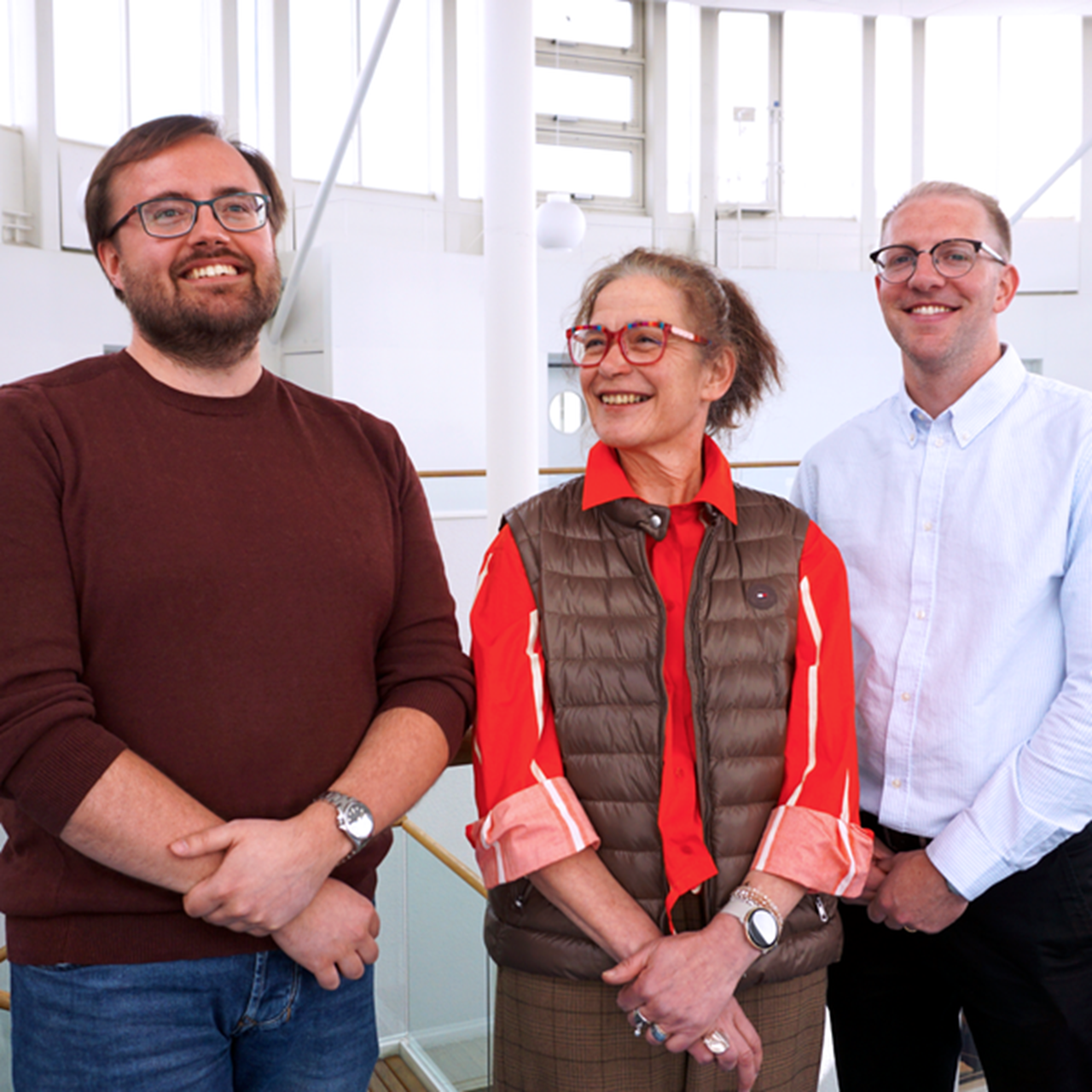
Peter Gustafsson, Zsuzsanna Vincze and Lucas Haskell.
ImageTherese SarlinThe teaching team consisting of Peter Gustafsson, Lucas Haskell, and Zsuzsanna Vincze, is awarded USBE’s Pedagogical Prize 2026 for their deliberate and systematic approach to integrating the USBE’s competencies into teaching and assessment. Under the leadership of Zsuzsanna, who over time has played a central and unifying role in the course’s development, the team has designed a student‑centred and practice‑based course format. Through long‑standing collaboration with external stakeholders, the course creates strong conditions for students’ learning and for the development of several core competencies, in particular problem solving, communication, responsible approach, and self‑leadership.
At the core of the course is an innovation camp, in which students work in groups on real challenges provided by companies. This format places particular emphasis on problem‑solving skills through clear progression from problem formulation to the development and presentation of solutions, with continuous feedback from both teachers and company representatives. Communication skills are developed through group work, presentations for different audiences, and active use of feedback. Responsible approach and self‑leadership are integrated through engagement with ethical and societal considerations, as well as reflection on students’ own learning processes.
Zsuzsanna shares that the idea behind the concept did not originate solely from her, but emerged in response to a request from the Finnish company MacGregor and its Swedish subsidiary. They wanted to develop an innovation camp in Sweden based on a concept that had already been successfully implemented in Finland.
– At the time, I was responsible for a newly developed course in innovation management, and the collaboration became a perfect opportunity to strengthen the course’s practical dimensions. I have long believed that innovation and entrepreneurship are best taught through real-world business engagement. Although the course involves intensive work and close coordination, the camp has evolved into a strong collaboration equally benefiting the three key stakeholder groups: students, companies, and faculty.
Taken together, the course represents an exemplary model of how the development of multiple competencies can be placed at the centre of teaching in a well‑designed and pedagogically sound way. According to Peter the success and long-term sustainability of the course is based on a strong emphasis on practice- and student‑centered learning.
– We use flipped classroom approaches, where students are given greater responsibility for their own learning. A central feature of the course the Innovation Camp focuses on practical, real‑world challenges, developed in close collaboration with high‑quality external partners such as UKF and Olofsfors. These collaborations help us ensure that the course remains relevant to practice and attractive to students. In addition, the course is closely integrated with our ongoing research in areas such as innovation, sustainability, strategy, and entrepreneurship. By creating this connection, we can continuously combine our research interests and expertise with our pedagogy.
Lucas describes the award as an honouring recognition of the long-term work invested in course development and collaboration with external partners, and as a motivation to continue developing the education further.
– Receiving the award feels genuinely good and rewarding, it is an honor. It's especially satisfying to see our work recognized, not only for what we do in the classroom but for the considerable effort we put into collaborating with local organizations to ensure the course is as practically relevant as possible. The award also motivates us to continue developing the course further. Course development has always been a continuous process, shaped over time by both Zsuzsanna and Peter, and the recognition reinforces our commitment to keep improving and refining the course, especially as part of the development of our new master’s programme.
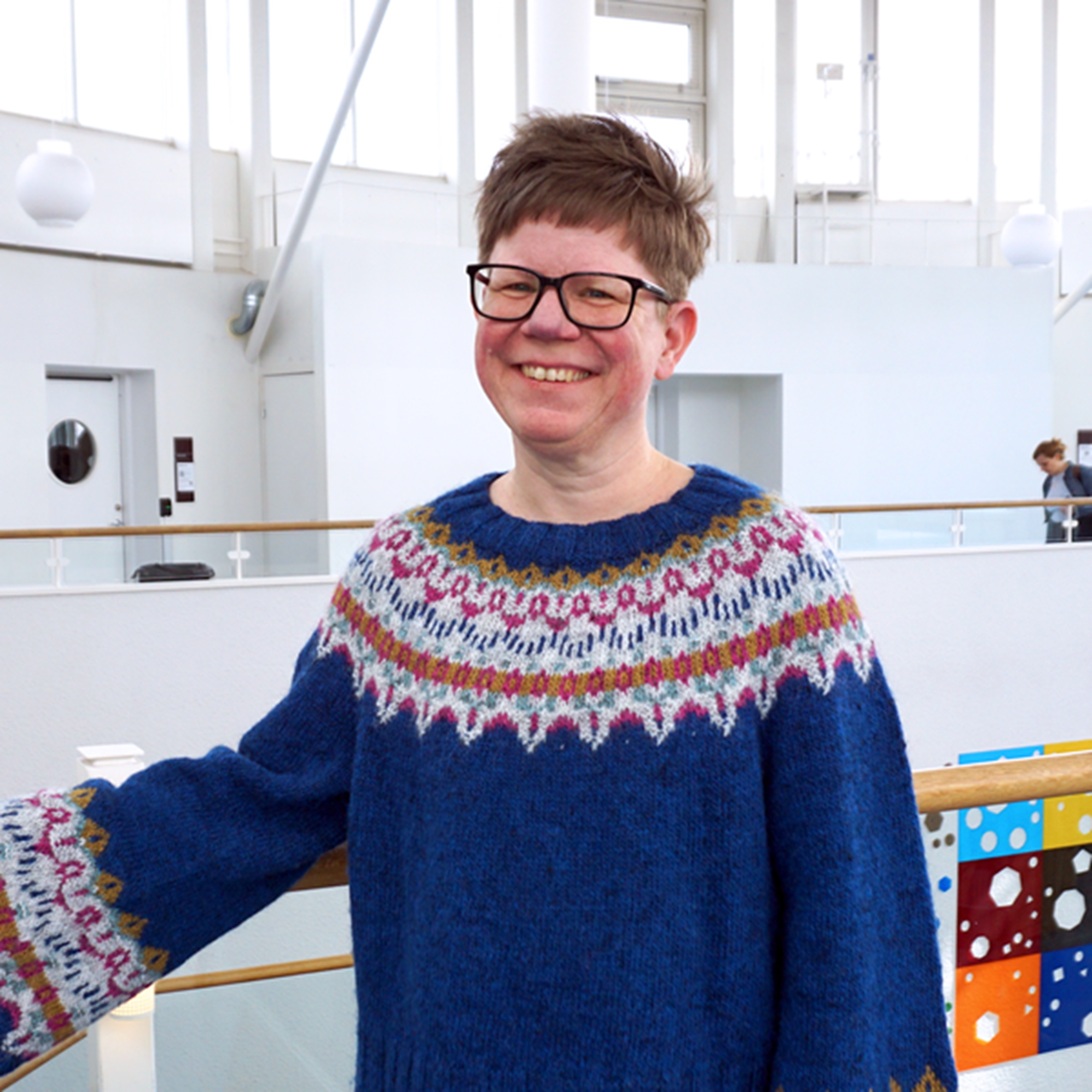
Maria Karlsson.
ImageTherese SarlinMaria is awarded USBE’s Pedagogical Prize 2026 for her dedicated and well‑structured work in ensuring that all USBE’s competencies are systematically practiced and assessed within the Programme in Statistics and Data Science. Her work is particularly notable in the areas of responsible approach, communication, and data literacy. Through carefully designed course components and assessment tasks, students are trained to analyse, interpret, and evaluate data, make well‑informed ethical judgements, and adapt oral, written, and visual communication to different audiences and contexts.
Through this long‑term and coordinating approach, Maria contributes to increased quality, clarity, and progression in students’ competency development, as well as to a strengthened holistic perspective across the programme.
For Maria, the award is a recognition of the pedagogical development work that takes place in close collaboration with colleagues.
– I am very grateful for this recognition, as it draws attention to pedagogical work that often takes place in the background and through close collaboration with colleagues. Together, we have worked to strengthen coherence across courses and to ensure clear progression in the program. One concrete contribution has been the development of support for subject‑integrated writing and communication, allowing students to build these abilities step by step over time. I have also worked to integrate ethical perspectives as an explicit and visible part of course content. Ethics is an important part of several of the competencies we work with at USBE, such as responsible approach, data literacy, and self‑leadership.
The Dean of USBE, Agneta Marell, extends her congratulations to this year’s award recipients and expresses her appreciation for their valuable contributions to the USBE’s students.
– Providing our students with the best possible opportunities for the future requires teachers who combine a holistic perspective with strong commitment and long-term coordination and collaboration — both within and beyond academia. This year’s award recipients truly live up to these expectations.