
Master's Programme in Critical Perspectives on the Economy: Environment, Inequality and Crises 60 credits

About the programme
Understand the forces shaping today’s world – and learn how to analyse them critically.
This one‑year fully online master’s programme equips students with advanced analytical tools to understand how economies evolve, why inequalities persist, and how environmental and financial crises emerge. Drawing on economic history and integrating perspectives from cultural geography, historical demography and gender studies, the programme offers a powerful interdisciplinary framework for analysing the long‑term dynamics of economic and social change.
Students learn to connect historical transformations with contemporary global challenges such as climate change, uneven development, financial instability and demographic transitions. By combining methodological training with theoretical depth, the programme prepares students to investigate complex societal problems and to critically evaluate established economic explanations and policy solutions.
Key Questions Explored in the Programme
• Why are economic opportunities and living standards distributed so unevenly across regions and social groups?
• How have colonialism, industrialisation and globalisation shaped contemporary patterns of inequality?
• Why do financial crises occur – and why do they affect societies and social groups differently?
• How have economic systems contributed to climate change and environmental degradation?
• What historical experiences exist of energy transitions and environmental policy?
• How have demographic change, welfare institutions and gender relations influenced economic development?
The language of instruction is English. All lectures, seminars, supervision and assessments – both written and oral – are conducted in English. The programme therefore welcomes both Swedish and international students and is designed for students who want to develop strong academic writing, analytical and communication skills in an international environment.
While studying
The programme is delivered entirely online and combines live digital lectures with interactive seminars and collaborative learning activities. Teaching takes place in real time, allowing students to actively engage with teachers and fellow students through discussion, group work and analytical exercises.
Active participation is central to the learning environment. Students are therefore expected to participate in seminars with camera and microphone enabled. This format creates a dynamic and supportive digital classroom that encourages debate, critical thinking and close interaction with teaching staff.
Assessment is based on a combination of written assignments, oral presentations and research‑based projects. This variety of formats strengthens academic skills, promotes academic integrity and allows students to develop both independent and collaborative research competencies.
Programme Structure
The programme comprises 60 credits and is organised into three integrated blocks that progressively develop students’ analytical and research skills.
1. Methods and Research Design (22.5 credits)
This block introduces students to how scientific studies are designed, conducted and critically evaluated. While rooted in economic history, the courses draw on methodological traditions from across the social sciences.
Students receive training in:
• Research design in the social sciences (quantitative and qualitative approaches)
• Quantitative methods with a focus on inequality, population change and economic development
• Qualitative and interdisciplinary approaches to historical and social research
The courses are practically oriented and include hands‑on work with real datasets and historical sources. Students learn how to formulate research questions, evaluate methodological choices and critically reflect on how theories, sources and data shape our understanding of economic and social change.
2. Theoretical Specialisation (22.5 credits)
In this block students deepen their understanding of major debates in economic history and global development.
Courses explore themes such as:
• Uneven economic development in a globalised world
• Financial crises and the dynamics of global capitalism
• Climate change, environmental transformation and the historical roots of sustainability challenges
Students analyse long‑run processes including globalisation, inequality, industrialisation, demographic change, environmental transformation and gendered labour markets. Methodological skills acquired in the first block are applied in independent analytical assignments where students develop their own research questions.
3. Master’s Thesis (15 credits)
The programme concludes with an independent master’s thesis in economic history. Under the guidance of an academic supervisor, students conduct their own research project connected to the program’s themes.
Possible thesis topics include:
• The environmental consequences of industrialisation
• The historical roots of global inequality
• Colonial resource extraction and long‑term development
• The social consequences of financial crises
• Welfare states, labour markets and social protection
• The history of sustainability policies and energy transitions
Future and career opportunities
Graduates from the programme gain advanced analytical and methodological skills that are highly relevant for a wide range of careers.
After completing the programme, students will have:
• Strong skills in quantitative and qualitative social‑science methods
• The ability to analyse complex economic, social and environmental challenges from a long‑term perspective
• Experience in conducting independent research and communicating analytical findings
The programme provides an excellent foundation for careers in the public sector, international organisations, policy analysis, civil society organisations and sustainability‑oriented businesses. It also provides strong preparation for doctoral studies in economic history and related social‑science fields.
Apply
-
Autumn 2026
-
Master's Programme in Critical Perspectives on the Economy: Environment, Inequality and Crises
Second admissions round for EU/EEA citizens
HT26 / Varied / English / Web-based (online)
Show more Show less
StartAutumn term 2026
Number of credits60 credits
Type of studiesWeb-based (online)
Study pace100%
Length1 year
Study locationVaried
LanguageEnglish
Application codeUMU-P2074
EligibilityA Bachelor's degree or equivalent first-cycle qualification comprising of at least180 ECTS or a corresponding qualification from an internationally recognised university. Specific entry requirements are 90 ECTS in social science and proficiency in English equivalent to the Swedish upper secondary course English6/level 2.
SelectionAcademic credits awarded by application deadline (HPAV 30-285 ECTS)
DegreeAfter completed study programme, a student who has applied for a degree certificate can obtain a Degree of Master of Science (60 credits) according to the local qualification descriptor established by the Vice-Chancellor (see Umeå University's web site).
The Swedish translation of Degree of Master of Science (60 credits) is Filosofie magisterexamen. The degree is awarded in the main field of study Economic History.
ApplicationApplication deadline was 15 April 2026. The late application period opens on 15 July 2026 if there are seats available. Please note: This second application round is intended only for EU/EEA/Swiss citizens.
Application and tuition feesAs a citizen of a country outside the European Union (EU), the European Economic Area (EEA) or Switzerland, you are required to pay application and tuition fees for studies at Umeå University.
Application fee: SEK 900
Tuition fee, first instalment: SEK 48,300
Total fee: SEK 96,600
-
How to apply
Apply online via universityadmissions.se
You apply to our programmes and courses via universityadmissions.se – the official website for higher education applications in Sweden. There, you can track your application, check that your documents have been registered, and log in to find our your admission results.
Late applications
Admissions to most programmes and courses typically close after the final application deadline. However, some programmes and courses may still accept late applications if seats are available. These are marked “Open for late application” on universityadmissions.se. Please note that late applications are not guaranteed to be reviewed.
More about application and admission
Research excellence at Umeå University
Be a part of a world-class environment for teaching and research – where the Nobel Prize-winning discovery of CRISPR-Cas9 geneediting began, and where innovation continues to shape the future.
-
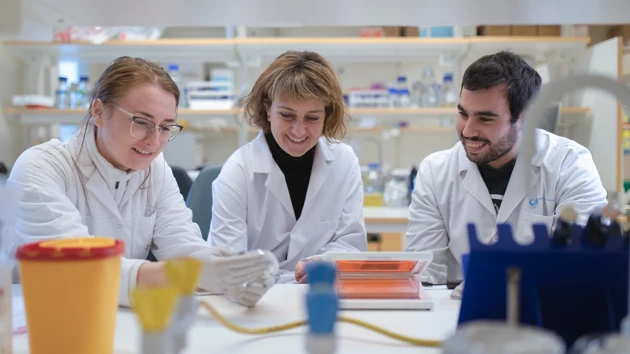
Innovative with international impact
Research for society, nature and the future. Read about our research research environments and infrastructure.
-
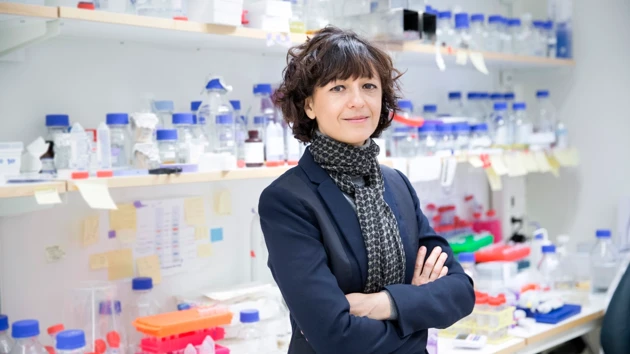
Open climate for groundbreaking research
Emmanuelle Charpentier credits the research environment in Umeå as a key factor in her discovery.


Contact us
Your message goes to Infocenter, and they’ll make sure it gets to the right person – so you get the best and most relevant reply.
Contact person

Programme is given by
Unit of Economic HistoryGood to know

How to apply
A step-by-step guide to apply for studies at Umeå University.

Chat with our students
Are you wondering what it's really like to study at Umeå University?

Experience Umeå
Northern Sweden’s largest city – diverse, dynamic, and student-friendly.