

NEWS His research focuses on inorganic and aquatic chemistry, with a particular emphasis on chemical speciation—that is, the form in which a substance occurs. This determines whether a substance is harmless or toxic, whether it remains in the soil or spreads further in water. When metals such as zinc, lead or cadmium enter the environment, it is their chemical form that determines their impact.

Staffan Sjöberg is currently Professor Emeritus at the Department of Chemistry and will be conferred as a Jubilee Doctor on 23 May 2026
Image Simon JönssonAs a Professor of Chemistry at Umeå University, Staffan Sjöberg has contributed to building knowledge that is now central to understanding the toxicity, transport, and immobilisation of metals in the environment.
His path into chemistry began somewhat by chance. Biology was an early interest, but at the time it was not offered at Umeå University. Instead, he spent a year studying mathematics, and in autumn 1965 he began his studies in chemistry.
The Department was characterised by a strong pioneering spirit. When chemistry education started in Umeå in 1965, much was still under development. Teaching was organised by the newly appointed professor Nils Ingri, who brought teachers from KTH Royal Institute of Technology.
–The problem was that the lab facilities were not quite finished. In some places we walked on sawdust, it wasn’t entirely complete, but almost. Still, we were able to do lab work there, and I remember the inauguration in 1965 when the King and Queen visited.
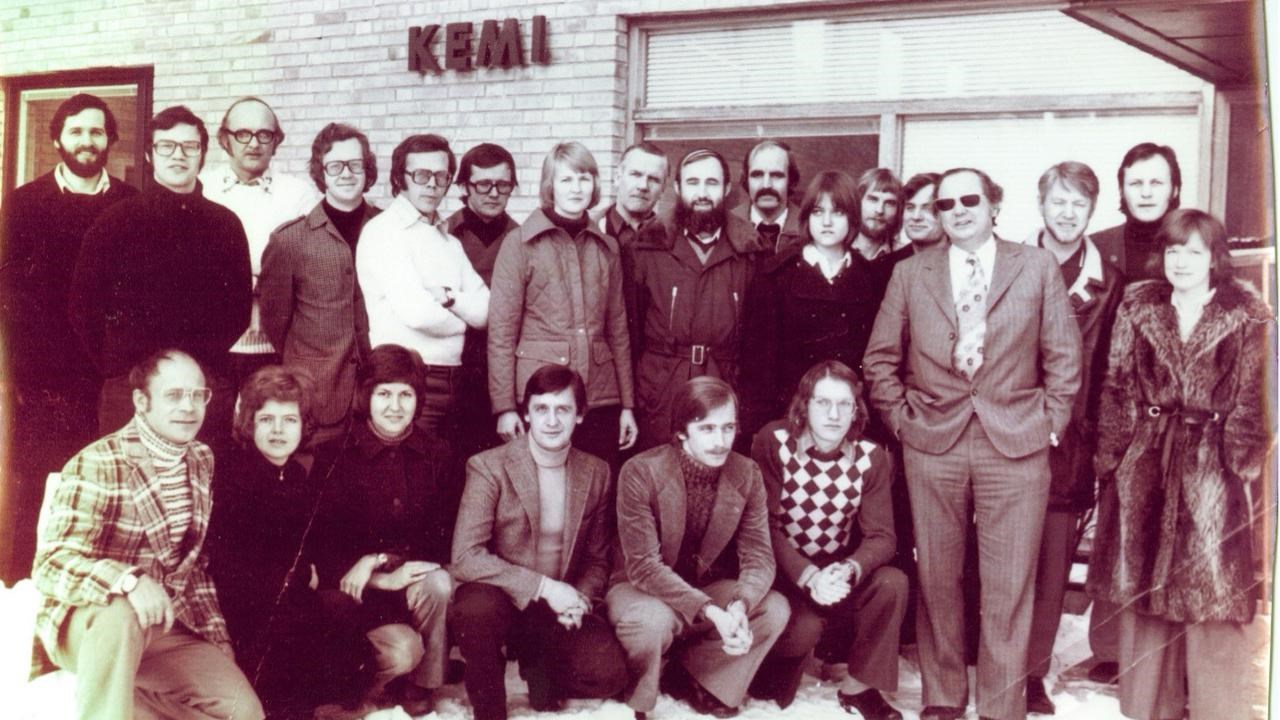
The department around 1970
Image[Archive]Over the decades, Staffan Sjöberg has mapped how metals react in aqueous solutions, how they form complexes with other substances, and how they bind to mineral surfaces. These processes govern everything from nutrient flows in lakes and oceans to the spread of pollutants in soil and water. His work thus lies at the intersection of inorganic chemistry and geochemistry, where molecular-level processes meet environmental systems.
A major part of his work has been to make chemistry calculable. By determining equilibrium constants and developing models, he has enabled researchers to predict how chemical systems behave under different conditions. This work has also resulted in internationally used reference data, including within IUPAC.
The results are applied in areas ranging from environmental assessments to advanced models of industrial processes, biological systems, and global chemical cycles.
His research has always been closely linked to real-world challenges. Studies of how phosphate binds to iron oxides are central to managing eutrophication, while research on heavy metals contributes to understanding pollution and water purification.
The acquisition of an XPS instrument marked an important step in developing surface science research in Umeå. Sjöberg played a key role in shaping the scientific direction, initiating research programmes that justified the investment, and helping secure external funding. The instrument enabled detailed analyses of surface chemical composition and continues to support research in surface chemistry today.
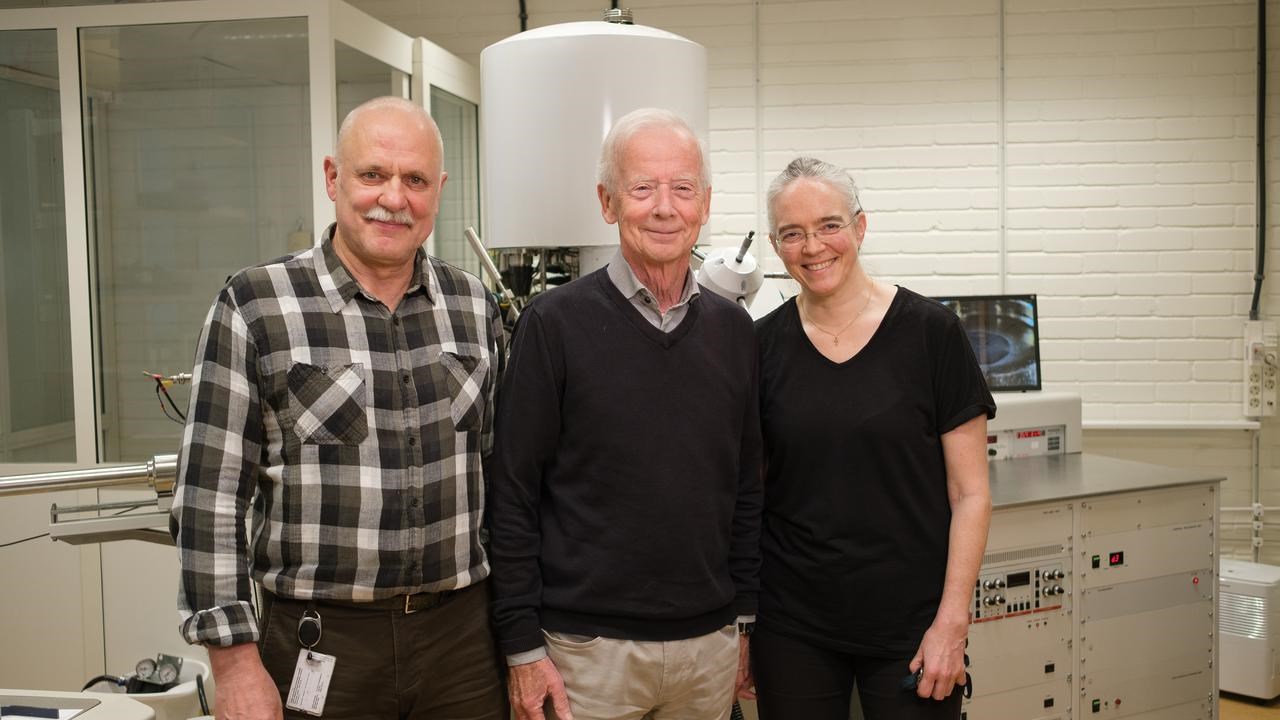
Staffan Sjöberg together with Andrey Shchukarev, Director of the XPS platform, and Madeleine Ramstedt, Professor at the Department of Chemistry.
Image[Simon Jönsson]Advances in computing have fundamentally changed chemical research, from slow, manual procedures to today’s immediate calculations and analyses.
In the early days, calculations were performed using punched cards, where data was manually encoded and submitted to dedicated computing centres. Results could take days, and a single error meant starting over.
–It required large computers that we didn’t have here in Umeå, so calculations were sent to machines at KTH in Stockholm. We would go to the pathology department at the hospital with stacks of punched cards, which were read using card readers. Then UMDAC was established around 1970, and we would cycle there with the cards. The calculations ran overnight, and we picked up the results in the morning. There was a lot of cycling back and forth.
Today, similar calculations can be performed in seconds on a standard computer, transforming both methods and possibilities within research.
Over more than 50 years as a researcher, Staffan Sjöberg has not only contributed individual results, but has also helped establish ways of working and thinking within the field. By combining experimental work with theoretical modelling, he has advanced the ability to describe and predict chemical processes in nature with increasing precision.
His work illustrates how research progresses in practice: step by step, systematically and over the long term. At the same time, it shows how this knowledge, once established, becomes crucial for understanding and managing our environment.
To those beginning their research careers today, Sjöberg offers clear advice: –Simply put: take on the challenge. It’s something that has stayed with me. You may only get one chance in life to start a PhD journey, and if you get that opportunity, it also means there is competence there, and people who believe in you. In that case, I think you should take it, Staffan finishes.
He emphasises the importance of trying, even without guarantees. It is better to test and later choose another path than never to have tried at all. The experiences gained, regardless of outcome, are part of the journey. At the same time, he highlights the joy of research, curiosity, experimentation, and discovery make the work rewarding. But he is also clear that the path requires persistence: competition is strong, and the ability to secure research funding is essential.
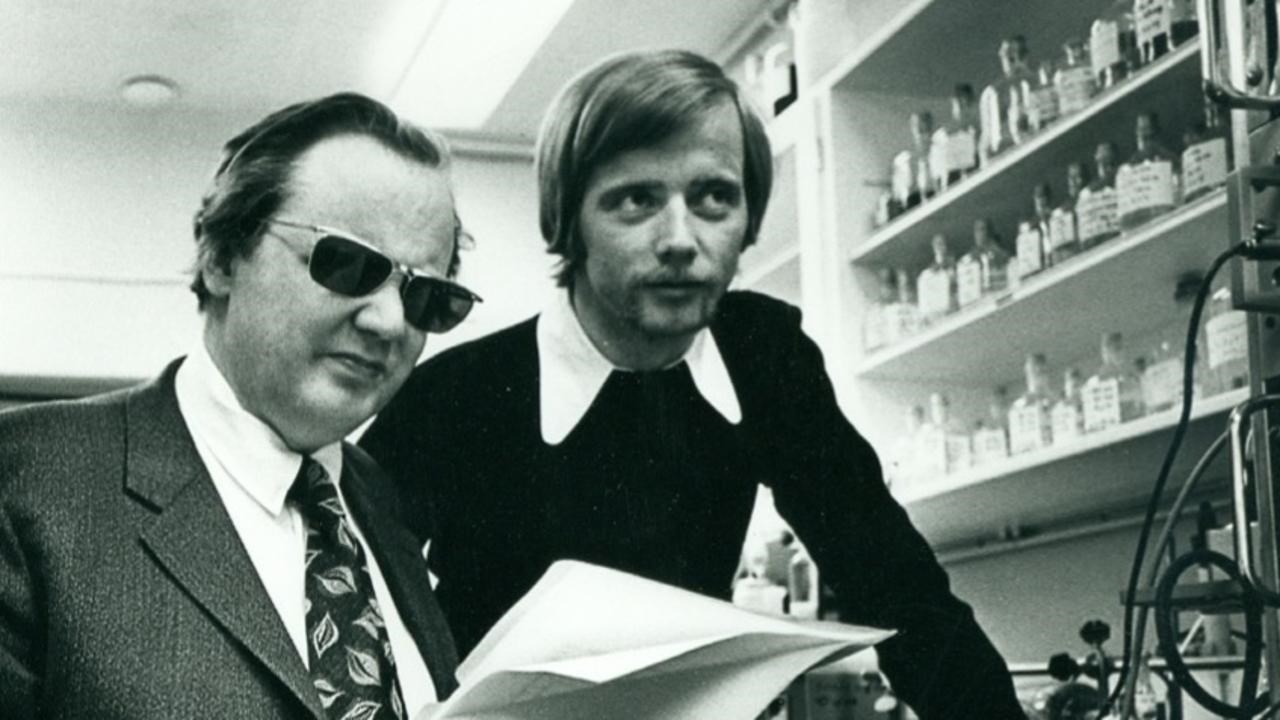
Staffan Sjöberg with his supervisor Nils Ingri.
ImageArchive