This year's honorary doctors will be conferred at Umeå University's Annual Ceremony on Saturday, October 17 in Aula Nordica.

NEWS Enlli Thomas, Professor at Bangor University in Wales, has been appointed honorary doctor 2026 by the Faculty of Arts and Humanities at Umeå University. She is an internationally prominent linguist and has had a significant impact on both research and society.
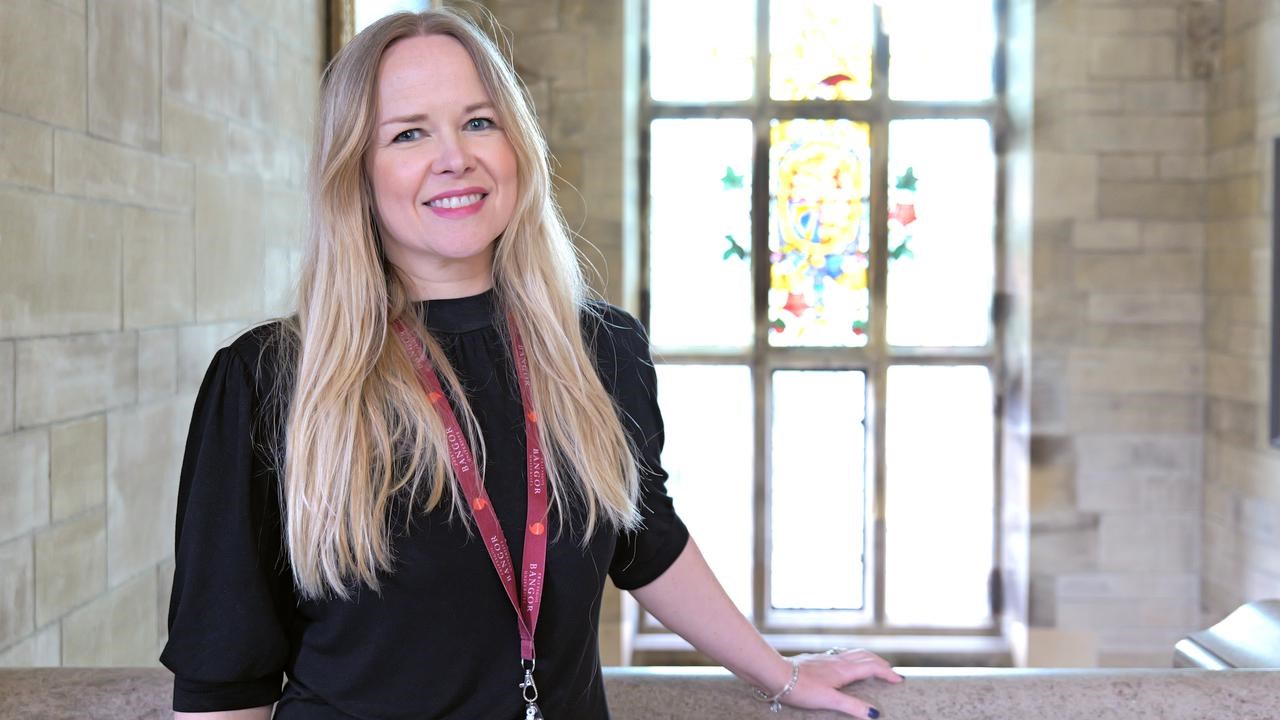
Enlli Thomas
ImageDafydd PattinsonI am guided by a belief that academic work should not only generate knowledge, but also contribute to policy, practice, and wider society
She is awarded the honorary doctorate for her long-standing and significant commitment to research and postgraduate education at the Faculty of Arts and Humanities, and Umeå School of Education at Umeå University.
The motivation describes how Enlli Thomas' main research interests and expertise include psycholinguistic approaches to the study of bilingual language acquisition, including children's acquisition of complex linguistic structures under conditions of minimal language input, bilingual assessment (psychometrics), and educational methods for language transfer, learning, and use.
Enlli Thomas says that being appointed honorary doctor by Umeå University is a deeply meaningful and humbling recognition.
“I see it as not only an acknowledgement of my own work, but also of the many collaborations and shared efforts that have developed over time between Bangor and Umeå”, says Enlli Thomas and continues:
“Our relationship has grown organically through collegial collaborations with individuals such as Kirk Sullivan, Yvonne Knospe, Virginia Langum, and others across the Faculty. This honour therefore reflects a partnership that I value greatly and that has enriched my own work as much as it has contributed to others.”
Enlli Thomas says that her main driving forces are a strong sense of social purpose and a commitment to ensuring that research has meaningful impact—particularly in relation to language, education, and communities.
“I am especially motivated by questions around how bilingualism develops, how minority languages are sustained, and how education systems can support linguistic diversity.”
“In teaching, I am driven by the opportunity to support students and early-career researchers—including doctoral students I have worked with at Umeå—in developing their ideas and confidence.”
“Across both research and teaching, I am guided by a belief that academic work should not only generate knowledge, but also contribute to policy, practice, and wider society.”
Her interests in bilingualism, language development, and education stems from a longstanding fascination with the relationship between language, identity, and opportunity.
“Working within the Welsh language context brought into sharp focus the challenges and possibilities surrounding minority language use and transmission. This inspired a deeper interest in understanding how children acquire language in bilingual settings, particularly under conditions where input may be limited, and how educational approaches can support this process.”
“Over time, this has evolved into a broader commitment to both theoretical and applied research, particularly where it can inform language policy and practice.”
She describes her collaboration with colleagues at Umeå University as something that has been extensive and highly rewarding.
“Since my first visit in 2017— as a member of Yvonne Knospe’s PhD examination committee—this has grown into a wide-ranging partnership. I have contributed regularly through lectures, workshops, and seminars, and have worked closely with doctoral students and early-career researchers through mentoring and feedback.”
“I have also had the pleasure of engaging with colleagues including Yvonne Knospe, Virginia Langum, and Niclas Lindström through research visits, joint teaching activities, and ongoing academic exchange.”
“Our collaborations have included joint research projects, such as an ESRC IAA seed-funded project and involvement of Kirk Sullivan and Hanna Outakoski on the Advisory Board of our Ein Llais Ni (Our Voice) oracy project, as well as publications and doctoral-level cooperation.”
“I am also delighted to see collaborations extending further—for example, the joint work between Niclas Lindström and Gareth Evans-Jones and Eirini Sanoudaki and Sue Niebrzydowski’s participation in Umeå University’s doctoral education programmes.”
“I have particularly valued the opportunity to connect Umeå colleagues to wider European networks in minority language research, while also learning from their important work on Sámi languages and Meänkieli.”
An important aspect of her work has been building bridges—between institutions, disciplines, and communities.
“The collaboration between Bangor and Umeå is a strong example of this, grounded in shared interests but sustained through relationships with colleagues at all career stages.”
“I would also emphasise the importance of international collaboration in minority language research. The challenges we face are shared across contexts, and partnerships like those with colleagues at Umeå University demonstrate how much can be gained through sustained exchange and mutual learning.”
“Looking ahead, I am particularly excited about deepening these connections further—through the continuation of initiatives such as joint doctoral programmes, enhanced research networks, and expanded opportunities for colleagues and students to work together.”
This year's honorary doctors will be conferred at Umeå University's Annual Ceremony on Saturday, October 17 in Aula Nordica.