

"False"
Skip to content
printicon
Main menu hidden.
Published: 2026-03-13

Geneticists challenge theory of how cells retain their identity

NEWS One of the most widely accepted models for how cells remember their identity may be incorrect. This is shown in a new study from two research groups at Umeå University. In Science Advances, they present results that overturn a fundamental idea about how the Polycomb system maintains cellular memory.

Polycomb proteins help cells keep certain genes permanently switched off as they divide. In this way, cells are supported in remembering their identity – for example, ensuring that a skin cell continues to be a skin cell. For more than 20 years, researchers have believed that a specific chemical modification on one of the cell’s structural proteins, the histone H2A, plays a key role in this process.

But the new study from Umeå University shows that this explanation does not hold.

Fruit fly clarifies the effects

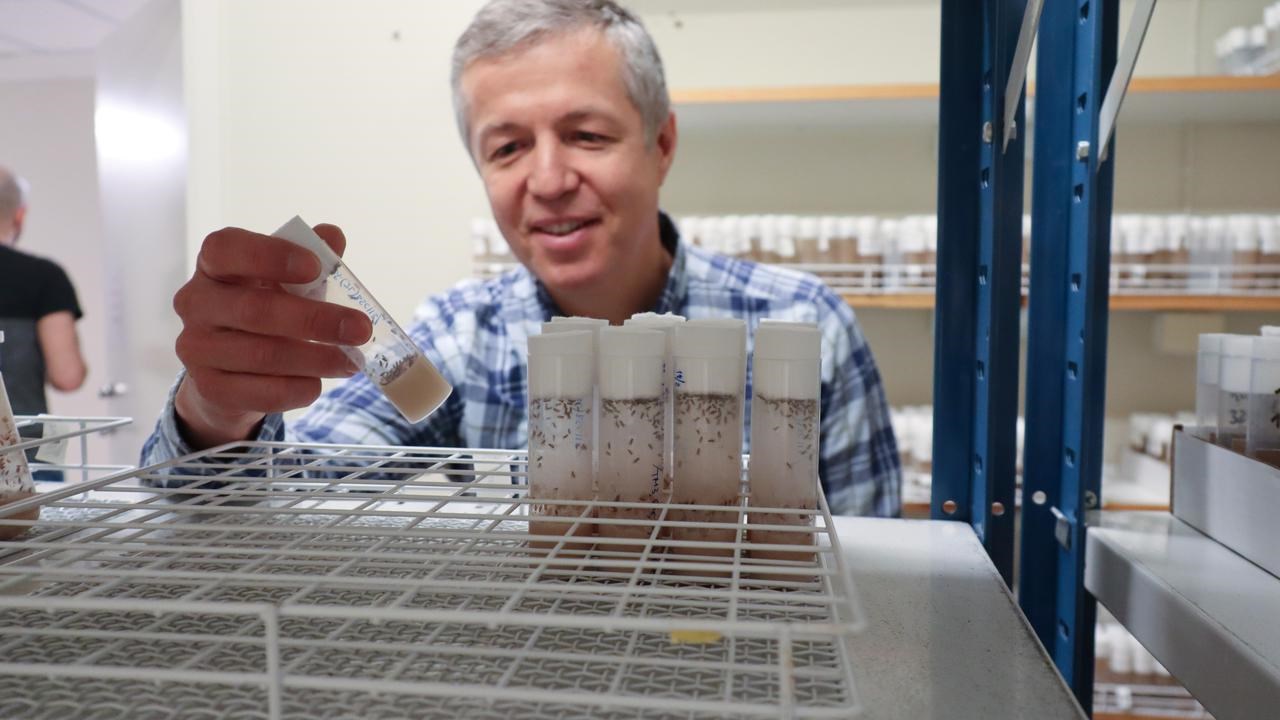
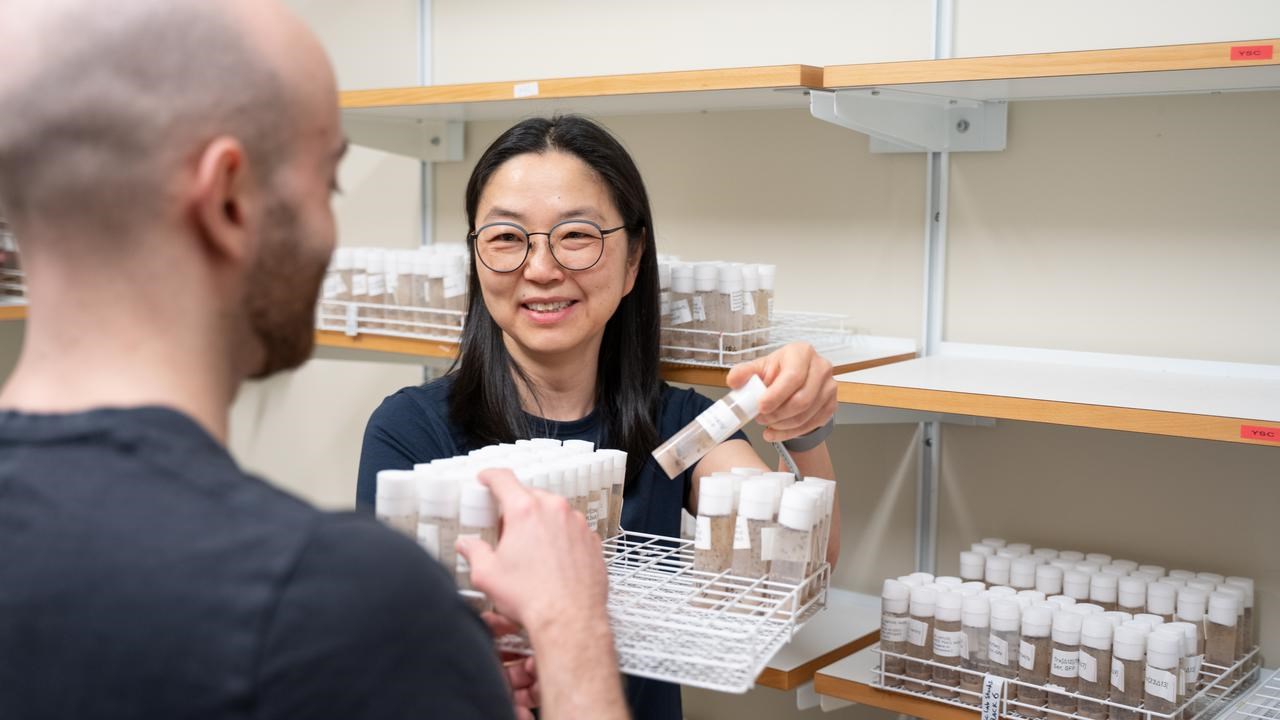
The fruit fly is a commonly used model organism because its genome is easier to analyze than that of humans. The research team studied a protein in the fruit fly Drosophila melanogaster that corresponds to the human PCGF3 protein. They named the gene encoding this protein Siesta. The protein is part of a group of Polycomb‑related complexes that have long been thought to contribute to gene repression.

“We were surprised to see that Siesta is not needed at all to repress developmental genes, even though it accounts for the majority of all H2A modification in the genome,” says Yuri Schwartz, Associate Professor at the Department of Molecular Biology at Umeå University, who led the project.

In mammals, there are six different PCGF proteins with partially overlapping functions, making them difficult to study individually. The fruit fly has only three, providing the researchers with a unique opportunity to distinguish their effects.

“It is precisely the fly’s genetic simplicity that made it possible to see what Siesta actually does and does not do,” explains first author Tatyana Kahn, Staff Scientist at the Department of Molecular Biology at Umeå University.

Her conclusion is clear:

“Our data show that the modification of H2A is not the general memory mechanism it was long believed to be.”

It is therefore only now, through the fly model, that researchers have been able to show that Siesta complexes do not function as part of the Polycomb system’s repressive machinery.

A completely unexpected function

The researchers also made a surprising discovery. When Siesta was absent, the movement of mutant larvae was affected, they became slow and moved in a irregularly manner.

This has nothing to do with gene repression, suggesting that Siesta has a completely different biological role than the one previously associated with the Polycomb system, the cell’s “genetic memory.”

Time to redefine

The new knowledge has broader implications. Today, all so‑called RING1‑based complexes are grouped together as variants of the Polycomb Repressive Complex 1 (PRC1). The researchers argue that this view is misleading.

“Our results show that Siesta complexes do not function as part of the Polycomb system. It is time to update how we define PRC1,” says Yuri Schwartz.

If H2A modification is not central to cellular memory, an important question remains: do Polycomb proteins instead place their chemical marks on entirely different, yet unknown, targets? The study provides new tools for exploring this question and opens the door to rewriting a chapter of cell biology.

The study was conducted within the research network Epigenetic Cooperation North, EpiCoN, at Umeå University. This network promotes collaboration and the development of internationally competitive research in epigenetics, chromatin structure, and gene regulation, with applications in both fundamental and clinically relevant problems.

About the scientific article:

Kahn TG, Garrido A, Yushkova A, Kim M, Glotov A, Sreekumar S, Larsson J, Schwartz YB.: Polycomb repression works without Siesta, the Drosophila ortholog of mammalian PCGF3. Sci Adv. 2026 Mar 6;12(10):eaec0733. doi: 10.1126/sciadv.aec0733

https://www.science.org/doi/10.1126/sciadv.aec0733

For more information, please contact:

Yuri Schwartz
Associate professor
E-mail
Email
Tatiana Kan
Staff scientist
E-mail
Email