
NEWS The war in Ukraine continues and Russia remains a threatening presence in the Nordic region. Meanwhile, there is a gulf between Sweden’s slimmed down total defence and neighbour Finland’s long-standing high defence capability. According to historian Professor Martin Hårdstedt, Sweden and the rest of the Nordic region would do well to draw lessons from the Finnish model and shoulder greater responsibility for Finland’s defence spending – while there is still room for manoeuvre.
Ukraine has been in conflict with Russia since 2014 when the Russian’s annexed the Crimean Peninsula and took de facto control of parts of eastern Ukraine. The conflict escalated in February 2022, when the Russians launched a full-scale invasion of the country. The ongoing war is the largest and most devastating armed conflict in Europe since the Second World War.
You are a professor of history. How does a historical perspective help us to understand the present security situation in the Nordic region in the wake of Russia’s invasion of Ukraine?
“Historically speaking – and this is still true today – Russia is an empire oscillating between collapse and expansion. The current attempt to take parts of Ukraine is deeply rooted in history and there is a long-standing presumption that the occupied areas belong to Russia. So, in a historical context the current state of affairs is logical and understandable,” says Hårdstedt.
Hårdstedt’s day job is at the Department of Historical, Philosophical and Religious Studies at Umeå University, where he both teaches and conducts research. At the time of writing, he is teaching the second-cycle course Ukraine between East and West and putting the finishing touches to a book on the occupation of Norway from 1940 to 1945. Hårdstedt is also co-presenter of the military history podcast Militärhistoriepodden.
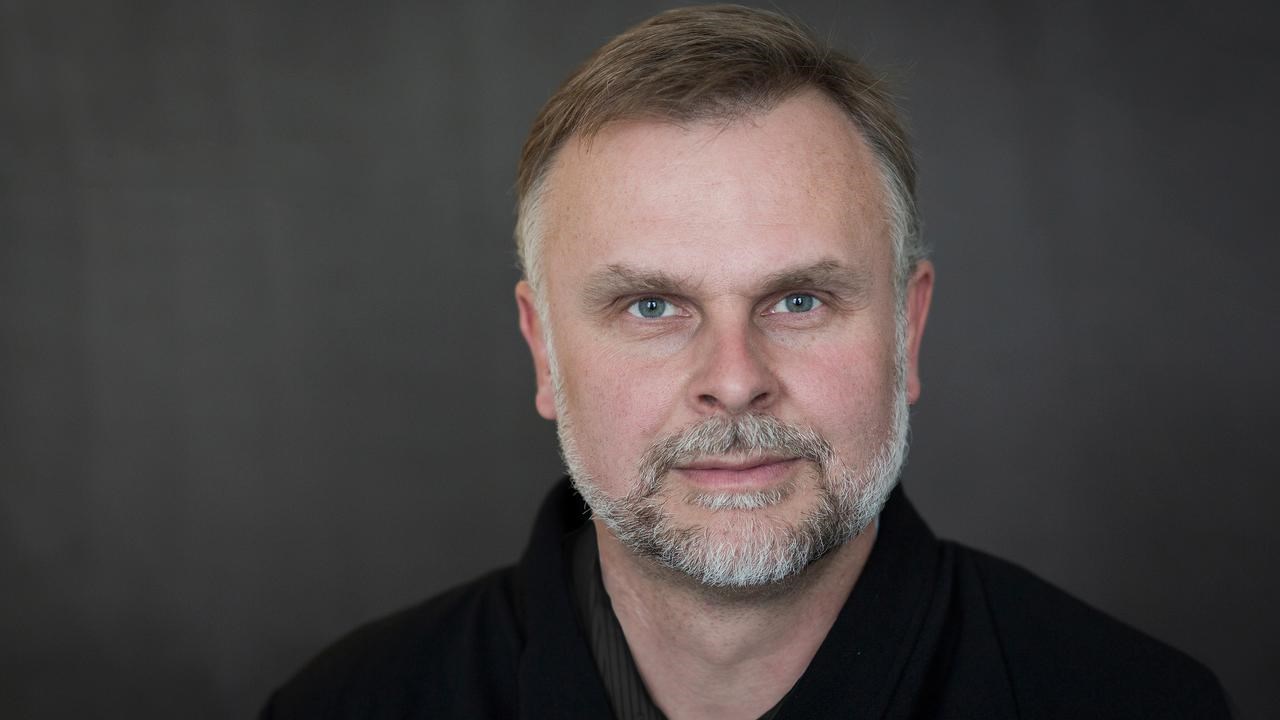
“Russia is an authoritarian state that has never progressed very far along the path of democracy, regardless of whether the ruler was named Putin, Peter the Great or Stalin,” says Martin Hårdstedt, Professor of History at Umeå University.
ImageUlrika BergforsIn many regards, military and civil preparedness have been dismantled in Sweden over recent decades. The same cannot be said of Finland which, with its long land border with Russia and historical experience of war against the Soviet Union, continues to maintain a high state of alert.
“Finland has always been psychologically prepared for the worst. We here in Sweden have not. That is the major difference. It’s not simply an attitude to national security; it’s part of a realistic mentality in the country,” says Hårdstedt who, in the sprit of full disclosure, lives in Finland himself.
Historically, Finland has always had to contend with its powerful, potentially dangerous neighbour to the east. In fact, there is a word for it: Finlandization, the neutralisation of a small country by a larger neighbour through influence or threats. The historical struggle for independence from the Soviets is part of the collective memory of the Finnish people. Finland understands the importance of creating a threshold effect to deter Russian aggression. To this end, Finland maintains a level of military preparedness that Hårdstedt describes as impressive.
“They can immediately mobilise 280,000 combat-trained soldiers. They can also call on a further 700,000 men and women with 6 to 15 months of basic military training. In Sweden, while we still have many older people with military training, there is a big gap during which many younger people have not undergone it.”
Hårdstedt believes that Sweden lacks not only combat-trained soldiers but also highly trained civil and military personnel to lead in a potential armed conflict.
Of course, Sweden’s civil preparedness has also been declining for some time. Can you explain how Finland differs in this regard?
“To begin with, let me say that civil preparedness is at least as important as military preparedness. Finland has an entirely different level of emergency stockpiles and another level of preparedness. I think I can safely say that Finland has largely managed its infrastructure better, despite Sweden being a richer country. They have also retained knowledge in civil society that Sweden once had, with voluntary organisations that are ready to act in a crisis or conflict.”
This is fundamentally a matter of resilience, which is to say society’s basic capacity to withstand a crisis.
“As a historian, I am dumbfounded that during the 1990s and 2000s we decided to reduce our level of preparedness so radically in Sweden – not just militarily but also in society as a whole. In retrospect, this appears to be reckless. It makes the little country of Finland seem rather astute, which of course is because they have historical experience of living with a potentially aggressive neighbour,” says Hårdstedt.
You might call it a geopolitical asymmetry: Sweden is always protected by Finland, which is always under threat.
Many Swedes might view Finland as some kind of buffer zone against Russia, and there is a sense of security in that ‘if the Russians come’, they will probably attack Finland first. In practice, this means that Finland’s defence capability is important to the stability of the entire Nordic region.
“Finland is critical to Sweden’s national security and to the security of northern Europe as a whole. You might call it a geopolitical asymmetry: Sweden is always protected by Finland, which is always under threat. Should the Russian army break through the Cap of the North, Sweden does not have the combat capability to hold the line, so it is essential that Finland holds out.”
The Finnish economy is currently under strain, but the country is determined to, and needs to, maintain its good preparedness for eventual war or crisis. Hårdstedt believes that Sweden, and indeed Norway and Denmark, should open its wallet and contribute to Finland’s defence spending, given that the country constitutes a security zone between the rest of the Nordic region and Russia, a point he makes in a debate article in Swedish newspaper Dagens Nyheter that has attracted a good deal of attention.
“For me, this is a momentous issue. In Sweden, we might think that others will come to our rescue, but we have to be prepared to carry the weight together. After all, we are one of the world’s richest countries, so it’s simply a matter of reallocating resources and using them wisely.”
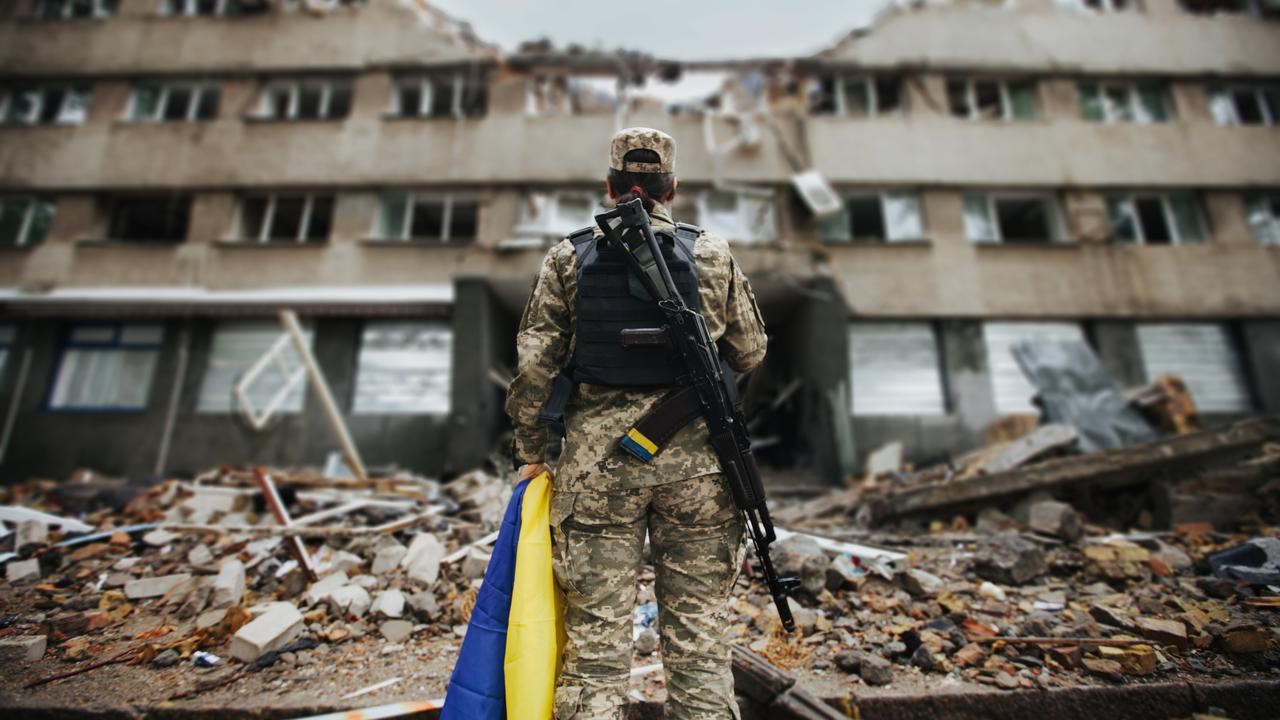
In February 2022, Russia launched its full-scale invasion of Ukraine, which is now Europe’s largest and most devastating armed conflict since the Second World War.
ImageAdobe StockHow would you describe the security situation in our immediate vicinity today?
“As insensitive as it may be, as long as Russia is tied up in the conflict with Ukraine, there is no immediate threat to us. But Russia is constantly preparing for aggression against neighbouring countries. It conducts extensive intelligence operations and systematic influence campaigns all the time.”
What kind of conflict should we be preparing for here in the north? What is a likely scenario?
“I’m not expecting full-scale war, but maybe a heightened level of conflict in our neighbourhood. I don’t believe that Finland is of primary interest to Russia, but we may see aggression against one of the Baltic States. There are many ethnic Russians and Russian minorities there, so Russia might make claims on that area. The risk exists.”
Many analysts concur that there is much to suggest that Russia will seek new conflicts within a few years of any peace in Ukraine.
“Alarmingly, and logically, Russia appears to be in an expansionist phase and will once again attempt to lay claim to land that it considers itself to have a historical right to.”
Hårdstedt is at pains to point out that there is no reason to live in fear, but that the public should be more aware of the potential threat from the east.
“One should be aware that this is going on. Don’t be naive. But we don’t need to slink around pressed to the wall either.”
If you were to summarise from a historical perspective: What lessons is Sweden in danger of missing if we fail to act?
“We risk reacting too late once again when things change in the world around us. It seems to be our fate historically to always lag behind. I don’t know why that is. But faced with an aggressive, authoritarian superpower on our doorstep, we need to rethink and maintain our long-term preparedness. Still, I think that we are in a period of awakening in Sweden right now,” says Hårdstedt.
