

NEWS METAmeet 2026 gathered leading researchers in light–matter interactions at the nanoscale for three days of presentations, discussions and networking. Hosted by Umeå University, the conference directly followed the Nobel Symposium in physics, held in Umeå’s city centre.
From 1 to 3 July 2026, Umeå University hosted METAmeet, an international conference on metamaterials and nanophotonics. The meeting continued the momentum created by the Nobel Symposium on metamaterials, which brought some of the world’s leading physicists to Umeå to discuss metamaterials science and technology.
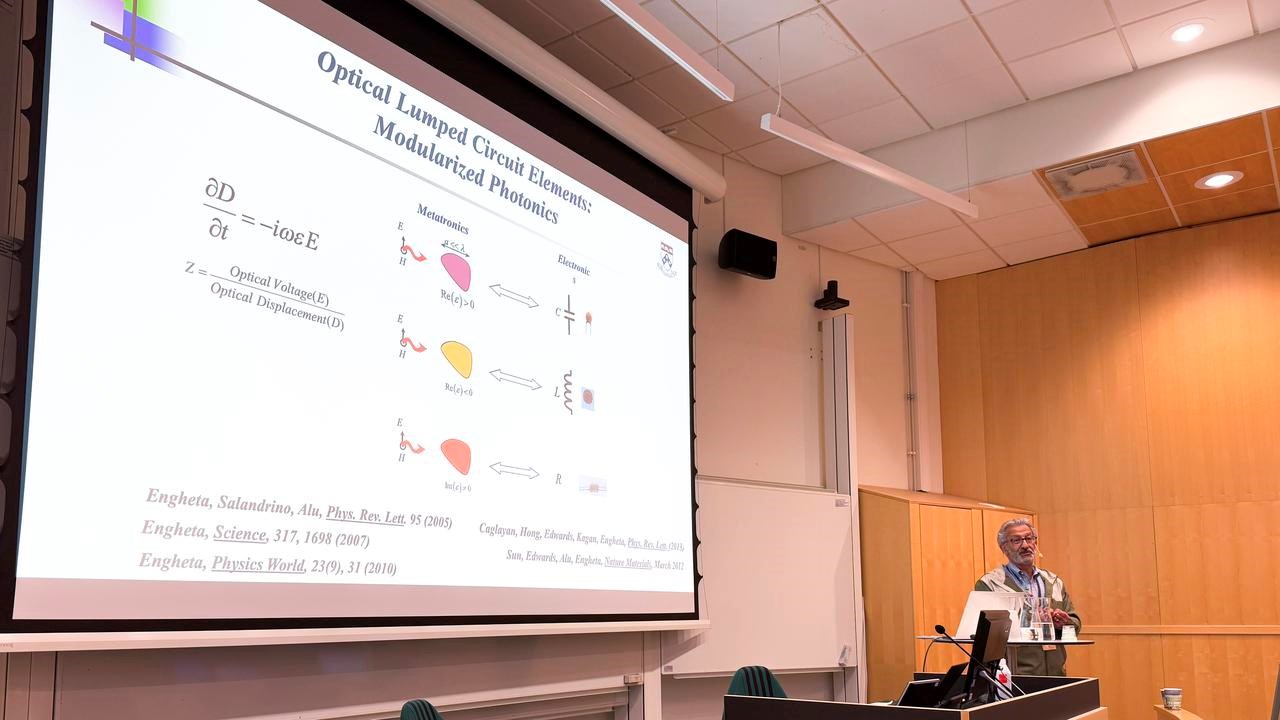
Professor N. Engheta, University of Pennsylvania, giving a keynote talk at METAmeet conference on the theme "4D Metamaterials"
ImageAnn Céline ZimmermannThe close timing of the two events turned Umeå into an international hub for discussions on how light, sound and other waves can be structured in space and time. While the Nobel Symposium was organised as a closed event, METAmeet opened the conversation to a broader community of researchers, students and early-career scientists working in related areas.
The conference took place in Carl Kempe Salen in the KBC building at Umeå University. Over three days, invited lectures, contributed talks, poster sessions and informal discussions highlighted recent developments in how structured materials can control light, heat and sound in new ways. Metamaterials and nanophotonics are rapidly developing research fields with potential impact in areas such as optical communication, sensing, imaging, medicine, energy technologies and quantum science. By bringing together international experts and early-career researchers, METAmeet strengthened scientific links across disciplines and opened new opportunities for collaboration.
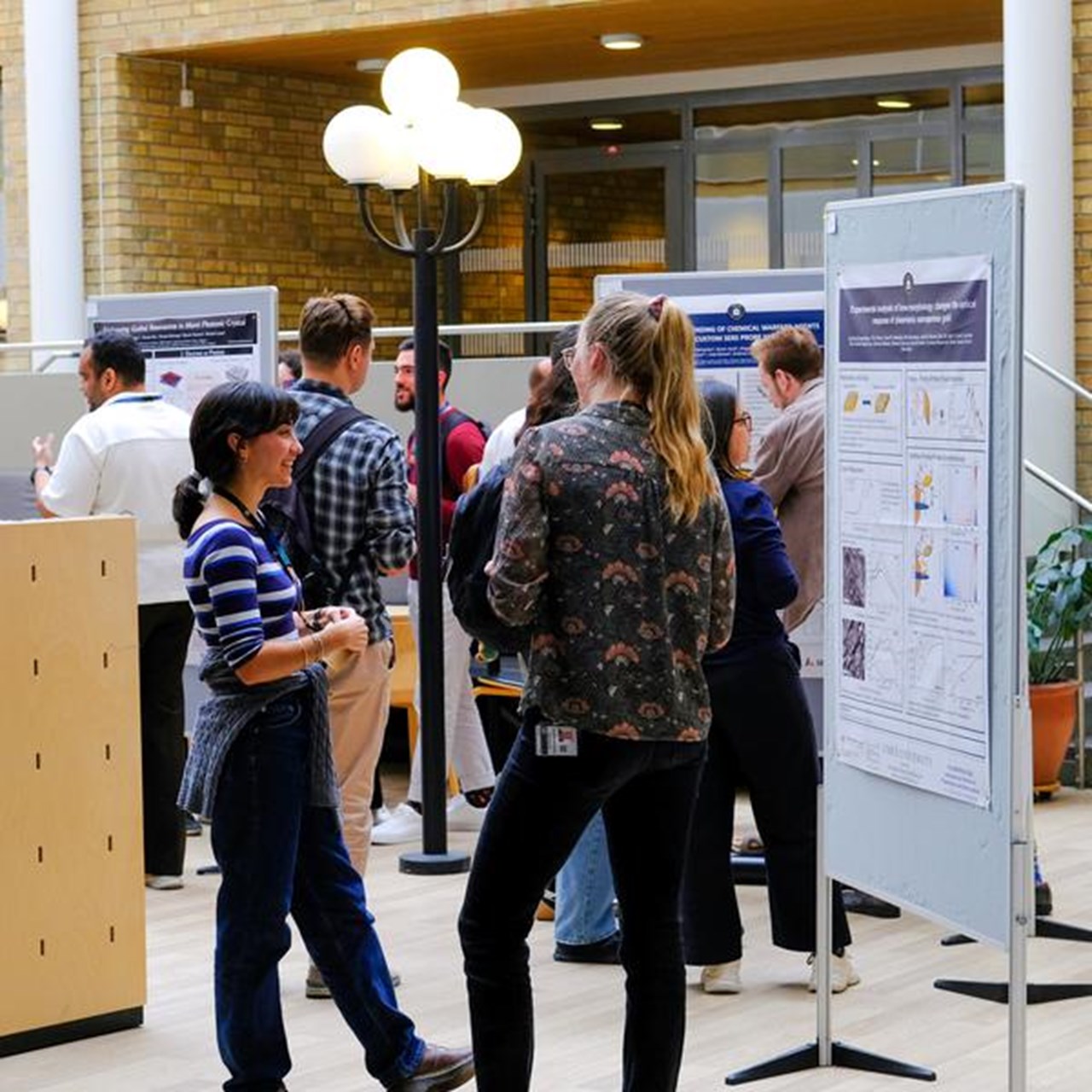
METAmeet poster session
ImageCarla BrunnerEvents like METAmeet are important because they create the conditions for new collaborations to start naturally. The scientific programme was strong, but the informal conversations were equally valuable
Says Nicolò Maccaferri, Chair of METAmeet 2026 and member of the Local Organising Committee from the Department of Physics, Umeå University.
The programme reflected the breadth of today’s metamaterials and nanophotonics research. Sessions addressed topics including negative-index and space-time photonics, meta-optical processors, resonant metasurfaces for biosensing, near-zero-index materials, hot carriers in plasmonics, time-varying materials, active polymer metasurfaces, van der Waals materials for nanophotonics, optical nanoantennas and polaritonic phenomena.
What stood out was the strong connection between theory, experiments and technology. The talks showed how ideas in metamaterials and nanophotonics are moving from conceptual designs towards real life applications
Says Ben Johns, Umeå University, Co-chair of METAmeet and member of the Local Organising Committee from the Department of Physics, Umeå University.
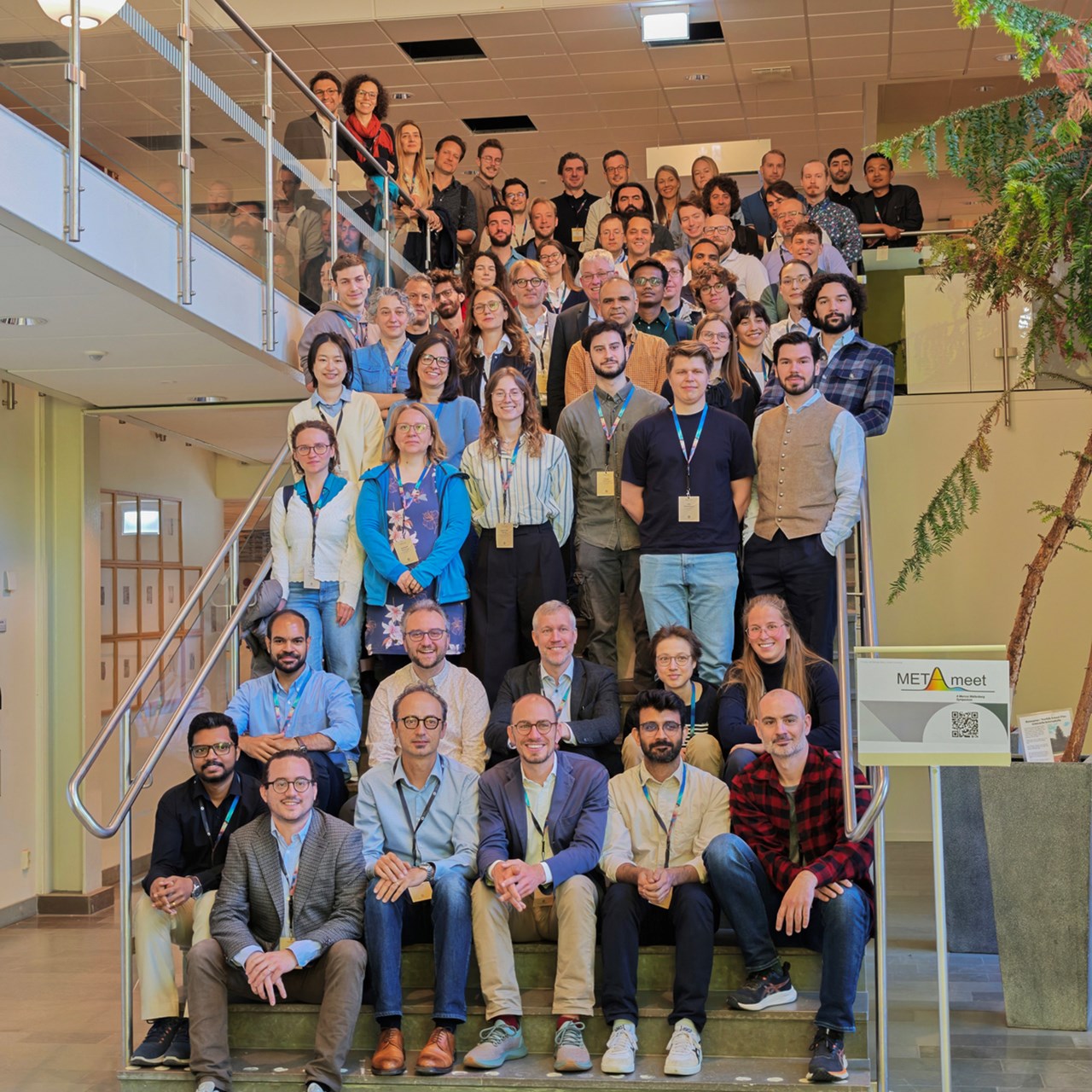
METAmeet group photo
ImageAnna Shevtsova
Invited speakers and contributors came from leading international institutions, with presentations combining fundamental physics, materials science, optical engineering and emerging applications. The format encouraged discussion across subfields, with time dedicated to a poster session, coffee breaks, a social event and a conference dinner. The keynote programme featured Vladimir Shalaev from Purdue University, Magnus P. Jonsson from Linköping University, Andrea Alù from the City University of New York, and Nader Engheta from the University of Pennsylvania, and the wider participant group represented a strongly international mix, including researchers based in Sweden, Finland, Denmark, Germany, Italy, Portugal, Spain, Belgium, the Netherlands, France, the United Kingdom and the United States.
The event was supported by the Marcus Wallenbergs Stiftelse för Internationellt Vetenskapligt Samarbete, the Wenner-Gren Foundations, Carl Tryggers Stiftelse and Umeå University, with additional sponsorship from organisations and companies active in photonics, scientific publishing, simulations and ultrafast technology.