
"False"
Skip to content
printicon
Main menu hidden.
Published: 2026-10-23

Unexpected discovery emerged from collaboration between two research fields

NEWS The researchers thought gold particles would make electronic components emit more light. Instead, they discovered an unexpected effect that could be important for the future of organic electronics. The study is the result of a collaboration between two research fields at Umeå University.

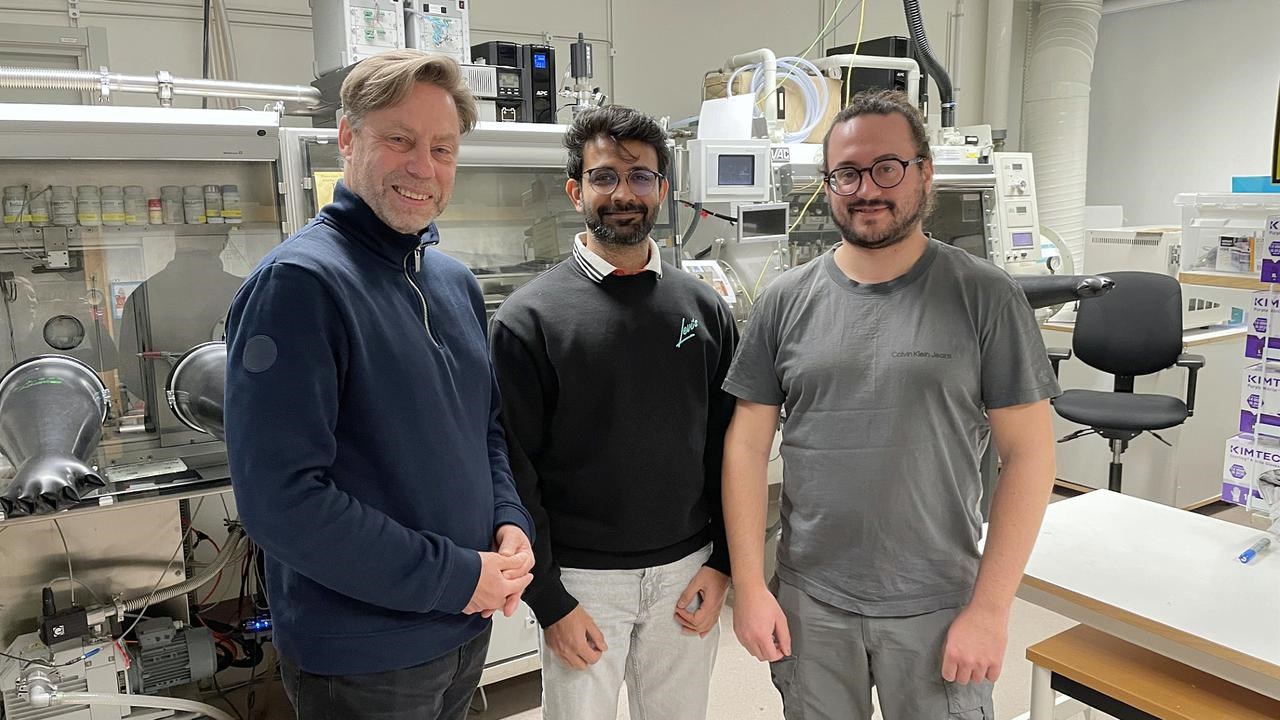
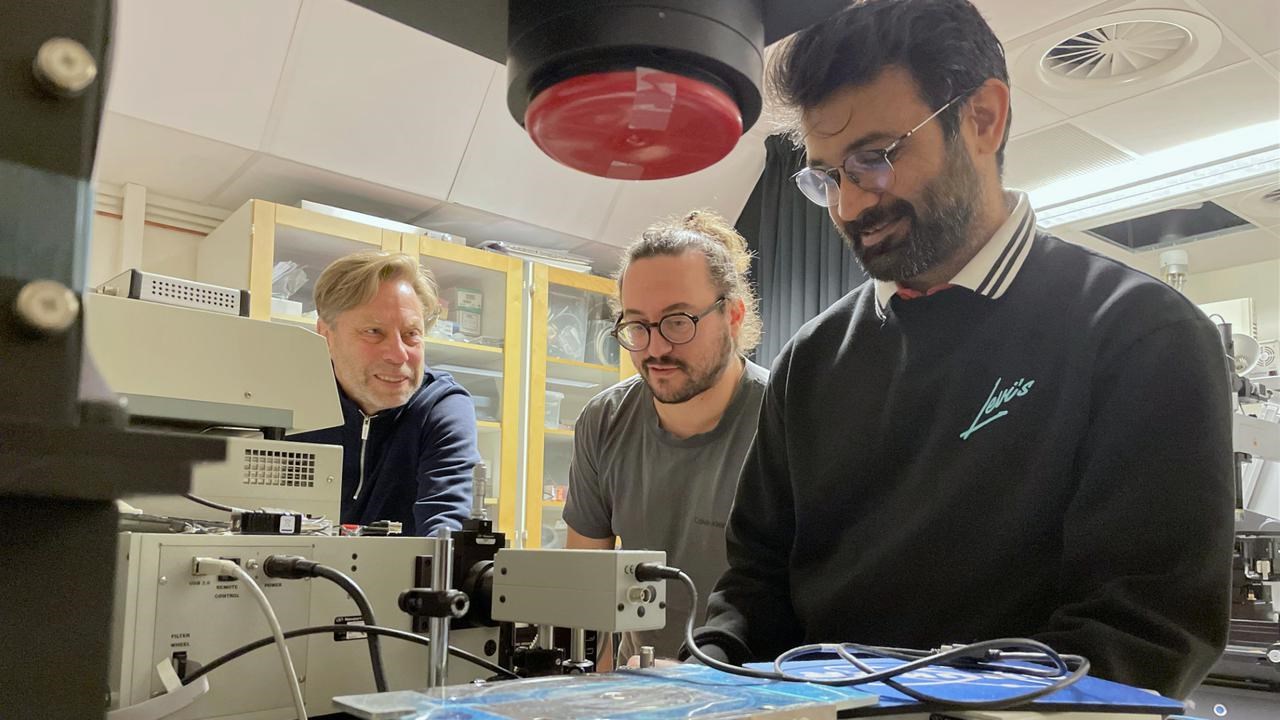
The project that led to the discovery emerged from a collaboration between two research groups. Research leaders Nicolò Maccaferri and Ludvig Edman recognised that they could benefit from each other’s complementary expertise. One wanted to better understand the dynamics of electrochemical reactions in organic electronic devices, while the other was looking for ways to improve device performance.

The collaboration began within the WISE-UmU framework, Umeå University’s early contribution to the national WISE programme. Supported by funding from Kempestiftelserna, the initiative aimed to strengthen and better coordinate materials science research at the university.

We see this as the beginning of a longer-term collaboration

A key part of the project was the recruitment of WISE postdoctoral researcher Ajay Kumar Poonia, who joined the Department of Physics in 2025 to work across the two research environments.

“Ajay’s postdoctoral project created the concrete bridge between our groups and gave us the opportunity to combine our complementary expertise,” says Nicolò Maccaferri, who leads the Ultrafast Nanoscience research group.

From light to electrochemistry

The original goal of the project was to investigate whether adding gold nanoparticles could increase the emission efficiency of light-emitting electrochemical cells. The particles can act like tiny antennas, scattering and directing light, so the researchers expected them to improve light emission in this way.

For Ajay Kumar Poonia, working at the intersection of two research fields required a high degree of independence.

“It has been both challenging and highly rewarding. Nanophotonics and organic electronics have different backgrounds and methods, so at the start I had much to learn, from the physics of gold nanoparticles to device fabrication,” he says.

Bringing together expertise from different disciplines is a core part of the WISE initiative.

“Interdisciplinary research often requires time and resources. The targeted funding allowed ideas to develop into experiments and ultimately into this publication,” says Ludvig Edman, head of research at the Organic Electronics and Photonics group.

A result the researchers did not expect

The researchers initially expected the nanoparticles primarily to influence the light emission of the devices. However, when the results were analysed, a different effect emerged.

“We found that they also affect the electrochemical doping within the device. This became the central result of the paper,” says Ajay Kumar Poonia.

Electrochemical doping changes a material’s ability to conduct electrical current and is central to how many organic electronic devices operate. The discovery therefore suggests that gold nanoparticles could provide a new way of controlling important processes in a wide range of organic electronic systems, not only light-emitting devices. Potential applications include electrochemical transistors, bioelectronics and neuromorphic technologies.

More joint projects ahead

The researchers now plan to explore these electrochemical processes in greater detail and use the knowledge to develop new electronic devices for the future. Additional joint publications are already in preparation.

“We see this as the beginning of a longer-term collaboration,” says Nicolò Maccaferri.

About WISE

WISE (Wallenberg Initiative Materials Science for Sustainability) is Sweden’s largest research programme in sustainable materials science. Funded by the Knut and Alice Wallenberg Foundation, it brings together researchers from several Swedish universities to develop materials and technologies that can contribute to a more sustainable society.

About the scientific study

A. K. Poonia, A. Kirch, J. Ràfols-Ribé, et al. Modifying Electrochemical Doping in Light-Emitting Electrochemical Cells With Gold Nanoparticles. Advanced Science (2026).

Read the full study